当前位置:网站首页>Summarize and learn STM32 to create project template
Summarize and learn STM32 to create project template
2022-07-26 06:44:00 【Flowers bloom in half ོ】
Because I learned from ant factory , I feel that the method they teach is very good , however , I also have a little opinion on typesetting .
use CUBE MX After generating the code , You can create an intermediate layer BSP.

And then put BSP Move this layer to this position
 You can add .c Documents ..
You can add 4 individual .c file , Of course, just follow your habits .
led_key.c
#include "led_key.h"

void Led_Disp(uint8_t ucled)
{
	HAL_GPIO_WritePin(GPIOC, GPIO_PIN_13|GPIO_PIN_14|GPIO_PIN_15|GPIO_PIN_8
                          |GPIO_PIN_9|GPIO_PIN_10|GPIO_PIN_11|GPIO_PIN_12, GPIO_PIN_SET);
  HAL_GPIO_WritePin(GPIOD, GPIO_PIN_2, GPIO_PIN_SET);
	HAL_GPIO_WritePin(GPIOD, GPIO_PIN_2, GPIO_PIN_RESET);

	HAL_GPIO_WritePin(GPIOC,ucled<<8,GPIO_PIN_RESET);
	HAL_GPIO_WritePin(GPIOD, GPIO_PIN_2, GPIO_PIN_SET);
	HAL_GPIO_WritePin(GPIOD, GPIO_PIN_2, GPIO_PIN_RESET);
}

uint8_t Key_Scans(void)
{
	uint8_t ucKey_val = 0;
	if(key1 == Key_Down)
		ucKey_val = 1;
	if(key2 == Key_Down)
		ucKey_val = 2;
	if(key3 == Key_Down)
		ucKey_val = 3;
	if(key4 == Key_Down)
		ucKey_val = 4;

	return ucKey_val;
}
led_key.h
#ifndef _LED_KEY
#define _LED_KEY

#include "main.h"
#define key1 HAL_GPIO_ReadPin(GPIOB,GPIO_PIN_0)
#define key2 HAL_GPIO_ReadPin(GPIOB,GPIO_PIN_1)
#define key3 HAL_GPIO_ReadPin(GPIOB,GPIO_PIN_2)
#define key4 HAL_GPIO_ReadPin(GPIOA,GPIO_PIN_0)

#define Key_Down GPIO_PIN_RESET

void Led_Disp(uint8_t ucled);
uint8_t Key_Scans(void);

#endif
bsp_adc.c
#include "bsp_adc.h"

/*  Use query ADC sampling */
uint32_t Get_Adc2_IN15(void) /* PB15   R37*/
{
	uint32_t Adc2_IN15_value = 0;
	HAL_ADC_Start(&hadc2);
	if(HAL_ADC_PollForConversion(&hadc2,50) == HAL_OK)
	{
		Adc2_IN15_value = HAL_ADC_GetValue(&hadc2);
	}
	return Adc2_IN15_value;
}

/*  Obtain by interrupt ADC1 passageway 11 Value */
uint32_t Adc1_IN11_value;
void HAL_ADC_ConvCpltCallback(ADC_HandleTypeDef *hadc)
{
	if(hadc->Instance == ADC1)
	{
		Adc1_IN11_value = HAL_ADC_GetValue(&hadc1);
	}
	HAL_ADC_Start_IT(&hadc1);
}
bsp_adc.h
#ifndef _BSP_ADC
#define _BSP_ADC

#include "main.h"
#include "adc.h"

extern uint32_t Adc1_IN11_value;
uint32_t Get_Adc2_IN15(void);

#endif
led.c and i2c.c It has been provided to us .
iic and mcp4017 Read and write code
/* EEPROM Related codes */
void Write_AT24C02(uint8_t *buf,uint8_t addr,uint8_t len)
{
	I2CStart();
	I2CSendByte(0xa0);
	I2CWaitAck();
	I2CSendByte(addr);
	I2CWaitAck();
	while(len--)
	{
		I2CSendByte(*buf++);
		I2CWaitAck();
	}
	I2CStop();
	delay1(500);
}

void Read_AT24C02(uint8_t *buf,uint8_t addr,uint8_t len)
{
	I2CStart();
	I2CSendByte(0xa0);
	I2CWaitAck();
	I2CSendByte(addr);
	I2CWaitAck();

	I2CStart();
	I2CSendByte(0xa1);
	I2CWaitAck();

	while(len--)
	{
		*buf++ = I2CReceiveByte();
		if(len)
			I2CSendAck();
		else
			I2CSendNotAck();
	}
	I2CStop();
	delay1(500);
}

/* MCP4017*/

void Write_MCP4017(uint8_t value)
{
	I2CStart();
	I2CSendByte(0x5e);
	I2CSendAck();

	I2CSendByte(value);
	I2CSendAck();
	I2CStop();
}

uint8_t Read_MCP4017(void)
{
	uint8_t value;
	I2CStart();
	I2CSendByte(0x5f);
	I2CSendAck();

	value = I2CReceiveByte();
	I2CSendNotAck();
	I2CStop();
	return value;
}
Then the rest of the functions are main.c Just implement it inside .
Key handling functions
void Key_Proc(void)
{
	if(uwTick - key_uwTick < 50)
		return;
	key_uwTick = uwTick;
	//uint8_t ucKey_Val,ucKey_Down,ucKey_Up,ucKey_Old;
	ucKey_Val = Key_Scans();
	ucKey_Down = ucKey_Val & (ucKey_Old ^ ucKey_Val);
	ucKey_Up = ~ucKey_Val & (ucKey_Old ^ ucKey_Val);
	ucKey_Old = ucKey_Val;

	switch(ucKey_Down)
	{
		case 1:
			ucled |= 0x88;
			count = 1;
			break;
		case 2:
			ucled &= (~0x88);
			count = 2;
			break;
		case 3:
			ucled |= 0x55;
			count = 3;
			break;
		case 4:
			ucled &= (~0x55);
			count = 4;
			break;
	}
}
led Processing function
void Led_Proc(void)
{
	if(uwTick - led_uwTick < 200)
		return;
	led_uwTick = uwTick;

	Led_Disp(ucled);
}
lcd Processing function
void Lcd_Proc(void)
{
	if(uwTick - lcd_uwTick < 200)
		return;
	lcd_uwTick = uwTick;

	HAL_RTC_GetTime(&hrtc,&H_M_S,RTC_FORMAT_BIN);
	HAL_RTC_GetDate(&hrtc,&Y_M_D,RTC_FORMAT_BIN);
	sprintf((char *)lcd_disp_string,"test:%02d i:%d",count,i);
	LCD_DisplayStringLine(Line9,lcd_disp_string);
	sprintf((char *)lcd_disp_string,"R37_Value:%.2fV",Get_Adc2_IN15()*3.3/4096);
	LCD_DisplayStringLine(Line0,lcd_disp_string);
	sprintf((char *)lcd_disp_string,"R38_Value:%.2fV",Adc1_IN11_value*3.3/4096);
	LCD_DisplayStringLine(Line1,lcd_disp_string);
	sprintf((char *)lcd_disp_string,"sbuf2:%d,%d,%d,%d,%d",sbuf2[0],sbuf2[1],sbuf2[2],sbuf2[3],sbuf2[4]);
	LCD_DisplayStringLine(Line2,lcd_disp_string);
	sprintf((char *)lcd_disp_string,"MCP_4017:%X",MCP_4017);
	LCD_DisplayStringLine(Line3,lcd_disp_string);
	sprintf((char *)lcd_disp_string,"pwm_duty1:%.2f",pwm_duty1);
	LCD_DisplayStringLine(Line4,lcd_disp_string);
	sprintf((char *)lcd_disp_string,"pwm_duty2:%.2f",pwm_duty2);
	LCD_DisplayStringLine(Line5,lcd_disp_string);
	sprintf((char *)lcd_disp_string,"Time:%02d-%02d-%02d",Y_M_D.Year,Y_M_D.Month,Y_M_D.Date);
	LCD_DisplayStringLine(Line6,lcd_disp_string);
	sprintf((char *)lcd_disp_string,"Time:%02d-%02d-%02d",H_M_S.Hours,H_M_S.Minutes,H_M_S.Seconds);
	LCD_DisplayStringLine(Line7,lcd_disp_string);
}
Serial port correlation function
void Usart_Proc(void)
{
	if(uwTick - usart_uwTick < 1000)
		return;
	usart_uwTick = uwTick;
	HAL_UART_Transmit(&huart1,tx_dat,sizeof(tx_dat),50);
}
The basic timer realizes the basic timing function
void HAL_TIM_PeriodElapsedCallback(TIM_HandleTypeDef *htim)
{
	if(htim->Instance == TIM6)
	{
		if(++t == 1000)
		{
			ucled ^= 0x1;
			t = 0;
			i++;
			if(i == 1000)
				i = 0;
		}


	}
}
pwm Pulse input
void HAL_TIM_IC_CaptureCallback(TIM_HandleTypeDef *htim)
{
	if(htim->Instance == TIM2) //PA15  R40
	{
		if(htim->Channel == HAL_TIM_ACTIVE_CHANNEL_1)
		{
			pwm_count1 = HAL_TIM_ReadCapturedValue(&htim2,TIM_CHANNEL_1)+1;
			pwm_duty1 = (float)pwm_high1/pwm_count1;
		}
		if(htim->Channel == HAL_TIM_ACTIVE_CHANNEL_2)
		{
			pwm_high1 = HAL_TIM_ReadCapturedValue(&htim2,TIM_CHANNEL_2)+1;
		}
	}
	if(htim->Instance == TIM3) //PB4  R39
	{
		if(htim->Channel == HAL_TIM_ACTIVE_CHANNEL_1)
		{
			pwm_count2 = HAL_TIM_ReadCapturedValue(&htim3,TIM_CHANNEL_1)+1;
			pwm_duty2 = (float)pwm_high2/pwm_count2;
		}
		if(htim->Channel == HAL_TIM_ACTIVE_CHANNEL_2)
		{
			pwm_high2 = HAL_TIM_ReadCapturedValue(&htim3,TIM_CHANNEL_2)+1;
		}
	}
}
Square wave output
void HAL_TIM_OC_DelayElapsedCallback(TIM_HandleTypeDef *htim)
{
	if(htim->Instance == TIM4)
	{
		if(htim->Channel == HAL_TIM_ACTIVE_CHANNEL_1)
		{
			CCR_Value1 = __HAL_TIM_GetCounter(htim) + 100;
			__HAL_TIM_SET_COMPARE(htim,TIM_CHANNEL_1,CCR_Value1);
		}
		if(htim->Channel == HAL_TIM_ACTIVE_CHANNEL_2)
		{
			CCR_Value2 = __HAL_TIM_GetCounter(htim) + 400;
			__HAL_TIM_SET_COMPARE(htim,TIM_CHANNEL_1,CCR_Value2);
		}
	}
}
main What's in the function
/**
  * @brief  The application entry point.
  * @retval int
  */
int main(void)
{
  /* USER CODE BEGIN 1 */

  /* USER CODE END 1 */

  /* MCU Configuration--------------------------------------------------------*/

  /* Reset of all peripherals, Initializes the Flash interface and the Systick. */
  HAL_Init();

  /* USER CODE BEGIN Init */

  /* USER CODE END Init */

  /* Configure the system clock */
  SystemClock_Config();

  /* USER CODE BEGIN SysInit */

  /* USER CODE END SysInit */

  /* Initialize all configured peripherals */
  MX_GPIO_Init();
  MX_ADC1_Init();
  MX_ADC2_Init();
  MX_USART1_UART_Init();
  MX_TIM6_Init();
  MX_TIM2_Init();
  MX_TIM3_Init();
  MX_RTC_Init();
  MX_TIM4_Init();
  MX_TIM15_Init();
  /* USER CODE BEGIN 2 */
	/* LCD initialization */
	LCD_Init();
	LCD_Clear(White);
	LCD_SetBackColor(White);
	LCD_SetTextColor(Black);

	/*  start-up ADC1 Channel sampling */
	HAL_ADC_Start_IT(&hadc1);

	/*  Reading and writing EEPROM*/
	I2CInit();
	Write_AT24C02(sbuf1,0,sizeof(sbuf1));
	HAL_Delay(10);
	Read_AT24C02(sbuf2,0,sizeof(sbuf2));

	/* MCP4017*/
	Write_MCP4017(0x45);
	MCP_4017 = Read_MCP4017();
	/*  Turn on the serial port to receive the interrupt */
	HAL_UART_Receive_IT(&huart1,&rx_dat,1);

	/*  Turn on the basic timer interrupt */
	HAL_TIM_Base_Start_IT(&htim6);

	/*  open PWM Input interrupt */
	HAL_TIM_IC_Start_IT(&htim2,TIM_CHANNEL_1);
	HAL_TIM_IC_Start_IT(&htim2,TIM_CHANNEL_2);
	HAL_TIM_IC_Start_IT(&htim3,TIM_CHANNEL_1);
	HAL_TIM_IC_Start_IT(&htim3,TIM_CHANNEL_2);

	/*  Square wave output */
	HAL_TIM_OC_Start_IT(&htim4,TIM_CHANNEL_1);
	HAL_TIM_OC_Start_IT(&htim4,TIM_CHANNEL_2);

	/* PWM Output */
	HAL_TIM_PWM_Start(&htim15,TIM_CHANNEL_1);// Duty cycle 30%
	HAL_TIM_PWM_Start(&htim15,TIM_CHANNEL_2);// Duty cycle 70%
  /* USER CODE END 2 */

  /* Infinite loop */
  /* USER CODE BEGIN WHILE */
  while (1)
  {
    /* USER CODE END WHILE */

    /* USER CODE BEGIN 3 */
		Key_Proc();
		Led_Proc();
		Lcd_Proc();
//		Usart_Proc();
  }
  /* USER CODE END 3 */
}
Related variable definitions
/* Private variables ---------------------------------------------------------*/

/* USER CODE BEGIN PV */
/*  Key variables */
__IO uint32_t key_uwTick;
uint8_t ucKey_Val,ucKey_Down,ucKey_Up,ucKey_Old;
uint32_t count;

/* LED Variable */
__IO uint32_t led_uwTick;
uint8_t ucled;

/* LCD Variable */
__IO uint32_t lcd_uwTick;
uint8_t lcd_disp_string[21];

/* EEPROM Related variables */
uint8_t sbuf1[5] = {13,45,24,56,67};
uint8_t sbuf2[5] = {0};

/* MCP4017 Variable */
uint8_t MCP_4017;

/*  Serial port related variables */
__IO uint32_t usart_uwTick;
uint8_t tx_dat[20] = {"hello world!\r\n"};


/*  Basic timer variables */
uint32_t t,i;

/* PWM The input variable */
uint32_t pwm_count1,pwm_count2;
uint32_t pwm_high1,pwm_high2;
float pwm_duty1,pwm_duty2;

/* rtc Related variables */
RTC_TimeTypeDef H_M_S;
RTC_DateTypeDef Y_M_D;

/*  Square wave output related variables */
uint32_t CCR_Value1,CCR_Value2;

/* USER CODE END PV */
When writing code before, I felt very messy , But after making a set of provincial competition questions , I suddenly feel that I know how to write , This only represents personal thoughts .
边栏推荐
- C language introduction practice (8): switch case calculates the month, year and day of the next day (normal year / leap year calculation)
- Gdown Access denied:Cannot retrieve the public link of the file.
- Integrated design of signal processing systems - Design of solver functions (continuous and discrete time systems)
- UIToolkit工具模板工程
- 【保姆级】包体积优化教程
- Delete ^m from VIM
- 【故障诊断】基于贝叶斯优化支持向量机的轴承故障诊断附matlab代码
- 力扣5: 最长回文子串
- Regular expressions and calling related functions in C language
- 【Star项目】小帽飞机大战(二)
猜你喜欢

Input the records of 5 students (each record includes student number and grade), form a record array, and then output them in order of grade from high to low The sorting method adopts selective sortin

Force buckle - 4. Find the median of two positive arrays
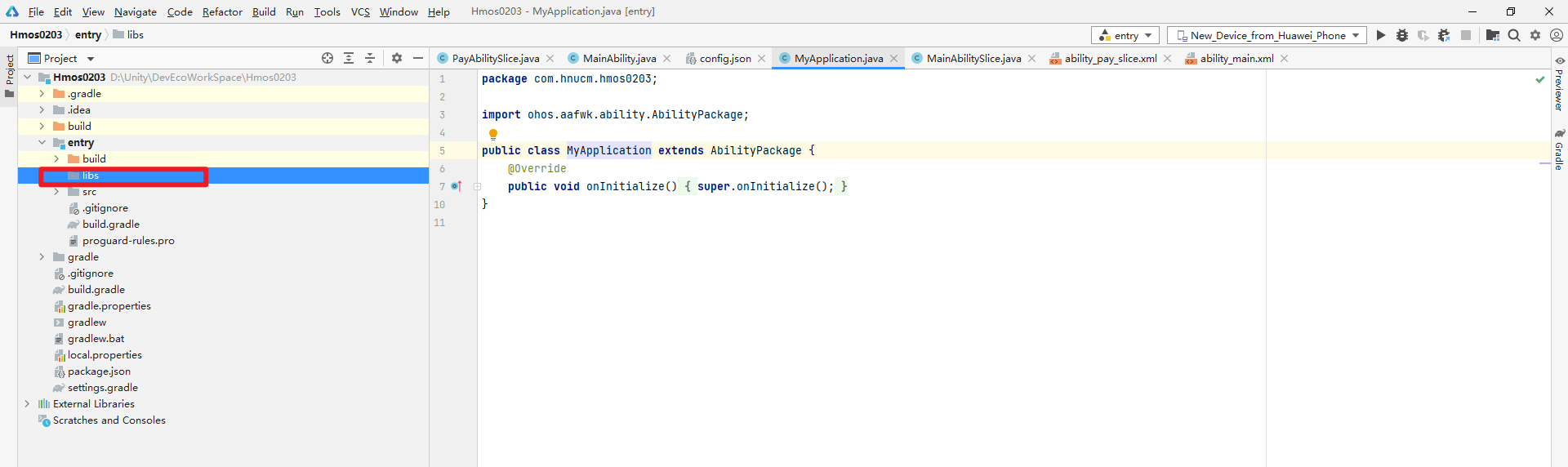
"Harmonyos" explore harmonyos applications
![[untitled]](/img/42/5e8b62edc0aa289098425b26df2453.jpg)
[untitled]

『牛客|每日一题』有效括号序列
力扣——4. 寻找两个正序数组的中位数

『期末复习』16/32位微处理器(8086)基本寄存器

Address resolution ARP Protocol
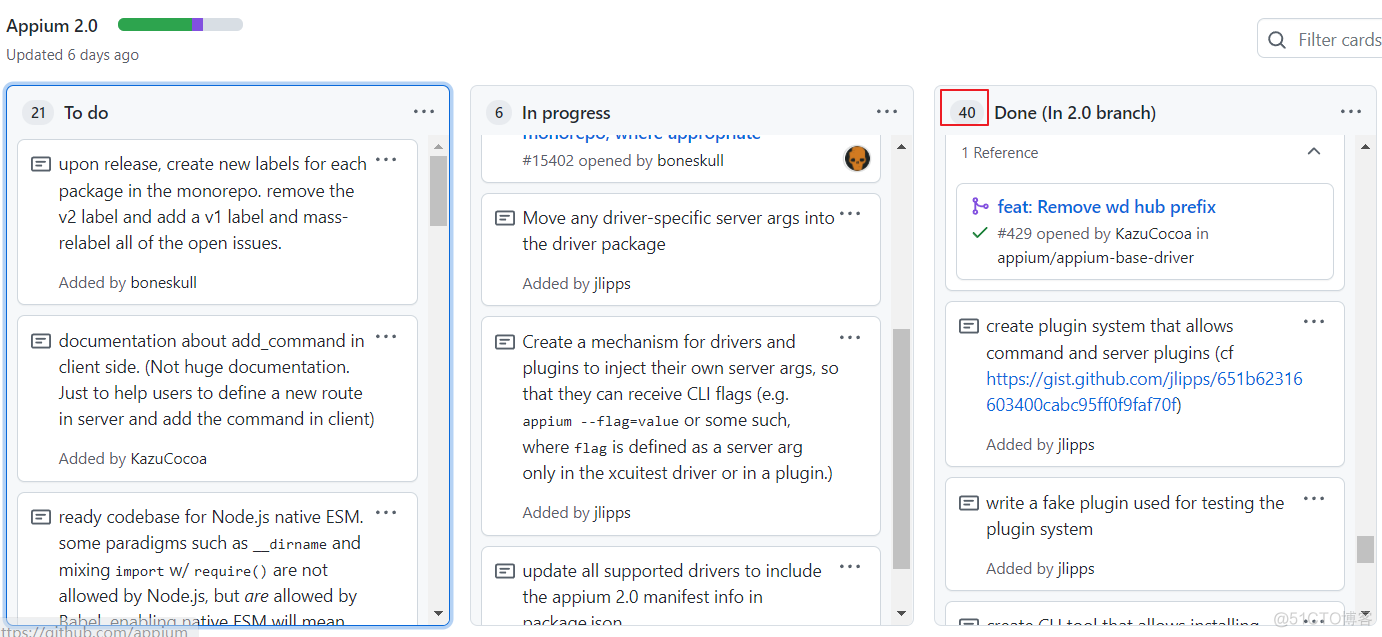
Upgrade appium automation framework to the latest 2.0

Decomposing a positive integer into prime factors requires decomposing into as many factors as possible.
随机推荐
Force deduction 5: Longest palindrome substring
C#使用log4net插件,输出日志到文件
Use and analysis of show profile optimized by MySQL
@Constructorproperties annotation understanding and its corresponding usage
[1] Basic knowledge of mathematical modeling
"Harmonyos" explore harmonyos applications
堆排序(heap-sort)
BPG notes (IV)
Advanced C language - archived address book (file)
Design principle of infrared circuit of single chip microcomputer
Go的map字典及约束
Database and the future of open source
抖音web端 s_v_web_id 参数生成分析与实现
UIToolkit工具模板工程
Force buckle - 3. Longest substring without repeated characters
Open includeexceptiondetailinfaults on the server (from servicebehaviorattribute or from & lt; servicedebug & gt; to configure behavior) to send exception information back
力扣——3. 无重复字符的最长子串
Experimental flags: --disable_ admission_ control=false --enable_ rm=false --llama_ callback_ port=28000
MySQL optimized index and index invalidation
What are the main reasons for server crash