当前位置:网站首页>June 10, 2022: Captain Shu crosses a sweet potato field from north to South (m long from north to South and N wide from east to West). The sweet potato field is divided into 1x1 squares. He can start
June 10, 2022: Captain Shu crosses a sweet potato field from north to South (m long from north to South and N wide from east to West). The sweet potato field is divided into 1x1 squares. He can start
2022-06-11 04:03:00 【Fuda scaffold constructor's daily question】
2022-06-10: The potato captain crosses a sweet potato field from north to south ( North and South length M, East-West width N), The sweet potato field is divided into 1x1 Of the lattice ,
He can start from any grid in the North , Get to any grid in the South ,
But each step can only go to the southeast 、 due south 、 One of the three grids in the southwest ,
And you can't step out of the sweet potato field , He can get all the sweet potatoes on the grid , How many sweet potatoes can he get .
From little red book , The first question in the little red book .
answer 2022-06-10:
Dynamic programming .dp It's a two-line grid .dp[0] It's plus arr[i][j] Array of previous maximum values .dp[1] It's plus arr[i][j] After that, the maximum value array .
dp[1][j]=arr[i][j]+max(dp[0][j-1],dp[0][j],dp[[0][j+1]). The future is uncertain , But the past is certain .dp[0] For the past ,dp[1] Select the best direction according to the past three directions .
Time complexity :O(MN).
Spatial complexity :O(N). Occupy two rows of cells .
The code to use rust To write . The code is as follows :
fn main() {

    let mut map: Vec<Vec<i32>> = vec![
        vec![3, 5, 6, 2, 4],
        vec![7, 8, 9, 1, 1],
        vec![1, 2, 3, 4, 5],
    ];
    let ans = max_score(&mut map);
    println!("ans = {}", ans);
    let mut map: Vec<Vec<i32>> = vec![
        vec![3, 5, 6, 2, 4],
        vec![7, 8, 9, 1, 1],
        vec![1, 2, 3, 4, 5],
    ];
    let ans = max_score2(&mut map);
    println!("ans = {}", ans);
    let mut map: Vec<Vec<i32>> = vec![
        vec![3, 5, 6, 2, 4],
        vec![7, 8, 9, 1, 1],
        vec![1, 2, 3, 4, 5],
    ];
    let ans = max_score3(&mut map);
    println!("ans = {}", ans);
}

fn max_score(map: &mut Vec<Vec<i32>>) -> i32 {

    let mut ans = 0;
    for col in 0..map[0].len() as i32 {

        ans = get_max(ans, process(map, 0, col));
    }
    return ans;
}

fn process(map: &mut Vec<Vec<i32>>, row: i32, col: i32) -> i32 {

    if col < 0 || col == map[0].len() as i32 {

        return -1;
    }
    if row == map.len() as i32 - 1 {

        return map[row as usize][col as usize];
    }
    let cur = map[row as usize][col as usize];
    let next1 = process(map, row + 1, col - 1);
    let next2 = process(map, row + 1, col);
    let next3 = process(map, row + 1, col + 1);
    return cur + get_max(get_max(next1, next2), next3);
}

fn max_score2(map: &mut Vec<Vec<i32>>) -> i32 {

    let mut ans = 0;
    let n = map.len() as i32;
    let m = map[0].len() as i32;
    let mut dp: Vec<Vec<i32>> = vec![];
    for i in 0..n {

        dp.push(vec![]);
        for _ in 0..m {

            dp[i as usize].push(-2);
        }
    }
    for col in 0..map[0].len() as i32 {

        ans = get_max(ans, process2(map, 0, col, &mut dp));
    }
    return ans;
}

fn process2(map: &mut Vec<Vec<i32>>, row: i32, col: i32, dp: &mut Vec<Vec<i32>>) -> i32 {

    if col < 0 || col == map[0].len() as i32 {

        return -1;
    }
    if dp[row as usize][col as usize] != -2 {

        return dp[row as usize][col as usize];
    }
    //  Keep counting !
    let mut ans = 0;
    if row == map.len() as i32 - 1 {

        ans = map[row as usize][col as usize];
    } else {

        let cur = map[row as usize][col as usize];
        let next1 = process2(map, row + 1, col - 1, dp);
        let next2 = process2(map, row + 1, col, dp);
        let next3 = process2(map, row + 1, col + 1, dp);
        ans = cur + get_max(get_max(next1, next2), next3);
    }
    dp[row as usize][col as usize] = ans;
    return ans;
}

//  Optimal method
fn max_score3(map: &mut Vec<Vec<i32>>) -> i32 {

    let n = map.len() as i32;
    let m = map[0].len() as i32;
    let mut dp: Vec<Vec<i32>> = vec![];
    for _ in 0..2 {

        dp.push(map[0].clone());
    }

    for i in 1..n {

        for j in 0..m as i32 {

            dp[1][j as usize] = get_max(
                get_max(
                    dp[0][j as usize],
                    if j - 1 >= 0 {

                        dp[0][(j - 1) as usize]
                    } else {

                        0
                    },
                ),
                if j + 1 < m {

                    dp[0][(j + 1) as usize]
                } else {

                    0
                },
            ) + map[i as usize][j as usize];
        }
        dp[0] = dp[1].clone();
    }

    let mut ans = dp[0][0];
    for i in 1..m {

        ans = get_max(ans, dp[0][i as usize]);
    }

    return ans;
}

fn get_max<T: Clone + Copy + std::cmp::PartialOrd>(a: T, b: T) -> T {

    if a > b {

        a
    } else {

        b
    }
}
The results are as follows :

边栏推荐
- [cnn]|differences between CNN and transformer
- clickjacking漏洞的挖掘与利用
- SQL注入关联分析
- Market prospect analysis and Research Report of Ethernet scanner in 2022
- A - Eddy‘s AC难题(C语言)
- 基于FPGA的一维卷积神经网络CNN的实现(五)数据量化(附代码)
- Manual testing cannot be changed to automated testing. What is missing?
- Run Skynet for the first time
- MAUI 迁移指南
- Record a VMware problem
猜你喜欢

Source Insight 4.0设置注释与反注释的快捷键
大厂外包or自研公司?测试人找工作怎么选?

强烈推荐这款神器,一行命令将网页转PDF!
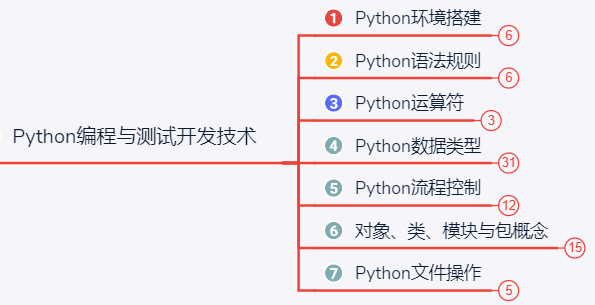
Manual testing cannot be changed to automated testing. What is missing?

6. form label

1_ Attribute management function

Interface performance optimization ideas
![From function test to advanced automation test, I stayed up 7 days to sort out this 3000 word super complete learning guide [with network disk resources]](/img/bd/478558d50aa14320c70d3f8a7b76a5.png)
From function test to advanced automation test, I stayed up 7 days to sort out this 3000 word super complete learning guide [with network disk resources]

Writing shell scripts using vscode

Eth Transfer
随机推荐
基于FPGA的一维卷积神经网络CNN的实现(五)数据量化(附代码)
A Security Analysis Of Browser Extensions
Host computer development (how to develop host computer)
PMM monitoring Oracle
Pthread in the multithreaded Trilogy
Linq. pdf
密码找回功能可能存在的问题(补充)
SQL query users logged in for three consecutive days
After the installation of Damon database is completed, query whether it is case sensitive
Benefits of declaring variables
This artifact is highly recommended. One line command will convert the web page to PDF!
Synchronized locked objects
Market prospect analysis and Research Report of denitrification unit in 2022
What great open source projects does Google have?
Final review of software engineering notes (short answer)
代码复现CSRF攻击并解决它
给孩子的国学经典
Shell script binary encryption
Run Skynet for the first time
雷达辐射源调制信号仿真(代码)