当前位置:网站首页>February 2, 2022: the closest binary search tree value II. Given a non empty two
February 2, 2022: the closest binary search tree value II. Given a non empty two
2022-06-23 02:36:00 【Fuda scaffold constructor's daily question】
2022-02-02: The closest binary search tree value II.
Given a binary search tree that is not empty and a target value target, Please find the closest target value in the binary search tree target Of k It's worth .
Be careful :
Given target value target Is a floating point number ,
You can default k Value is always valid , namely k ≤ Sum up points ,
The title guarantees that there will be only one kind of... In the binary search tree k Sets of values closest to the target value .
expand :
Suppose the binary search tree is balanced , Would you please tell me if you can make it less than O(n)(n To sum up the points ) The time complexity of solving the problem ?
Power button 272.
answer 2022-02-02:
【 Precursor node - The target 】 and 【 Precursor node - The target 】, The closer we get target, Take this node . The precursor node is taken , Left expansion ; Take the rear drive node , Right expansion .
Prepare two stacks , Quick support for finding precursors and successors .
Time complexity : lower than O(N).
Spatial complexity : lower than O(N).
The code to use golang To write . The code is as follows :
package main

import "fmt"

func main() {
    root := &TreeNode{val: 4}
    root.left = &TreeNode{val: 2}
    root.right = &TreeNode{val: 5}
    root.left.left = &TreeNode{val: 1}
    root.left.right = &TreeNode{val: 3}
    ret := closestKValues(root, 3.713286, 2)
    fmt.Println(ret)
}

type TreeNode struct {
    val   int
    left  *TreeNode
    right *TreeNode
}

func NewTreeNode(val int) *TreeNode {
    ans := &TreeNode{}
    ans.val = val
    return ans
}

//  This solution comes from the answer in the discussion area , The optimal solution is easy to understand and beautiful
func closestKValues(root *TreeNode, target float64, k int) []int {
    ret := make([]int, 0)
    // >=8, The nearest node , And we need to quickly find such a structure
    moreTops := make([]*TreeNode, 0)
    // <=8, The nearest node , And we need to quickly find such a structure of precursor
    lessTops := make([]*TreeNode, 0)
    getMoreTops(root, target, &moreTops)
    getLessTops(root, target, &lessTops)
    if len(moreTops) > 0 && len(lessTops) > 0 && moreTops[len(moreTops)-1].val == lessTops[len(lessTops)-1].val {
        getPredecessor(&lessTops)
    }
    for k > 0 {
        k--
        if len(moreTops) == 0 {
            ret = append(ret, getPredecessor(&lessTops))
        } else if len(lessTops) == 0 {
            ret = append(ret, getSuccessor(&moreTops))
        } else {
            diffs := abs(float64(moreTops[len(moreTops)-1].val) - target)
            diffp := abs(float64(lessTops[len(lessTops)-1].val) - target)
            if diffs < diffp {
                ret = append(ret, getSuccessor(&moreTops))
            } else {
                ret = append(ret, getPredecessor(&lessTops))
            }
        }
    }
    return ret
}

func abs(d float64) float64 {
    if d < 0 {
        return -d
    } else {
        return d
    }

}

//  stay root For the head of the tree
//  find >=target, And closest to target The node of
//  And in the process of searching , Just a node x Left , Just put x Put in moreTops in
func getMoreTops(root *TreeNode, target float64, moreTops *[]*TreeNode) {
    for root != nil {
        if root.val == int(target) {
            *moreTops = append(*moreTops, root)
            break
        } else if root.val > int(target) {
            *moreTops = append(*moreTops, root)
            root = root.left
        } else {
            root = root.right
        }
    }
}

//  stay root For the head of the tree
//  find <=target, And closest to target The node of
//  And in the process of searching , Just a node x Go to the right , Just put x Put in lessTops in
func getLessTops(root *TreeNode, target float64, lessTops *[]*TreeNode) {
    for root != nil {
        if root.val == int(target) {
            *lessTops = append(*lessTops, root)
            break
        } else if root.val < int(target) {
            *lessTops = append(*lessTops, root)
            root = root.right
        } else {
            root = root.left
        }
    }
}

//  return moreTops Value of the header of
//  And adjust moreTops :  In order to quickly find the successor node of the return node in the future
func getSuccessor(moreTops *[]*TreeNode) int {
    cur := (*moreTops)[len(*moreTops)-1]
    *moreTops = (*moreTops)[0 : len(*moreTops)-1]
    ret := cur.val
    cur = cur.right
    for cur != nil {
        *moreTops = append(*moreTops, cur)
        cur = cur.left
    }
    return ret
}

//  return lessTops Value of the header of
//  And adjust lessTops :  In order to quickly find the precursor node of the return node in the future
func getPredecessor(lessTops *[]*TreeNode) int {
    cur := (*lessTops)[len(*lessTops)-1]
    *lessTops = (*lessTops)[0 : len(*lessTops)-1]
    ret := cur.val
    cur = cur.left
    for cur != nil {
        *lessTops = append(*lessTops, cur)
        cur = cur.right
    }
    return ret
}
The results are as follows :
边栏推荐
- Evolution history of mobile communication
- Solve the problem that QQ flash photos cannot be saved
- How to batch generate matrix 25 codes
- Hypervisor Necromancy; Recover kernel protector (2)
- Quick sorting C language code + auxiliary diagram + Notes
- Soft exam information system project manager_ Information system comprehensive testing and management - Senior Information System Project Manager of soft test 027
- Supervisor multi process management exception automatic restart visual management
- Deep analysis of time complexity
- How to customize a finished label template
- Get the structure of the class through reflection, little chestnut
猜你喜欢

Analog Electronic Technology

Deep learning environment configuration (III) pytorch GPU under Anaconda
CSDN browser assistant for online translation, calculation, learning and removal of all advertisements

1.3-1.4 web page data capture

5. concept of ruler method

My good brother gave me a difficult problem: retry mechanism

what the fuck! If you can't grab it, write it yourself. Use code to realize a Bing Dwen Dwen. It's so beautiful ~!
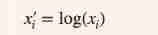
II Data preprocessing

Information theory and coding

5g spectrum
随机推荐
Schedule tasks to periodically restart remote services or restart machines
Deep analysis of time complexity
Google account cannot be logged in & external links cannot be opened automatically & words with words cannot be used
Cut! 39 year old Ali P9 saved 150million
Unity official case nightmare shooter development summary < I > realization of the role's attack function
Evolution history of mobile communication
Reinforcement learning series (III) -gym introduction and examples
Web components series (I) - Overview
Deep scan log4j2 vulnerability using codesec code audit platform
8. greed
A penetration of an internal self built shooting range
The practice of traffic and data isolation in vivo Reviews
Essentials of fleet video playback and fleet videoplayer video playback components
Markdown - enter a score (typora, latex)
[CodeWars]Matrix Determinant
Docker installs mysql5.7 and mounts the configuration file
Mobile communication Overview - Architecture
Anaconda creates a new environment encounter pit
How to make word notes beautiful
Call rest port to implement nailing notification