当前位置:网站首页>324. swinging sort II: not a simple construction problem
324. swinging sort II: not a simple construction problem
2022-06-28 14:39:00 【Gong Shui Sanye's Diary】
Title Description
This is a LeetCode Upper 「324. Swing sort II」 , The difficulty is 「 secondary 」.
Tag : 「 structure 」、「 Sort 」、「 Choose... Quickly 」
Give you an array of integers nums, Rearrange it into nums[0] < nums[1] > nums[2] < nums[3]... The order of .
You can assume that all input arrays can get results that meet the requirements of the topic .
Example 1:
 Input :nums = [1,5,1,1,6,4]

 Output :[1,6,1,5,1,4]

 explain :[1,4,1,5,1,6]  It is also the result that meets the requirements of the topic , It can be accepted by the problem determination program .
Example 2:
 Input :nums = [1,3,2,2,3,1]

 Output :[2,3,1,3,1,2]
Tips :
Topic data assurance , For a given input nums, Always produce results that meet the requirements of the topic
Advanced : You can use Time complexity and / Or in place Extra space to do it ?
structure ( Quick selection + Three number order )
Even if this problem does not consider space Advanced requirements for , Only required In time , stay LC It is also a difficult problem . If it's the first time you've done , And hope that in a limited time ( No more than minute ) Make it inside , It can be said that it is even more difficult .
Essentially , The topic asks us to implement a construction method , To be able to nums Adjust to meet 「 swing 」 requirement .
Specific construction method :
find
numsThe median , This step can be done by 「 Choose... Quickly 」 Algorithm to do , The time complexity is , The space complexity is , Suppose the median found isx;according to And
xThe size of the relationship , take Divided into three categories ( Less than / be equal to / Greater than ), Three types of operations can be divided into 「 Three number order 」 How to do it , The complexity is .When this is done , Our array is adjusted to : , It's divided into 「 Less than
x/ be equal tox/ Greater thanx」 Three paragraph .structure : First put 「 Odd number 」 Subscript , Put again 「 even numbers 」 Subscript , The placement direction is 「 From left to right 」( Subscripts can be placed from small to large ), If the value placed is, then 「 From big to small 」.
Before we get to this point , The upper bound of the space we use is , If there is no requirement for the upper bound of space , We can simply
numsCopy , Then place according to the corresponding logic , But the final space complexity is ( The code is shown ); If you don't want to affect the original upper bound of space , We need an extra pass 「 Looking for a regular / mathematics 」 The way , Find the mapping relationship between the original subscript and the target subscript ( functiongetIdxin ).
It is easy to prove the correctness of the construction process ( That is to say, the tectonic process must be carried out smoothly ): Because we are based on the value 「 From big to small 」 Place , If the constructed scheme is illegal , It must be that two adjacent values are equal (“ It should be increasing but actually decreasing ” perhaps “ It should be decreasing in real terms ” The situation has been 「 From big to small 」 Place rejected ), And when the same value is placed in the adjacent position , That is, there is an odd subscript , And its adjacent even subscripts all have the same value , This is equivalent to that the number of occurrences of this value exceeds half of the total number , This is related to 「 The title itself guarantees that the data can be used to construct a swinging array 」 Conflicts .
Code :
class Solution {
    int[] nums;
    int n;
    int qselect(int l, int r, int k) {
        if (l == r) return nums[l];
        int x = nums[l + r >> 1], i = l - 1, j = r + 1;
        while (i < j) {
            do i++; while (nums[i] < x);
            do j--; while (nums[j] > x);
            if (i < j) swap(i, j);
        }
        int cnt = j - l + 1;
        if (k <= cnt) return qselect(l, j, k);
        else return qselect(j + 1, r, k - cnt);
    }
    void swap(int a, int b) {
        int c = nums[a];
        nums[a] = nums[b];
        nums[b] = c;
    }
    int getIdx(int x) {
        return (2 * x + 1) % (n | 1);
    }
    public void wiggleSort(int[] _nums) {
        nums = _nums;
        n = nums.length;
        int x = qselect(0, n - 1, n + 1 >> 1);
        int l = 0, r = n - 1, loc = 0;
        while (loc <= r) {
            if (nums[getIdx(loc)] > x) swap(getIdx(loc++), getIdx(l++));
            else if (nums[getIdx(loc)] < x) swap(getIdx(loc), getIdx(r--));
            else loc++;
        }
    }
}
class Solution {
    int[] nums;
    int n;
    int qselect(int l, int r, int k) {
        if (l == r) return nums[l];
        int x = nums[l + r >> 1], i = l - 1, j = r + 1;
        while (i < j) {
            do i++; while (nums[i] < x);
            do j--; while (nums[j] > x);
            if (i < j) swap(i, j);
        }
        int cnt = j - l + 1;
        if (k <= cnt) return qselect(l, j, k);
        else return qselect(j + 1, r, k - cnt);
    }
    void swap(int a, int b) {
        int c = nums[a];
        nums[a] = nums[b];
        nums[b] = c;
    }
    public void wiggleSort(int[] _nums) {
        nums = _nums;
        n = nums.length;
        int x = qselect(0, n - 1, n + 1 >> 1);
        int l = 0, r = n - 1, loc = 0;
        while (loc <= r) {
            if (nums[loc] < x) swap(loc++, l++);
            else if (nums[loc] > x) swap(loc, r--);
            else loc++;
        }
        int[] clone = nums.clone();
        int idx = 1; loc = n - 1;
        while (idx < n) {
            nums[idx] = clone[loc--];
            idx += 2;
        }
        idx = 0;
        while (idx < n) {
            nums[idx] = clone[loc--];
            idx += 2;
        }
    }
}
Time complexity : The time complexity of quick selection is ; The sorting complexity of three numbers is . The overall complexity is Spatial complexity : My habit is not to count the extra space consumption caused by recursion , But if it is a topic assignment In terms of space , Obviously, you can't follow your habits , The space complexity of quick selection is . The overall complexity is
Last
This is us. 「 Brush through LeetCode」 The first of the series No.324 piece , The series begins with 2021/01/01, As of the start date LeetCode I have in common 1916 questions , Part of it is a locked question , We will finish all the questions without lock first .
In this series , In addition to explaining the idea of solving problems , And give the most concise code possible . If the general solution is involved, there will be corresponding code templates .
In order to facilitate the students to debug and submit code on the computer , I've built a warehouse :https://github.com/SharingSource/LogicStack-LeetCode .
In the warehouse address , You can see the links to the series 、 The corresponding code of the series 、LeetCode Links to the original problem and other preferred solutions .
More, more, more popular 「 written examination / interview 」 Relevant information can be found in the beautifully arranged Gather new bases
边栏推荐
- [binary tree] allocate coins in the binary tree
- Tencent was underweight again by prosus, the major shareholder: the latter also cashed out $3.7 billion from JD
- Open source invites you to participate in openinfra days China 2022. Topic collection is in progress ~
- 智联招聘基于 Nebula Graph 的推荐实践分享
- 配置文件加密(Jasypt的简单使用)
- 机器人的运动范围(DFS)
- 基于asp.net的文献检索系统
- PMP认证证书的续证费用是多少?
- Unable to create process using 'd:\program file
- Leetcode(167)——两数之和 II - 输入有序数组
猜你喜欢

【中移芯昇】5. spi接口测试tf卡
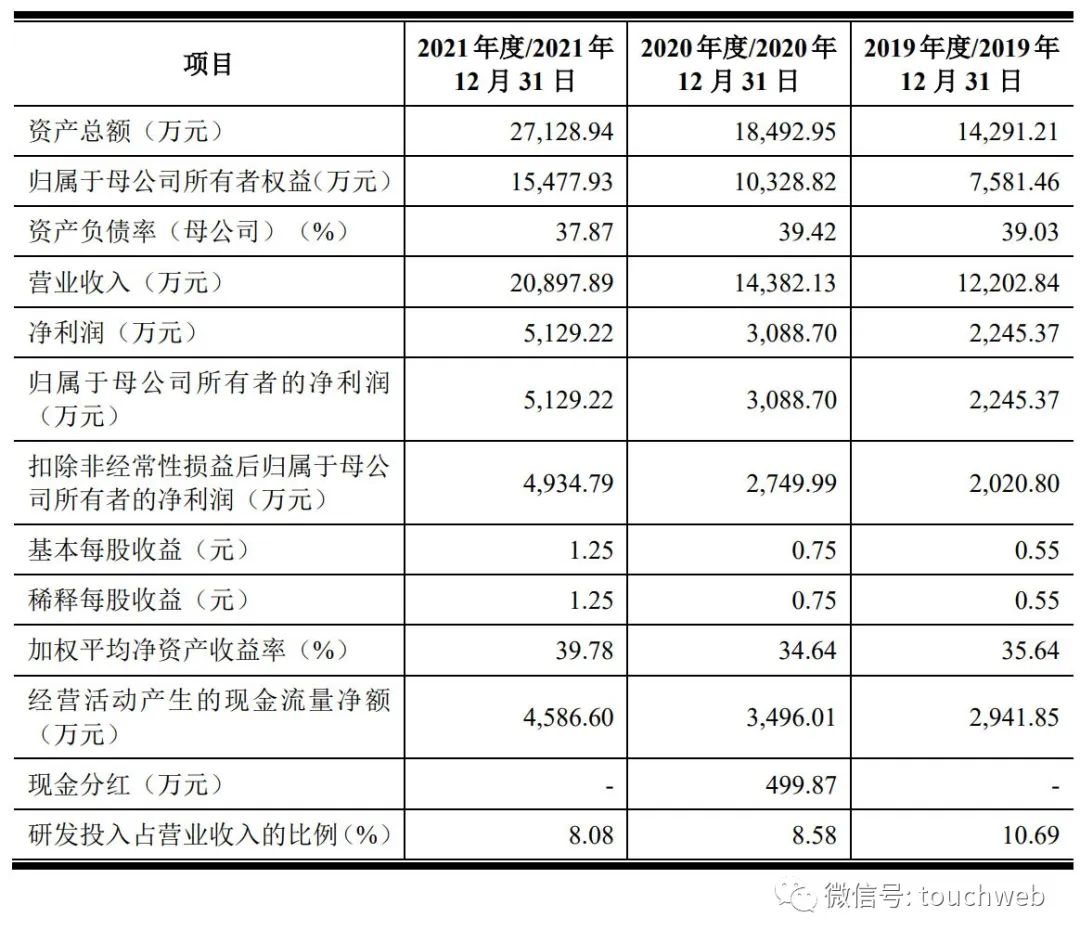
Jingyuan's safe sprint to the Growth Enterprise Market: it plans to raise 400million yuan for investment and Yunyou software is the shareholder

IonQ联合GE Research证实:量子计算在风险聚合上有巨大潜力
![[MySQL learning notes 23] index optimization](/img/08/644fddf2521b47de41dff99ebaad56.png)
[MySQL learning notes 23] index optimization

Why can't Bert completely kill the BM25??

推荐四款可视化工具,解决 99% 的可视化大屏项目!

基于MATLAB的混沌数字图像加密技术研究与仿真实现
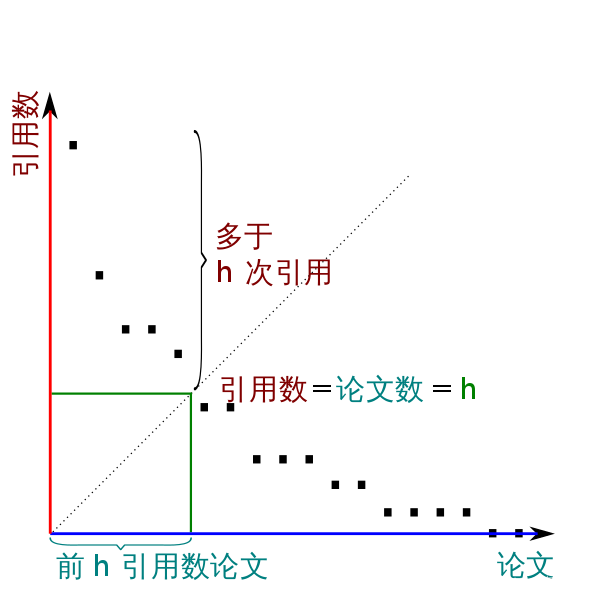
干货 | 科研人的KPI怎么算,H指数和G指数是什么

猫狗图像数据集上的深度学习模型性能对比

线程的生命周期以及其中的方法
随机推荐
Introduction to common components of IOT low code platform
openGauss内核:SQL解析过程分析
从小小线虫谈起——溯源神经系统进化,开启生命模拟
PC Museum - familiar and strange ignorant age
What are the consequences of opening an account with Huatai Securities? How to open an account is the safest
Q-Tester 3.2:适用于开发、生产和售后的诊断测试软件
由两个栈组成的队列
Youju new material rushes to Shenzhen Stock Exchange: it plans to raise 650million yuan, with an annual revenue of 333million yuan
@ControllerAdvice + @ExceptionHandler 全局处理 Controller 层异常
安杰思医学冲刺科创板:年营收3亿 拟募资7.7亿
How to count dimensions of foreign trade E-mail Promotion
What is the renewal fee for PMP certificate?
Why can't Bert completely kill the BM25??
Thread life cycle and its methods
【mysql学习笔记23】索引优化
解决Unable to create process using ‘D:\Program File
2022 questions d'examen pour les cuisiniers chinois (Senior) et l'examen de simulation en ligne
组合总和-Leetcode
【数字IC精品文章收录】近500篇文章|学习路线|基础知识|接口|总线|脚本语言|芯片求职|安全|EDA|工具|低功耗设计|Verilog|低功耗|STA|设计|验证|FPGA|架构|AMBA|书籍|
The time schedule for the soft test in the second half of 2022 has been determined!