当前位置:网站首页>【无标题】2022-7-24
【无标题】2022-7-24
2022-08-03 03:27:00 【骑驴_找马】
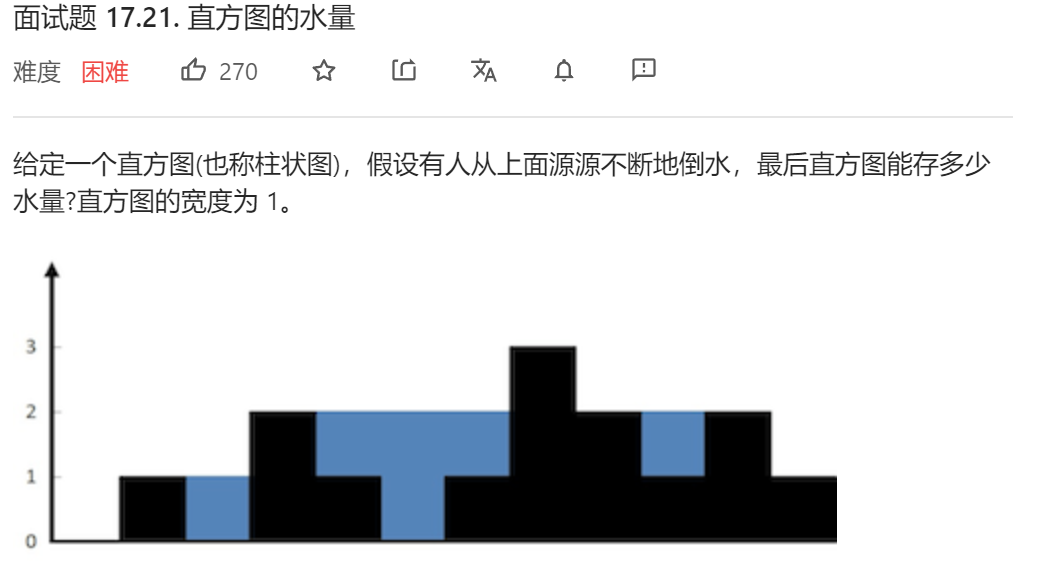
先正序计算每个位置左max
倒序计算每个位置右max
当前水位 = min(左max,右max)- 当前高度
蓄水量为各个位置蓄水量求和
#include<stdio.h>
#include<stdlib.h>
#include<string.h>
int trap(int* height, int heightSize){
	int out=0,max=0;
	int *tl=(int*)malloc(sizeof(int)*heightSize);
	memset(tl,0,heightSize);
	for(int i=1;i<heightSize;i++){
		max=max<height[i-1]?height[i-1]:max;
		tl[i]=max;

	}
	max=0;
	for(int i=heightSize-2;i>0;i--){
		max=max<height[i+1]?height[i+1]:max;
		int t=max<tl[i]?max:tl[i];
		t=t-height[i];
		if(t>0){
			out+=t;

		}
	}
	return out;
}
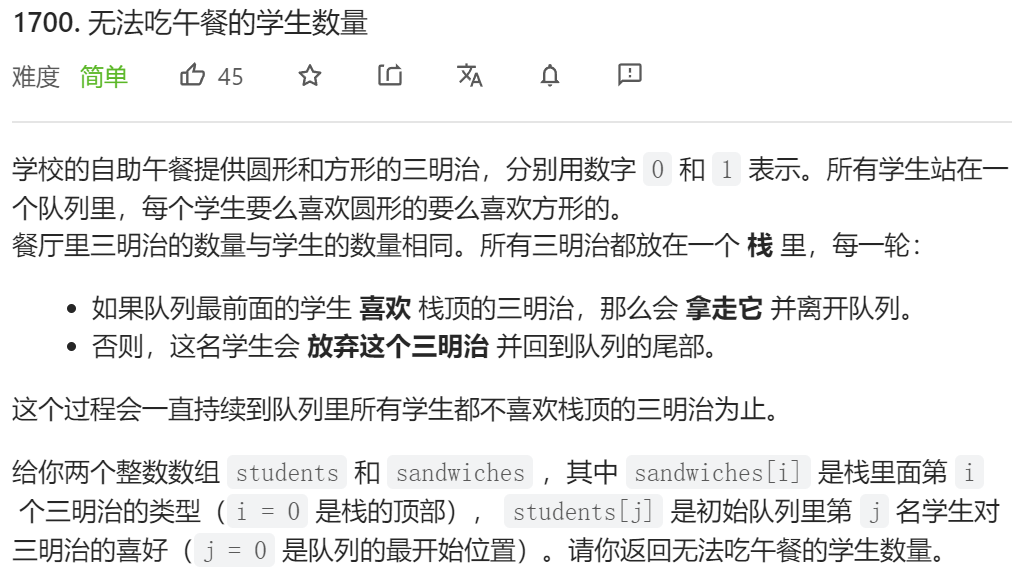
如果喜欢栈顶的甜点的学生存在,那么不管他们在队伍的哪个位置,必定会遍历到他。否则,一定无法继续拿掉栈顶甜点。
int countStudents(int* students, int studentsSize, int* sandwiches, int sandwichesSize){
    int arr[2];
    memset(arr, 0, sizeof(arr));
    for (int i=0; i<studentsSize; ++i) {
        ++arr[students[i]];
    }
    for (int i=0; i<sandwichesSize; ++i) {
        if (arr[sandwiches[i]] == 0) break;
        --arr[sandwiches[i]];
    }
    return arr[0] + arr[1];
}
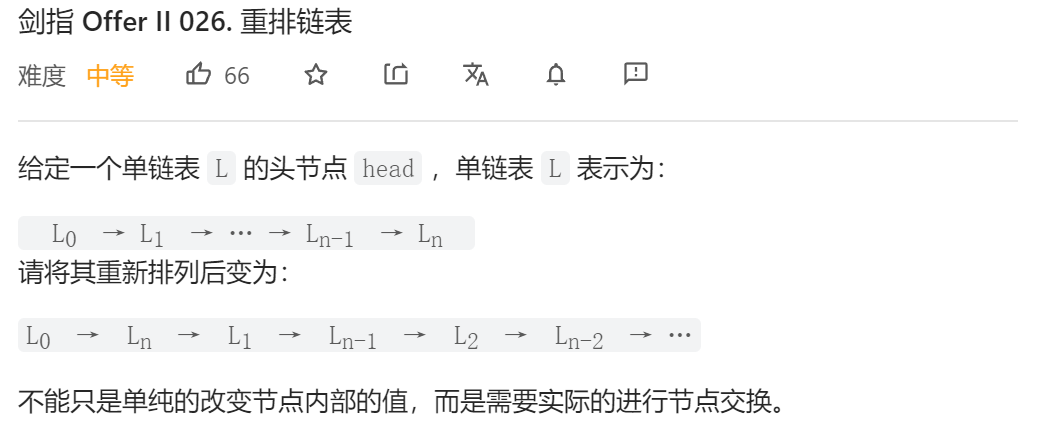
先使用快慢指针找中点
反转后半部分链表
交叉合并两个链表
void reorderList(struct ListNode* head){

    struct ListNode *tmp = head;
    int ListLen = 1;
    while (tmp->next != NULL) {
        ListLen++;
        tmp = tmp->next;
    }

    struct ListNode **ListArry = malloc(sizeof(struct ListNode*) * ListLen);

    tmp = head;
    int i = 0;
    while (tmp->next != NULL) {
        ListArry[i] = tmp;
        i++;
        tmp = tmp->next;
    }
    ListArry[i] = tmp;

    tmp = head;
    struct ListNode *tmp2 = NULL;
    for (int i = 0; i < ListLen / 2; i++) {
        tmp2 = tmp->next;
        tmp->next = ListArry[ListLen - 1 - i];
        tmp = tmp->next;
        tmp->next = tmp2;
        tmp = tmp->next;
    }

    tmp->next = NULL;
}
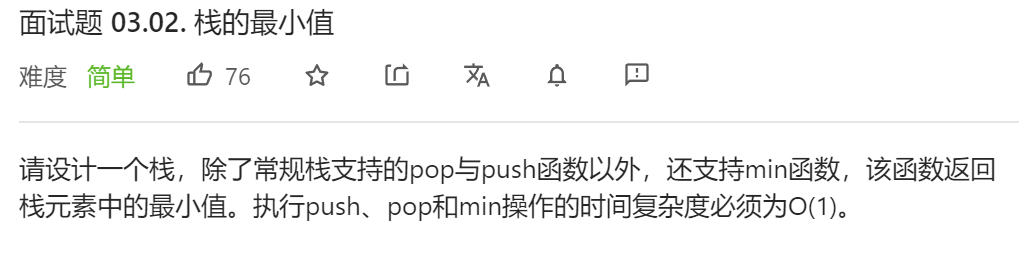
typedef struct minstack{
    int val;
    int size;
    struct minstack *next;
    struct minstack *top;

} MinStack;

/** initialize your data structure here. */


MinStack* minStackCreate() {
    MinStack *root = (MinStack *)malloc(sizeof(MinStack));
    root->next = NULL;
    root->size = 0;
    root->top = NULL;
    return root;
}


void minStackPush(MinStack* obj, int x) {//入栈
    MinStack *node = minStackCreate();
    node->val = x;
    node->next = obj->top;
    obj->top = node;
    obj->size++;
}


void minStackPop(MinStack* obj) {//出栈
    if(obj->size == 0) return;
    MinStack *cur = obj->top;
    obj->top = obj->top->next;
    obj->size--;
    free(cur);
}


int minStackTop(MinStack* obj) {//获取栈顶的值
    if(obj->size == 0) return 0;
    return obj->top->val;
}


int minStackGetMin(MinStack* obj) {
    MinStack *cur = obj;
    MinStack *top = obj->top;
    if(cur->size == 0) return 0;
    int minret = cur->top->val;
    int size = cur->size;
    while(size--)
    {
        int temp = cur->top->val;
        minret = minret < temp ? minret : temp;
        cur->top = cur->top->next;

    }

    cur->top = top;
    return minret;
}

void minStackFree(MinStack* obj) {
    if(obj->size == 0)
    {
        return;
    }

    while(obj->size > 0)
    {
        MinStack *temp = obj->top;
        obj->top = obj->top->next;
        free(temp);
        obj->size--;
    }
}

用两个栈实现队列的入队、出队
一个栈只进行入栈,相当于入队
另一个栈只进行出栈,相当于出队
typedef struct {
    int top1; //栈1的栈顶指针
    int top2; //栈2的栈顶指针
    int size; //栈的大小
    int count; //队列中的元素个数
    int *S1; //栈1
    int *S2; //栈2
} MyQueue;

/** Initialize your data structure here. */
//初始化两个栈
MyQueue* myQueueCreate() {
    MyQueue* queue = (MyQueue*)malloc(sizeof(MyQueue));
    queue->top1 = -1;
    queue->top2 = -1;
    queue->size = 100;
    queue->count = 0;  //队列中当前元素个数0
    queue->S1 = (int*)malloc(queue->size * sizeof(int));
    queue->S2 = (int*)malloc(queue->size * sizeof(int));

    return queue;
}


void myQueuePush(MyQueue* obj, int x) {
    if(obj->top1 == -1)
    {
        while(obj->top2 != -1)
        {
            obj->S1[++obj->top1] = obj->S2[obj->top2--]; //将栈2中的所有元素保存到栈1
        }
    }
    obj->S1[++obj->top1] = x; //新元素入栈相当于入队

    obj->count++; //队列元素个数加一
}

int myQueuePop(MyQueue* obj) {
    if(obj->top2 == -1)
    {
        while(obj->top1 != -1)
        {
            obj->S2[++obj->top2] = obj->S1[obj->top1--]; //将栈1中的元素保存到栈2中
        }
    }
    obj->count--;
    return obj->S2[obj->top2--];

}

/*查看队头元素,即查看栈2的栈顶元素*/
int myQueuePeek(MyQueue* obj) {
    if(obj->top2 == -1)
    {
        while(obj->top1 != -1)
        {
            obj->S2[++obj->top2] = obj->S1[obj->top1--];
        }
    }
    return obj->S2[obj->top2];
}

/*队列为空返回true,否则返回false */
bool myQueueEmpty(MyQueue* obj) {
    if(obj->count == 0)
        return true;
    else
        return false;
}

void myQueueFree(MyQueue* obj) {
    free(obj->S1);
    free(obj->S2);
    free(obj);
}
SVM
想要的就是找到各类样本点到超平面的距离最远,也就是找到最大间隔超平面。任意超平面可以用下面这个线性方程来描述:
w(T)*x+b=0
二维空间点 (x,y) 到直线 Ax+By+C=0 的距离公式是:

扩展到 n 维空间后,点 x=(x1,x2…xn) 到直线 wTx+b=0 的距离为:

假设有一个超平面H:ωTx+b=0能正确地将样本划分开来,那么同时也肯定存在两个平行于H的平面H1和H2:
H1:ωTx+b=1
H2:ωTx+b=1
距离超平面 H距离最近的正负样本正好就分别在H1和 H2上,而这样的样本就是 支持向量。
对于任意样本 (xi,yi)有,若 yi=1,即为正样本,满足 ωTxi+b>0;若 yi=−1,即为负样本,满足 ω(T)xi+b<0。
令:

使用之前推出的任意点 xx到超平面的距离的公式,不难发现,超平面H1H1和 H2H2之间的距离是:
这个东西就叫做 间隔。
而SVM的目标是就是找到一个超平面,使得 间隔取到最大值,同时也要能保证正确地划分正负样本。
超平面由法向量w和截距b决定,法向量指向的一侧为正类,另一侧为负类
函数间隔
在超平面wx+b=0确定的情况下,|wx+b|能够相对地表示点x距离超平面的远近。wx+b的符号与类标记y的符号是否一致能够表示分类是否正确。所以可用变量y(wx+b)来表示分类的正确性及确信度-统计学习方法(李航)
函数间隔可以表示分类预测的正确性及准确度,但是选择分类超平面时,只有函数间隔还不够,因为只要成比例地改变w和b,,比如说2w和2b,超平面并没有改变,但是函数间隔却称为原来的2倍
几何间隔
统计学习方法

最大间隔分类器Maximum Margin Classifier的定义
对一个数据点进行分类,当超平面离数据点的“间隔”越大,分类的确信度(confidence)也越大。所以,为了使得分类的确信度尽量高,需要让所选择的超平面能够最大化这个“间隔”值。这个间隔就是下图中的Gap的一半。
很喜欢统计学习方法中关于最大间隔的描述:
不仅将正负实例点分开,而且对最难分的实例点(离超平面最近的点)也有足够大的确信度将它们分开,这样的超平面应该对未知的新实例有很好的分类预测能力-统计学习方法

统计学习方法中关于最大间隔法

虚线上的点便叫做支持向量Support Vector,在线性可分情况下,训练数据集的样本点中与分离超平面最近的样本点的实例
满足公式:y(wx+b)-1=0

在决定分离超平面时只有支持向量起作用
统计学习方法Page:115定义
深入SVM
学习的对偶算法
应用拉格郎日对偶性,通过求解对偶问题(dual problem)得到原始问题(primal problem)的最优解,这就是线性可分支持向量机的对偶算法(dual algorithm),优点为对偶问题更容易求解,引入核函数,进而推广到非线性分类问题

求解步骤
将拉格郎日函数L(w,b,a)分别对w,b求偏导数并令其等于0
将以上的结果代入之前的L
边栏推荐
猜你喜欢
PyTorch installation - error when building a virtual environment in conda before installing PyTorch

Sentinel vs Hystrix 限流对比,到底怎么选?
记录学习--Navicat使用自定义数据库列表
【obs】启动推流失败 : Output.StartStreamFailed 调用流程
leetcode:151. 颠倒字符串中的单词
(一)Nacos注册中心集群环境搭建
如何画一张架构图(内含知识图谱)
Redshift贴logo的方法

Kotlin 乘法、我怎么越乘越小?

浅谈用KUSTO查询语言(KQL)在Azure Synapse Analytics(Azure SQL DW)审计某DB账号的操作记录
随机推荐
Base64编码原理
2022-08-01 顾宇佳 学习笔记
Auto.js Pro 编写第一个脚本hello world
stdio.h(本机代码)
成都高新南区 高新西区 东部新区 多边形范围点位 AOI 高德
15【背景 渐变色】
vscode access denied to unins000.exe
Kotlin multiplication, how do I multiply smaller and smaller?
一文了解SAP IBP是什么?
道通转债,微芯转债,博22转债上市价格预测
企业上云规划与云原生环境设计
使用docker容器搭建MySQL主从复制
【原创】Auto.js get和post 案例
Jincang Database Pro*C Migration Guide (3. KingbaseES Pr*oc Compatibility with Oracle Pro*c)
软件测试个人求职简历该怎么写,模板在这里
对话框管理器第四章:对话框消息循环
uniapp运行到手机,基座提示本应用无法独立运行,需要与hbuilderX 搭配使用
C语言实验十二 指针(二)
找不到符号@SuperBuilder,你以为真的是Lombok的问题?
DPDK mlx5 驱动使用报错