当前位置:网站首页>scipy.sparse.csr_matrix
scipy.sparse.csr_matrix
2022-07-26 02:17:00 【Wanderer001】
参考 https://cloud.tencent.com/developer/article/1525065
class scipy.sparse.csr_matrix(arg1, shape=None, dtype=None, copy=False)[source]
Compressed Sparse Row matrix
This can be instantiated in several ways:
csr_matrix(D)
with a dense matrix or rank-2 ndarray D
csr_matrix(S)
with another sparse matrix S (equivalent to S.tocsr())
csr_matrix((M, N), [dtype])
to construct an empty matrix with shape (M, N) dtype is optional, defaulting to dtype=’d’.
csr_matrix((data, (row_ind, col_ind)), [shape=(M, N)])
where data, row_ind and col_ind satisfy the relationship a[row_ind[k], col_ind[k]] = data[k].
csr_matrix((data, indices, indptr), [shape=(M, N)])
is the standard CSR representation where the column indices for row i are stored in indices[indptr[i]:indptr[i+1]] and their corresponding values are stored in data[indptr[i]:indptr[i+1]]. If the shape parameter is not supplied, the matrix dimensions are inferred from the index arrays.
Notes
Sparse matrices can be used in arithmetic operations: they support addition, subtraction, multiplication, division, and matrix power.
Advantages of the CSR format
efficient arithmetic operations CSR + CSR, CSR * CSR, etc.
efficient row slicing
fast matrix vector products
Disadvantages of the CSR format
slow column slicing operations (consider CSC)
changes to the sparsity structure are expensive (consider LIL or DOK)
Examples
>>> import numpy as np
>>> from scipy.sparse import csr_matrix
>>> csr_matrix((3, 4), dtype=np.int8).toarray()
array([[0, 0, 0, 0],
       [0, 0, 0, 0],
       [0, 0, 0, 0]], dtype=int8)

>>>

>>> row = np.array([0, 0, 1, 2, 2, 2])
>>> col = np.array([0, 2, 2, 0, 1, 2])
>>> data = np.array([1, 2, 3, 4, 5, 6])
>>> csr_matrix((data, (row, col)), shape=(3, 3)).toarray()
array([[1, 0, 2],
       [0, 0, 3],
       [4, 5, 6]])

>>>

>>> indptr = np.array([0, 2, 3, 6])
>>> indices = np.array([0, 2, 2, 0, 1, 2])
>>> data = np.array([1, 2, 3, 4, 5, 6])
>>> csr_matrix((data, indices, indptr), shape=(3, 3)).toarray()
array([[1, 0, 2],
       [0, 0, 3],
       [4, 5, 6]])
As an example of how to construct a CSR matrix incrementally, the following snippet builds a term-document matrix from texts:
>>> docs = [["hello", "world", "hello"], ["goodbye", "cruel", "world"]]
>>> indptr = [0]
>>> indices = []
>>> data = []
>>> vocabulary = {}
>>> for d in docs:
...     for term in d:
...         index = vocabulary.setdefault(term, len(vocabulary))
...         indices.append(index)
...         data.append(1)
...     indptr.append(len(indices))
...
>>> csr_matrix((data, indices, indptr), dtype=int).toarray()
array([[2, 1, 0, 0],
       [0, 1, 1, 1]])
Attributes
nnz Number of stored values, including explicit zeros.
has_sorted_indices Determine whether the matrix has sorted indices
dtype (dtype) Data type of the matrix
shape (2-tuple) Shape of the matrix
ndim (int) Number of dimensions (this is always 2)
data CSR format data array of the matrix
indices CSR format index array of the matrix
indptr CSR format index pointer array of the matrix
Methods
arcsin() Element-wise arcsin.
arcsinh() Element-wise arcsinh.
arctan() Element-wise arctan.
arctanh() Element-wise arctanh.
asformat(format) Return this matrix in a given sparse format
asfptype() Upcast matrix to a floating point format (if necessary)
astype(t)
ceil() Element-wise ceil.
check_format([full_check]) check whether the matrix format is valid
conj()
conjugate()
copy()
count_nonzero() Number of non-zero entries, equivalent to
deg2rad() Element-wise deg2rad.
diagonal() Returns the main diagonal of the matrix
dot(other) Ordinary dot product
eliminate_zeros() Remove zero entries from the matrix
expm1() Element-wise expm1.
floor() Element-wise floor.
getH()
get_shape()
getcol(i) Returns a copy of column i of the matrix, as a (m x 1) CSR matrix (column vector).
getformat()
getmaxprint()
getnnz([axis]) Number of stored values, including explicit zeros.
getrow(i) Returns a copy of row i of the matrix, as a (1 x n) CSR matrix (row vector).
log1p() Element-wise log1p.
max([axis, out]) Return the maximum of the matrix or maximum along an axis.
maximum(other)
mean([axis, dtype, out]) Compute the arithmetic mean along the specified axis.
min([axis, out]) Return the minimum of the matrix or maximum along an axis.
minimum(other)
multiply(other) Point-wise multiplication by another matrix, vector, or scalar.
nonzero() nonzero indices
power(n[, dtype]) This function performs element-wise power.
prune() Remove empty space after all non-zero elements.
rad2deg() Element-wise rad2deg.
reshape(shape[, order]) Gives a new shape to a sparse matrix without changing its data.
rint() Element-wise rint.
set_shape(shape)
setdiag(values[, k]) Set diagonal or off-diagonal elements of the array.
sign() Element-wise sign.
sin() Element-wise sin.
sinh() Element-wise sinh.
sort_indices() Sort the indices of this matrix in place
sorted_indices() Return a copy of this matrix with sorted indices
sqrt() Element-wise sqrt.
sum([axis, dtype, out]) Sum the matrix elements over a given axis.
sum_duplicates() Eliminate duplicate matrix entries by adding them together
tan() Element-wise tan.
tanh() Element-wise tanh.
toarray([order, out]) See the docstring for spmatrix.toarray.
tobsr([blocksize, copy]) Convert this matrix to Block Sparse Row format.
tocoo([copy]) Convert this matrix to COOrdinate format.
tocsc([copy])
tocsr([copy]) Convert this matrix to Compressed Sparse Row format.
todense([order, out]) Return a dense matrix representation of this matrix.
todia([copy]) Convert this matrix to sparse DIAgonal format.
todok([copy]) Convert this matrix to Dictionary Of Keys format.
tolil([copy]) Convert this matrix to LInked List format.
transpose([axes, copy]) Reverses the dimensions of the sparse matrix.
trunc() Element-wise trunc.
边栏推荐
- [Android development IOS series] Language: swift vs kotlin
- Turn: do the right thing efficiently
- A pluggable am335x industrial control module onboard WiFi module
- 18.删除链表的倒数第n个节点
- 一款可插拔的AM335X工控模块板载wifi模块
- Sqlyog data import and export graphic tutorial
- I.MX6UL核心模块使用连载-USB接口测试 (六)
- Postman报Json序列化错误
- Error reporting caused by local warehouse
- Activiti workflow gateway
猜你喜欢
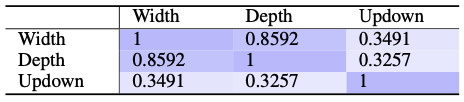
DialogRPT-Dialog Ranking Pretrained Transformers

微信小程序解密并拆包获取源码教程

A pluggable am335x industrial control module onboard WiFi module

Illustration of the insertion process of b+ tree

Worthington nuclease and Micrococcus related research and determination scheme

Sword finger offer 28. symmetric binary tree

i.MX6ULL SNVS电源域GPIO状态保持验证
i. Mx6ull snvs power domain GPIO status hold verification
【LeetCode】32、 最长有效括号
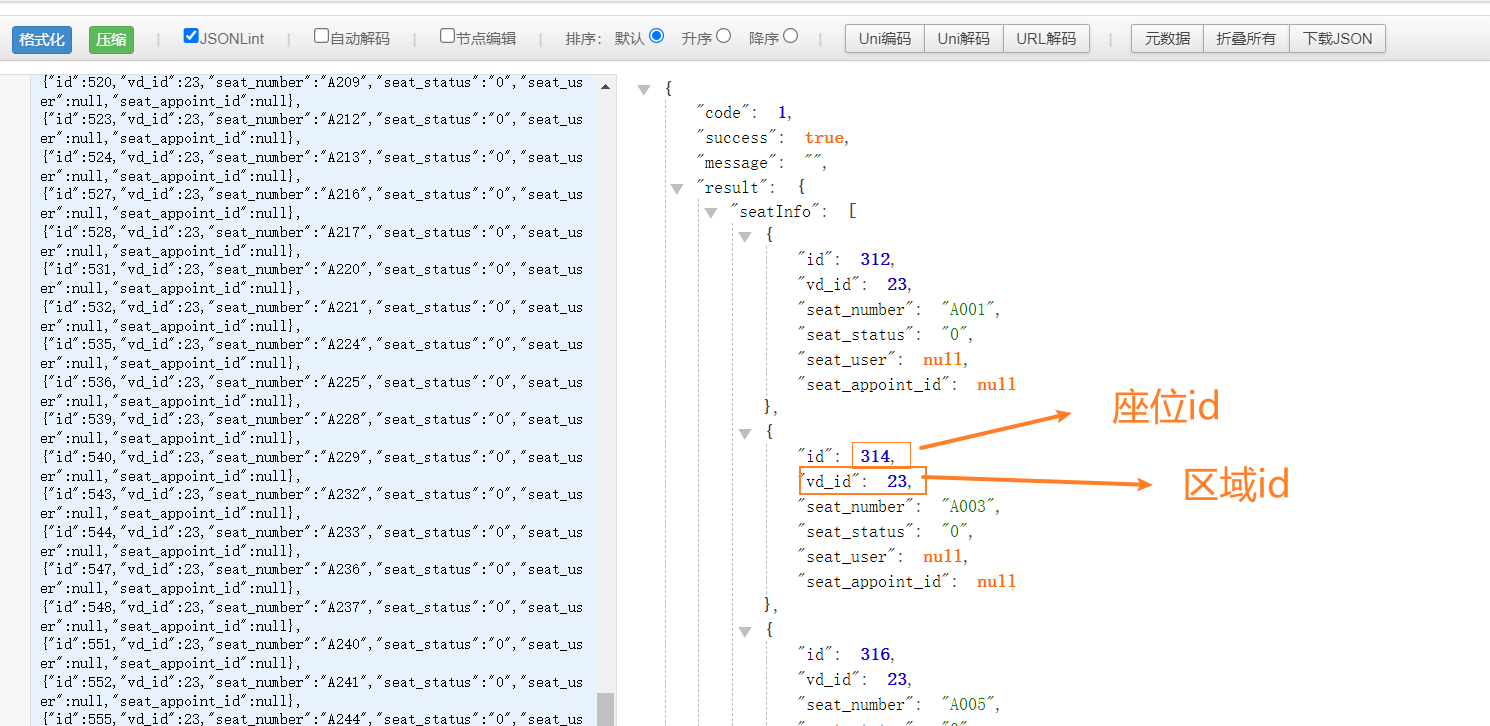
我来图书馆小程序一键签到和一键抢位置工具
随机推荐
17_表单数据
力扣148:排序链表
[xxl-job] xxl-job learning
I.MX6UL核心模块使用连载-触摸屏校准 (九)
还在用==0 null equal 判断空值吗,对isEmpty 和 isBlank有多少了解呢
3. Upload the avatar to qiniu cloud and display it
Build embedded development environment and FRP penetration under win
Composition API的优势
Be careful about bitmap, the "memory Assassin"~
【红队】ATT&CK - 利用BITS服务实现持久化
国标GB28181协议视频平台EasyGBS消息弹框模式优化
1. Mx6ul core module serial WiFi test (VIII)
【LeetCode】32、 最长有效括号
I.MX6UL核心模块使用连载-nand flash读写测试 (三)
Postman报Json序列化错误
i.MX6ULL SNVS电源域GPIO状态保持验证
【PyQt5打包为exe】
【2019】【论文笔记】基于超材料可调谐THz宽频吸收——
由一个数据增量处理问题看到技术人员的意识差距
[2019] [paper notes] tunable THz broadband absorption based on metamaterials——