当前位置:网站首页>Different JVM
Different JVM
2022-06-24 18:23:00 【Autumn rain——】
Preface : Reading needs a certain foundation , Not suitable for the first time JVM The crowd . Some languages are concise , There are some knowledge points or a stroke of knowledge , I don't know that I need to consult the information in detail , The purpose of this article is to supplement JVM Some details , Something a little deeper , Some easily overlooked places , I believe that reading this article will make you feel different from reading eight part essay in the past . More knowledge will be added later . Because the knowledge in this article helps to supplement the knowledge , In some places, if you write in detail , It may take a lot of space , So I selected several links , Their articles are all good , I have seen it , Eat with ease . It is suitable for the people who will be interviewed .( This article does not record the very conventional eight - Part )
List of articles
Memory area
Pile up
- Methods for allocating objects on the heap : Pointer collisions and free lists .
Pointer collision requires pointer movement when the heap memory is regular , Memory needed to move ( It depends on whether the garbage collector has compression ).
The free list records memory usage .
The methods to solve the concurrency problem are :CAS, Failure to retry ;TLAB( Allocate a block of memory for each thread , Not enough to apply , Use your own )
How to access objects on the heap : Handles and direct pointers .
Handle :Java The heap divides a chunk of memory into handle pools ,reference The handle address of the object is stored in , The handle contains the specific address of the object instance data and type information .
Direct Pointers :reference The address of the object is stored in .
The former is stable , When the address of an object changes ,reference The address of the handle pointed to does not need to be changed .
The latter is more efficient , One less addressing time .( at present HotSpot The virtual machine uses this )
Method area
Used to store class information loaded by virtual machine 、 Constant 、 static const 、 Real time compiler compiled code 、 Data such as runtime constant pools .
Runtime constant pool 、 Constant pool 、 String constant pool (jdk1.8 after , Put the string constant pool in the heap ) The difference between :
Constant pool :
java File is compiled into class file ,class The file contains only the version of the class 、 Field 、 Method 、 Interface and other description information , And then there's the constant pool , It is used to store various literal and symbol references generated by the compiler .


Runtime constant pool :
JVM When executing a class , Must be loaded 、 Connect 、 initialization , And connection includes verification 、 Get ready 、 Analyze three stages . When the class is loaded into memory ,JVM Will be class The contents of the constant pool are stored in the runtime constant pool ` in , The runtime constant pool is one for each class . It is then converted to a direct reference at parsing and runtime .
String constant pool : Generate string object instances in the heap after the preparation phase , Then the reference value of the string object instance is stored in the string constant pool .
The reference values are stored in the string constant pool , Instead of specific instance objects , Specific instance objects are stored in a piece of space opened in the heap .
Virtual machine stack
OutOfMemoryError: If the virtual machine stack can be expanded dynamically , When expanding, we can't apply enough memory .
StackOverflowError: The stack depth of the thread request is greater than the virtual machine allows .
Local method stack and program counter
JVM Call local method ( Provide interfaces for other languages ); Program counter : The only one that doesn't have OutOfMemoryError The memory area of the situation .
Out of heap memory
Through a store in Java Heap DirectByteBuffer Object operates as a reference to this memory , To avoid the Java Heaps and Native Copying data back and forth between the heaps .
Permanent generation and meta space
Forever (Java7, Heap space ):
A concrete implementation of the permanent proxy method area , Store class related information , For the dynamic production class , It is prone to permanent memory overflow .
To avoid such problems , Put the symbol reference in local memory ; The string constant pool is put in the heap , Static variables are placed on the heap
Meta space (Java8, Local memory ).
Why use Metaspace to replace permanent generation
The string has a permanent generation , Prone to performance problems and memory overflows .
Class and method information is difficult to determine the size , The designation of a permanent agent , Too small is prone to permanent generation overflow , Too big is easy for the old generation to overflow . Dynamic production class loading is easy to occur OOM error . Use Metaspace , Controlled by the actual available space of the system .
The permanent representative will be GC Bring unnecessary complexity , The recovery efficiency is low ( Loaded classes are not usually unloaded )
Is the object really dead
You need to mark it twice , If not in finalize Method is associated with GCRoots, It will be recycled .( The method is not overwritten or has been called , Deemed unnecessary to perform )( Refer to the data for details )
GC ROOT The object contains :
Objects referenced in the virtual machine stack , The object referenced by the class static property in the method area , Constant reference object in method area , Reference object in local method .
strong 、 soft 、 weak 、 Virtual reference
Note the order of adding to the reference queue . Soft references and soft references , After its object is garbage collected , To join the queue ; Virtual references are added before their objects are recycled .( Specific knowledge inquiry materials )
Garbage collector ( Tricolor )
Tricolor notation ( Specific learning needs to be inquired )
White means that you have not been accessed by the garbage collector , If after the analysis , Still white , Will be recycled
The black table object has been accessed by the garbage collector , And all references to this object have been scanned . Black object generation The table has been scanned , It's safe to live , If there are other object references pointing to black objects , No need to scan again . Black objects can't be direct ( Without going through the gray object ) Point to a white object .
gray : Indicates that the object has been accessed by the garbage collector , But at least one reference on this object has not been scanned .

CMS and G1 The garbage collector is running concurrently , There will be misbidding , All of them are operated by three color marking method .
CMS Solution : Write barriers + Incremental updating . Record new references , Black to white .
G1 resolvent : Write barriers +SATB. Record references from gray objects to white objects .
In retag , This part will be rescanned , Prevention of MIS marking .
Floating garbage

After the gray reference is broken , Because it is gray, it will continue to scan , And survive . But it has been associated with GC ROOT No longer connected , So it becomes floating garbage .
- Pay attention to understanding concurrency and parallelism here .
- The new generation generally adopts the replication algorithm ( Each garbage collection can be completed at a small cost of object replication , Because every time the new generation collects, a large number of objects die ), Old age objects have a high probability of survival , Generally, the tag sorting algorithm is used .
When does the subject enter the old age
Big object ( Requires a large amount of memory for continuous ) Directly into the elderly generation ( Such as arrays ).( Because the new generation uses replication algorithms to collect garbage , Large objects go directly into the old generation , To avoid the Eden Area and Survivor A large number of memory copies occur in the area )
Space allocation guarantee : When Eden Area and one of them survivor Zone for garbage collection , Put the living object into another survivor Regional time , But there is not enough space , Can only be Survivor Unable to accommodate objects directly into the old age .
Age judgment :1、 The age counter records the age of the object , Once at a time GC Still alive , Age +1, When the set value is exceeded , Directly into the elderly generation .( It's usually 15).2、 Dynamic object age determination , If in Survivor The sum of all object sizes of the same age in the space is greater than Survivor Half of the space , Those whose age is greater than or equal to that age can enter the old age directly , You don't have to wait until you reach the required age .
Space allocation guarantee :
Safe Minor GC: The largest continuous space available in the old generation is larger than that of all objects in the new generation .
Adventurous Minor GC: The maximum continuous space available in the old generation is greater than the average level of promotion to the old age in previous generations and allows guarantee failure ; If less than the average , Go straight ahead Full GC, Make room for the elderly
Safe points and safe areas
https://www.cnblogs.com/newAndHui/p/12246015.html
Escape analysis
https://cloud.tencent.com/developer/article/1761785
https://blog.csdn.net/chengqiuming/article/details/118639672
Parent delegation model
reason 、 Written by myself Java.lang.String Will it be loaded
http://fengziji.com/blog/10
How to break the parental delegation model ?
Because the process of his parents' appointment is loadClass Method , So you want to destroy this mechanism , Then customize a classloader inheritance ClassLoader, Rewrite one of loadClass() Method , Make it not to be assigned by parents .
Using the thread context class loader .(JDBC The source code of is , Data to be consulted )
reason :JVM Specify a type of loader to load A Class found A Yes B(A a=new B( )), Then it has to load first B.
Driver Class is the boot class loader , Implementation classes should also be loaded for the boot class loader , But the implementation class is implemented by the manufacturer , In the user directory , Cannot be loaded by startup class ( Only in their own scope \lib Internal search , So he couldn't find this kind of ), Therefore, an upper and lower file class loader is defined , The default is application class loader .
Custom class loaders
Inherit Class Loader, And rewrite findClass() Method .
How to do GC tuning
Optimization objectives
Minimize the number of objects entering the old age
Reduce Full GC Execution time of
Optimize JVM Parameters : Like the stack , Set the mode of the garbage collector .
Optimization strategy
Reserve new objects for the new generation , because Full GC The cost is much higher than Minor GC, Therefore, the objects shall be allocated to the new generation as much as possible , The actual project is based on GC Log analysis of new generation space size allocation is reasonable , Appropriate adoption “-Xmn” Command to adjust the size of the new generation , Minimize the situation that new objects enter the old age directly .
Big target into the old generation , Although in most cases , It makes sense to assign objects to the next generation , But for large objects, this approach is debatable , If large objects are allocated in the Cenozoic for the first time, there may be insufficient space , As a result, many young objects are assigned to the old age to destroy the object structure of the new generation , There may be frequent Full GC, Therefore, for large objects, you can directly enter the elderly generation .-XX :PretenureSizeThreshold You can set the object size directly into the old age . In addition, the replication of large objects back and forth in the Cenozoic era is also the reason for directly entering the old age .( The old generation is too young ,Full GC Time is short , But maybe out of memory error; Old age makes old age ,FullGC Transmission frequency reduction , but Full GC Time goes up ).
Reasonably set the age of the elderly ,-XX:MaXTenuringThreshold Set the age of the object entering the old age , Reduce memory usage in old age full gc Frequency of occurrence .
Set a stable heap size , The heap size setting has two parameters :-Xms Initialize heap size ,-Xmx Maximum heap size .
If the following indicators are met , In general, there is no need for GC Optimize :
MinorGC Execution time is less than 50ms;Minor GC Infrequent execution , about 10 Seconds at a time ;
Full GC Execution time is less than 1s;Full GC Execution frequency is not frequent , No less than 10 minute 1 Time
The squalid
Memory leak : Long life objects hold short life objects
JVM Tool use ( For example, use oneortwo )
jstack: Deadlock detection , Dead cycle
https://blog.csdn.net/sinat_36246371/article/details/53066585
jstat: Used to collect HotSpot All aspects of virtual machine operation data .
https://www.cnblogs.com/zhi-leaf/p/10629776.html
Why stop the world
Because the reachability analysis algorithm must be performed in a memory snapshot to ensure consistency . If the object reference relationship is still changing in the process of analysis , The accuracy of the analysis results cannot be guaranteed .
边栏推荐
- 浅谈云流送多人交互技术原理
- 股票网上开户安全吗?应该怎么办理?
- How to use SEO to increase the inquiry volume?
- Recommend 14 commonly used test development tools
- Setting the Arduino environment for tinyml experiments
- How to create simple shapes in illustrator 2022
- 腾讯云荣获“可信云技术最佳实践-虚拟化”
- [can you really use es] Introduction to es Basics (I)
- Fragment usage
- NVM download, installation and use
猜你喜欢

Ten excellent business process automation tools for small businesses

Business leaders compete for CIO roles

Skills of writing test cases efficiently

13 skills necessary for a competent QA Manager
Business based precipitation component = & gt; manage-table

Error reported after NPM I
Millions of dollars worth of NFT were stolen in the attack, and Google issued an emergency warning to 3.2 billion users worldwide | February 21 global network security hotspot

The country has made a move! Launch network security review on HowNet

How to decompile APK files
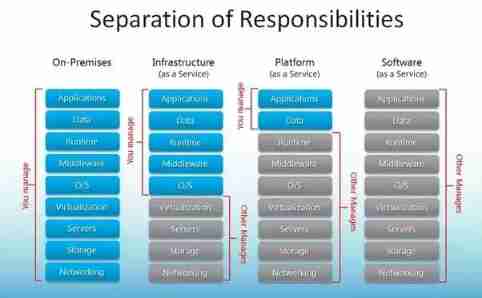
Cloud service selection of enterprises: comparative analysis of SaaS, PAAS and IAAs


随机推荐
13 ways to reduce the cost of cloud computing
Litamin: SLAM Based on geometric approximation of normal distribution
What makes data analysts good- Cassie Kozyrkov
Dunhuang Research Institute and Tencent have launched a new strategic cooperation to take you around the digital new silk road with AI
Operation and maintenance guide | cos back source setting practice
Recommend 14 commonly used test development tools
Flutter dart regular regexp matches non printing characters \cl\cj\cm\ck
13 skills necessary for a competent QA Manager
A solution to the problem that the separator of WordPress title - is escaped as -
How to start cloud native application development
[can you really use es] Introduction to es Basics (I)
Mcu-08 interrupt system and external interrupt application
Overall planning and construction method of digital transformation
Redpacketframe and openmode packages
TCE was shortlisted as a typical solution for ICT innovation of the Ministry of industry and information technology in 2020
The 'ng' entry cannot be recognized as the name of a cmdlet, function, script file, or runnable program. Check the spelling of the name. If you include a path, make sure the path is correct, and then
What if the database table structure changes? Smartbi products support one click synchronization
Restcloud ETL extracting dynamic library table data
基于BGP实现纯三层容器网络方案
Top ten popular codeless testing tools