当前位置:网站首页>Huawei cloud Gao Hongxia: CBC microservice code Reconstruction & independent release practice
Huawei cloud Gao Hongxia: CBC microservice code Reconstruction & independent release practice
2022-07-28 12:57:00 【CSDN cloud native】

The guest | Gao Hongxia Arrangement | Yinhong Huang
Produce | CSDN Cloud native
2022 year 6 month 9 Japan , stay CSDN Cloud native series online Summit 8 period " Huawei cloud native practice and application summit " On , Gao Hongxia, a Huawei cloud digital platform technology expert, shared Huawei CBC A practical case of microservice code refactoring and independent release .
Watch Gao Hongxia's sharing video
CBC(Cloud Business Center) Cloud operation platform , Responsible for the trading platform and operation platform capabilities of Huawei cloud , Covering the official website 、 Order 、 charging 、CRM、 Business modules such as partner cloud , Involving hundreds of micro Services .CBC It can be understood as a large cluster , Each cluster is registered by a unified service 、 Issue and manage .
CBC The construction goal of is : Realize service autonomy , Improve service maintainability 、 Extensibility , Demand can be launched independently , Don't walk in unison .

CBC Problems encountered
But in practice , We have some problems :
CBC There are some unmanageable “ Super micro Services ”, The definition of division is : Have 100+ The interface of (API),10W+ Line code microservices
In service , Some interfaces and information change relatively frequently , Some are very stable , Although in the same service management , But the pace of change is inconsistent
Domain model division is not clear , There is a shotgun modification , Modify a problem but introduce a new one
CBC The version adopts train mode ( Integrated release deployment ), All micro services are delivered at a specific pace (1 Months 2 A version ), Joint commissioning 、 Go online together , Some requirements TTM Elongated
The reason for these problems , This is our analysis :
Domain ambiguity : Before refactoring , Because unified deployment is adopted , So we pay less attention to domain models
The interface is arbitrary : Ambiguity in key areas , The interface design is very random . There is a super micro service before refactoring , Yes 300 Multiple interfaces , Interfaces cover each other , There is no unified design principle
data clumps : Because the interface is open at will , The relationship between the data is not clear
Code hybridity : Before refactoring , All data is in the same service , Different processes can be accessed directly 、 Use the data , The reusability of the interface is low , Maintenance costs are high . Unclear data relationships are reflected at the code level , Before hybrid refactoring , In addition to the interface layer , Other levels are almost nonexistent
Rely on Complexity : Because the code is mixed, the relationship between dependency and dependency is very complex , Before refactoring, it is not clear how most service dependencies are used and invoked , The code that calls other services is scattered 、 Difficult to manage , Because dependence is complex , So all the services can only go in one step
Inefficient deployment : Before refactoring , The Bi weekly train version will be launched uniformly , Resulting in inefficient deployment
The deployment platform does not support the streaming test of a single microservice
UT It is difficult to write too little
Loose modification : Pull one hair and move the whole body
To solve these problems , We have restructured the service 、 Try to improve engineering ability and other aspects , The independent publishing architecture of microservices has been established , Finally, the service can be released and deployed independently at a self paced pace , It solves the problem of service maintainability 、 Extensibility , Improved delivery efficiency , Reduced service learning 、 maintain 、 Test cost .

The following focuses on service reconfiguration 、 Two parts of engineering capacity improvement practice .

Service refactoring
One 、 Domain-driven design :DDD Large scale context segmentation & Domain modeling
The goal is : Divide by domain model , Realize the decoupling of business modules , Reduce shrapnel modification
measures :
Large scale context division according to business boundaries , Identify volatile and stable modules
Sort out the dependencies between contexts , Build a domain model , Make input for the code architecture

Two 、 Code decoupling —— Clean architecture of code
The goal is : When the refactoring is complete , Ensure reliability and flexibility
measures :
introduce DDD Clean architecture , It is divided into entrance / exit 、 Business choreography layer 、 Domain layer
implement “ The old is the same , New creation ; One step switch , Old goodbye ” The reconstruction technique of
Introduce architecture testing , Ensure the stability of the architecture ; The new code will not break through the existing architecture
Improve the coverage of white box testing , Reduce the difficulty of writing white box tests

3、 ... and 、API government —— Simplify the interface according to the domain model 、 Integrate
measures :
Divided by domain model , Peel off interfaces that are not within the scope of the art
Classify by characteristics , Integrate interfaces with the same functional characteristics , From general 、 Scalable 、 compatible 、 Reasonably design the interface in terms of safety
Review and summarize regularly , Ensure that the interface integration work follows “ analysis -> planning -> Rectification -> Offline ” To carry out in an orderly manner , Continuously improve and perfect the problems in the integration process , Forming a virtuous circle
After the above service reconstruction measures , Some preliminary effects have been achieved .


Engineering capacity improvement
One 、 Design the independent release and deployment process of microservices
Through the independent release pipeline 、 Microservice level blue-green deployment capability construction , Implementing microservice features E2E Release and deploy independently , Ensure the quality and efficiency of feature launch , At the same time, reduce the cost of multi branch synchronization and maintenance in version train mode .
effect 1: The service currently supports both high and low versions , At the same time, it carries traffic
effect 2:CBC Realize the drainage verification capability based on user list and user proportion
Two 、 Independently publish the deployment process ( The canary + Microservice level blue-green deployment )

3、 ... and 、DevOps Adaptation and transformation of testing capability in the process
The goal is : Build microservice test specification 、 Ability , Ensure that the quality of independent deployment of micro services does not decline .
Changed development branch parallel development
API Use cases are tested with multiple changes
Have the ability of real-time interface test and evaluation
Microservices can be carried out by themselves DFX test
Microservices allow feature level testing
measures :
The interface design of different development branches can be carried out independently
The ability to test multiple changes together
Develop interface testing and evaluation pipeline plug-ins
Develop microservice level DFX Test capability and pipeline plug-ins
Define and deploy microservice feature level test environment

summary : Practice can be replicated DNA
adopt DDD The idea of clean architecture divides the context of services 、 Domain modeling and hierarchy , Ensure that different business modules do not invade each other , While maintaining the stability of the architecture . introduce ArchUnit Architecture testing takes care of code architecture
Support blue-green drainage by micro service , Support each service to conduct independent testing of micro service blue-green drainage , Not disturbed by the blue-green drainage of other services
API The use case can match multiple changes in the independent deployment mode to release the test of the deployment scenario ; Have the ability to test and evaluate the real-time interface of microservices

END
Cloud native volunteer program is recruiting
Accurately grasp the technology trend , Deep learning of new technologies 、 New practice
 Scan the picture QR code and apply to join immediately
— Recommended reading —
* Jingdong Technology MA Junchang : Microservice low code platform “ Star chain ” Application practice

* Listen to Yang Jinquan, director of cloud R & D : With Tracing As the core observability system
* Past and present life and front-line practice of cloud native application delivery *2 Dimensions 5 The big way , Let your microservices in K8s Run up * Thoroughly analyze the application practice of cloud primitives in digital transformation ,PaaS "
Click here ↓↓↓ Remember to pay attention to the target star
 One key, three links  「 Share 」「 give the thumbs-up 」「 Looking at 」
100 million technical people 边栏推荐
- Can molecular modeling solve the data dilemma of AI pharmacy?
- Using dependent packages to directly implement paging and SQL statements
- [embedded explanation] key scanning based on finite state machine and stm32
- Machine learning practice - decision tree-22
- 1331. Array sequence number conversion: simple simulation question
- 03 pyechars rectangular coordinate system chart (example code + effect drawing)
- C语言项目中使用json
- Sliding Window
- How can non-standard automation equipment enterprises do well in product quality management with the help of ERP system?
- Which big model is better? Openbmb releases bmlist to give you the answer!
猜你喜欢

How to open the power saving mode of win11 system computer

Machine learning practice - integrated learning-23

Leetcode 1518. wine change

机器学习基础-主成分分析PCA-16
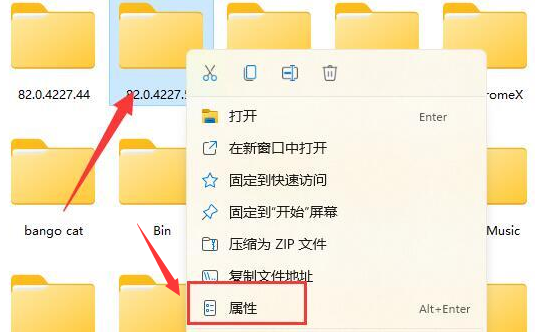
What if the win11 folder cannot be opened

New progress in the implementation of the industry | the openatom openharmony sub forum of the 2022 open atom global open source summit was successfully held

Interface control telerik UI for WPF - how to use radspreadsheet to record or comment

VS code更新后不在原来位置

Leetcode 42. rainwater connection

01 pyechars 特性、版本、安装介绍
随机推荐
Fundamentals of machine learning Bayesian analysis-14
Unity loads GLB model
试用copilot过程中问题解决
Multiple items on a computer share a public-private key pair to pull the Gerrit server code
Machine learning practice - integrated learning-23
Fundamentals of machine learning - principal component analysis pca-16
Solution to the binary tree problem of niuke.com
[graduation design] smart home system based on ZigBee - single chip microcomputer Internet of things stm32
Sliding Window
What if the right button of win11 start menu doesn't respond
西门子对接Leuze BPS_304i 笔记
Ten prohibitions for men and women in love
界面控件Telerik UI for WPF - 如何使用RadSpreadsheet记录或评论
Ccf201912-2 recycling station site selection
VS code更新后不在原来位置
LeetCode94. 二叉树的中序遍历
.NET的求复杂类型集合的差集、交集、并集
机器学习实战-集成学习-23
Machine learning practice - decision tree-22
The 'name' attribute value associated with the element type 'item' cannot contain '& lt;' Character solution