当前位置:网站首页>Operations on annotation and reflection
Operations on annotation and reflection
2022-06-11 03:04:00 【Maple Leaf sprite s】
annotation
It can be read by other programs
Built-in annotations
(1)@Override: Represents a method declaration overriding a superclass
(2)@Deprecated: It means that it is dangerous or there is a better choice
(3)@SuppressWarnings: Suppress compile time warnings , Need a parameter
SuppressWarnings(“all”);
SuppressWarnings(“unchecked”);
SuppressWarnings(“unchecked”,“deprecation”);
wait
Yuan notes
Responsible for annotation and other annotations
java.lang.annotation In bag
@Target: Describe the use of annotations
- ElementType.TYPE Class name
- ElementType.FIELD Field
- ElementType.METHOD Method
- wait
@Retention: Describe the lifecycle of annotations
- SOURCE<CLASS<RUNTIME
@Documented: Indicate that the annotation will be included in javadoc in
@Inherited: Indicates that the subclass can inherit the annotation in the parent class
@Target(value = {
    ElementType.METHOD})  // Place annotations on Methods
@Retention(value = RetentionPolicy.RUNTIME)  // Indicates that the annotation is valid at run time
@Documented  // Indicates that the annotation will be generated in javadoc in
@Inherited  // Subclasses can inherit the parent class annotation
public @interface Myannotation{


}
Custom annotation
// Yuan notes
public @interface  Annotation name {

	// Annotation parameters
}
import java.lang.annotation.ElementType;
import java.lang.annotation.Retention;
import java.lang.annotation.RetentionPolicy;
import java.lang.annotation.Target;

// Custom annotation
public class Test02 {

    // Annotations can show assignments
    @MyAnnotation2(name = "A")
    public void test(){


    }

    @Myannotation3("")  // Parameter is value And there is only one , Then you can omit value
    public void test2(){


    }
}

@Target({
    ElementType.TYPE,ElementType.METHOD})
@Retention(RetentionPolicy.RUNTIME)
@interface MyAnnotation2{


    // Annotated parameters : Parameter type   Parameter name ()
    String name() default "";  // The default is empty.
    int age() default 0;
    int id() default -1;  // The default value is -1 nonexistence

    int[] array() default {
    1,2,1};
}

@Target({
    ElementType.TYPE,ElementType.METHOD})
@Retention(RetentionPolicy.RUNTIME)
@interface Myannotation3{

    String value();
}
Reflection
Dynamic language : You can change your structure at run time
(1) Reflection is java Seen as the key to dynamic language , The reflection mechanism allows programs to use reflection during execution Reflection API Get internal information about any class , And directly operate the internal properties and methods of any object
Class c=Class.forName("java.lang.String")
(2) After loading the class , In the method area of heap memory, a Class Object of type ( There is only one class Class object ), This contains the complete class structure information . We can see the structure of the class through this object . This object is like a mirror , Look through this mirror to see the structure of the class , therefore , We call it reflection
Normal mode : Lead-in required “ Package class name –> adopt new Instantiation –> Get the instance object
Ways and means : Instantiate objects –>getClass() Method –> Get complete " Package class " name
Class class
stay Object Class defines the following methods , This method will be inherited by all subclasses
public final Class getClass()
(1)Class It's also a class
(2)Class Objects can only be created by the system
(3) A loaded class is in JVM There will only be one Class example
(4) One Class Object corresponds to a load into JVM One of the .class file
(5) Every instance of a class remembers who it is by Class Instance generated
(6) adopt Class You can get all the loaded structures in a class completely
(7)Class Class is Reflection The root of , For anything you want to load dynamically 、 Operation of class , You have to get Class object
| Method name | Functional specifications |
|---|---|
| static ClassforName(String name) | Returns the specified class name name Of Class object |
| Object newInstance() obsolete | Call parameterless constructor , return Class An instance of an object |
| getName() | Back here Class The name of the entity represented by the object lock |
| Class getSuperClass() | Returns the current Class Object's parent Class object |
| Class[] getinterfaces() | Get current Class Object's interface |
| ClassLoader getClassLoader() | Returns the class loader of this class |
| Constructor[] getConstructors() | Return a Constructor An array of objects |
| Method getMothed(String name,Class…T) | Return to one Method object , The formal parameter type of this object is paramType |
| Field[] getDeclareFields() | return Field An array of objects |
obtain class example
Get from a known class
Class c2=Person.class;Through the instance object of a known class getClass() Method to get
Class c1 = person.getClass();adopt Class Class static methods forName() obtain
Class c3=Class.forName("reflection.Person");The wrapper classes of basic built-in types all have type attribute
Class c4=Integer.TYPE;
Which classes can have class object
(1)class: External class , Member inner class , Static inner class , Local inner classes , Anonymous inner class
(2)interface
(3) Array
(4)enum
(5)annotation: annotation @interface
(6)primitive type: Basic data type
(7)void
import java.lang.annotation.ElementType;

// All types of class
public class test03 {

    public static void main(String[] args) {

        Class c1=Object.class;  // class
        Class c2=Comparable.class;  // Interface
        Class c3=int[].class;  // One dimensional array
        Class c4=Override.class;  // annotation
        Class c5= ElementType.class;  // enumeration
        Class c6=int[][].class;  // Two dimensional array
        Class c7=Integer.class;  // Basic data type
        Class c8=void.class;  //void
        Class c9=Class.class;  //Class

        System.out.println(c1);
        System.out.println(c2);
        System.out.println(c3);
        System.out.println(c4);
        System.out.println(c5);
        System.out.println(c6);
        System.out.println(c7);
        System.out.println(c8);
        System.out.println(c9);

        // One class ( type ) only one class object
        int[] a=new int[10];
        int[] b=new int[100];
        System.out.println(a.getClass().hashCode());
        System.out.println(b.getClass().hashCode());

        test03 t1=new test03();
        test03 t2=new test03();
        System.out.println(t1.getClass().hashCode());
        System.out.println(t2.getClass().hashCode());
    }
}
Class load memory analysis

Class initialization

Class loader

public class test06 {

    public static void main(String[] args) throws ClassNotFoundException {


        // Get system classloader
        ClassLoader systemClassLoader=ClassLoader.getSystemClassLoader();
        System.out.println(systemClassLoader);

        // Get the system classloader's parent classloader --> Extend the classloader
        ClassLoader parent=systemClassLoader.getParent();
        System.out.println(parent);

        // Get the parent loader of the extension class loader --> Root loader  java Can't get... Directly
        ClassLoader grandparent=parent.getParent();
        System.out.println(grandparent);

        // Test which loader is loading the current class
        ClassLoader classLoader = Class.forName("reflection.test06").getClassLoader();
        System.out.println(classLoader);

        // test jdk Which loader loads the built-in class
       classLoader = Class.forName("java.lang.Object").getClassLoader();
        System.out.println(classLoader);

        // How to get the path that the system class loader can load
        System.out.println(System.getProperty("java.class.path"));
    }
}
Create an object of a runtime class
Get the complete structure of the runtime class
Get the complete structure of the runtime class by reflection
Field、Method、Constructor、Superclass、Interface、Annotation
class User{

    private String name;
    private int id;
    private int age;

    public User(String name, int id, int age) {

        this.name = name;
        this.id = id;
        this.age = age;
    }
    public User(){
    }

    @Override
    public String toString() {

        return ("name="+this.name+",id="+this.id+",age="+this.age);
    }

    public String getName() {

        return name;
    }

    public void setName(String name) {

        this.name = name;
    }

    public int getId() {

        return id;
    }

    public void setId(int id) {

        this.id = id;
    }

    public int getAge() {

        return age;
    }

    public void setAge(int age) {

        this.age = age;
    }
}
import java.lang.reflect.Constructor;
import java.lang.reflect.Field;
import java.lang.reflect.Method;

// Get class information
public class test07 {

    public static void main(String[] args) throws ClassNotFoundException, NoSuchFieldException, NoSuchMethodException {

        //(1)
        Class c1 = Class.forName("reflection.User");

        // Get the name of the class   Package name . Class name
        System.out.println(c1.getName());
        // Class obtained simple name   Class name
        System.out.println(c1.getSimpleName());

        //(2)
        User user = new User();
        c1 = user.getClass();
        // Get the name of the class   Package name . Class name
        System.out.println(c1.getName());
        // Class obtained simple name   Class name
        System.out.println(c1.getSimpleName());

        System.out.println("------------------------------");

        // Get the properties of the class
        Field[] fields = c1.getFields();  // We can only find public attribute
        for (Field field : fields) {

            System.out.println(field);
        }

        System.out.println("------------------------------");


        fields=c1.getDeclaredFields();  // You can find all the properties
        for (Field field : fields) {

            System.out.println(field);
        }

        System.out.println("------------------------------");

        // Get specified properties
// Field name=c1.getField("name"); // Make a mistake , because name No public
        Field name=c1.getDeclaredField("name");
        System.out.println(name);

        System.out.println("------------------------------");

        // The way to get the class
        Method[] methods = c1.getMethods();  // Get all of this class and its parent class public Method
        for (Method method:methods){

            System.out.println(method);
        }
        System.out.println("");
        methods = c1.getDeclaredMethods();  // Get all the methods of this class
        for (Method method:methods){

            System.out.println(method);
        }

        System.out.println("------------------------------");
        // Get the specified method
        // because java There are heavy loads
        Method getName = c1.getMethod("getName",null);  // Method name   Parameters
        System.out.println(getName);

        Method setName = c1.getMethod("setName", String.class);  // Method name   Parameter type .class
        System.out.println(setName);

        System.out.println("------------------------------");
        // Get the specified constructor
        Constructor[] constructors = c1.getConstructors();
        for (Constructor constructor:constructors){

            System.out.println(constructor);
        }

        System.out.println("");

        constructors = c1.getDeclaredConstructors();
        for (Constructor constructor:constructors){

            System.out.println(constructor);
        }

        // Get the specified constructor
        System.out.println(c1.getDeclaredConstructor(String.class, int.class, int.class));

    }
}
import java.lang.reflect.Constructor;
import java.lang.reflect.Field;
import java.lang.reflect.InvocationTargetException;
import java.lang.reflect.Method;


// Create objects dynamically by reflection
public class test08 {

    public static void main(String[] args) throws ClassNotFoundException, IllegalAccessException, InvocationTargetException, InstantiationException, NoSuchMethodException, NoSuchFieldException {

        //1. get class object
        Class c1=Class.forName("reflection.User");

        Constructor[] constructors = c1.getConstructors();

        //2. adopt class Objects create objects
        User user1 =(User) c1.newInstance();  // Call parameterless construction
        System.out.println(user1);

        System.out.println("---------------------------------------");

        // The object is created by the constructor
        User user2 =(User) c1.getDeclaredConstructor(String.class,int.class,int.class).newInstance("A",18,18);
        System.out.println(user2);

        //3. Call normal methods through reflection
        User user3 =(User) c1.getDeclaredConstructor().newInstance();
        //(1) Access method
        Method setAge = c1.getDeclaredMethod("setAge", int.class);
        //invoke( Object name , Parameters );
        setAge.invoke(user3,1);
        System.out.println(user3.getAge());

// user3.setName("1");
// System.out.println(user3.getName());

        //4. Manipulate objects through reflection
        User user4 =(User) c1.getDeclaredConstructor().newInstance();
        Field name = c1.getDeclaredField("name");

        // Uncheck the private property   Turn off security monitoring of attributes   It is several times faster than the reflection direct call
        name.setAccessible(true);

        name.set(user4,"AA");
        System.out.println(user4.getName());
// System.out.println(name.getName());
    }
}
Reflection operation generics

import java.lang.reflect.Method;
import java.lang.reflect.ParameterizedType;
import java.lang.reflect.Type;
import java.util.List;
import java.util.Map;

// Get generics by reflection
public class test09 {

    public void test01(Map<String,User> map, List<User> list){


    }

    public Map<String,User> test02(){

        System.out.println("test02");
        return null;
    }

    public static void main(String[] args) throws NoSuchMethodException {

        // Get generics through annotations
        Method method = test09.class.getMethod("test01", Map.class, List.class);

        //get Generic Parameter Types  Get generic parameter types
        Type[] genericParameterTypes = method.getGenericParameterTypes();

        for (Type genericParameterType : genericParameterTypes) {

            // Print generic parameter types
            System.out.println("#"+genericParameterType);

            // Determine whether the generic parameter type is equal to the structured parameter type
            if (genericParameterType instanceof ParameterizedType){

                Type[] actualTypeArguments = ((ParameterizedType) genericParameterType).getActualTypeArguments();
                for (Type actualTypeArgument : actualTypeArguments) {

                    System.out.println(actualTypeArgument);
                }
            }
        }

        Method method1 = test09.class.getMethod("test02");

        Type genericReturnType = method1.getGenericReturnType();
        if (genericReturnType instanceof ParameterizedType){

            Type[] actualTypeArguments = ((ParameterizedType) genericReturnType).getActualTypeArguments();
            for (Type actualTypeArgument : actualTypeArguments) {

                System.out.println("2 "+actualTypeArgument);
            }
        }
    }
}
Reflection operation comment
getAnnotation
getAnnotations
ORM:Object relationship Mapping Object relation mapping
import java.lang.annotation.*;
import java.lang.reflect.Field;

// Reflection operation comment
public class test10 {

    public static void main(String[] args) throws ClassNotFoundException, NoSuchFieldException {

        Class c1 = Class.forName("reflection.B");

        // Get annotations by reflection
        Annotation[] annotations = c1.getAnnotations();
        for (Annotation annotation : annotations) {

            System.out.println(annotation);
        }

        // Get annotations value Value
        Table table =(Table) c1.getAnnotation(Table.class);
        System.out.println(table.value());

        // Get the annotation specified by the class
        Field name = c1.getDeclaredField("name");
        Field_ annotation = name.getAnnotation(Field_.class);
        System.out.println(annotation.columnName());
        System.out.println(annotation.type());
        System.out.println(annotation.length());
    }
}

@Table("db_B")
class B{


    @Field_(columnName = "id",type = "int",length = 10)
    private int id;
    @Field_(columnName = "age",type = "int",length = 10)
    private int age;
    @Field_(columnName = "name",type = "varchar",length = 20)
    private String name;

    public B(int id, int age, String name) {

        this.id = id;
        this.age = age;
        this.name = name;
    }

    public B() {

    }

    public int getId() {

        return id;
    }

    public void setId(int id) {

        this.id = id;
    }

    public int getAge() {

        return age;
    }

    public void setAge(int age) {

        this.age = age;
    }

    public String getName() {

        return name;
    }

    public void setName(String name) {

        this.name = name;
    }
}

// Annotation of class name
@Target(ElementType.TYPE)
@Retention(RetentionPolicy.RUNTIME)
@interface Table{

    String value();
}

// Comment for attribute
@Target(ElementType.FIELD)
@Retention(RetentionPolicy.RUNTIME)
@interface Field_{

    String columnName();
    String type();
    int length();
}
边栏推荐
- Problems with JDBC tool classes
- Arduino uses nRF24L01 module for wireless communication
- 巴歇尔槽流量计远程采集物联网关在明渠流量监测的应用
- B_QuRT_User_Guide(16)
- 出栈序列是否是入栈序列
- Win10 安装Office 2016出现错误代码30204-44怎么处理?
- Construction of Flink development environment and wordcount
- Determine whether a string of numbers is the result of a quick sort
- Error in Solr access: error initializing queryelevationcomponent
- List filtering, sorting, verification and other processing methods
猜你喜欢

ASLR

CPT 102_ LEC 16

postgresql源码学习(二十)—— 故障恢复①-事务日志格式

文件合成器

6 best WordPress Image optimizer plug-ins to improve WordPress website performance
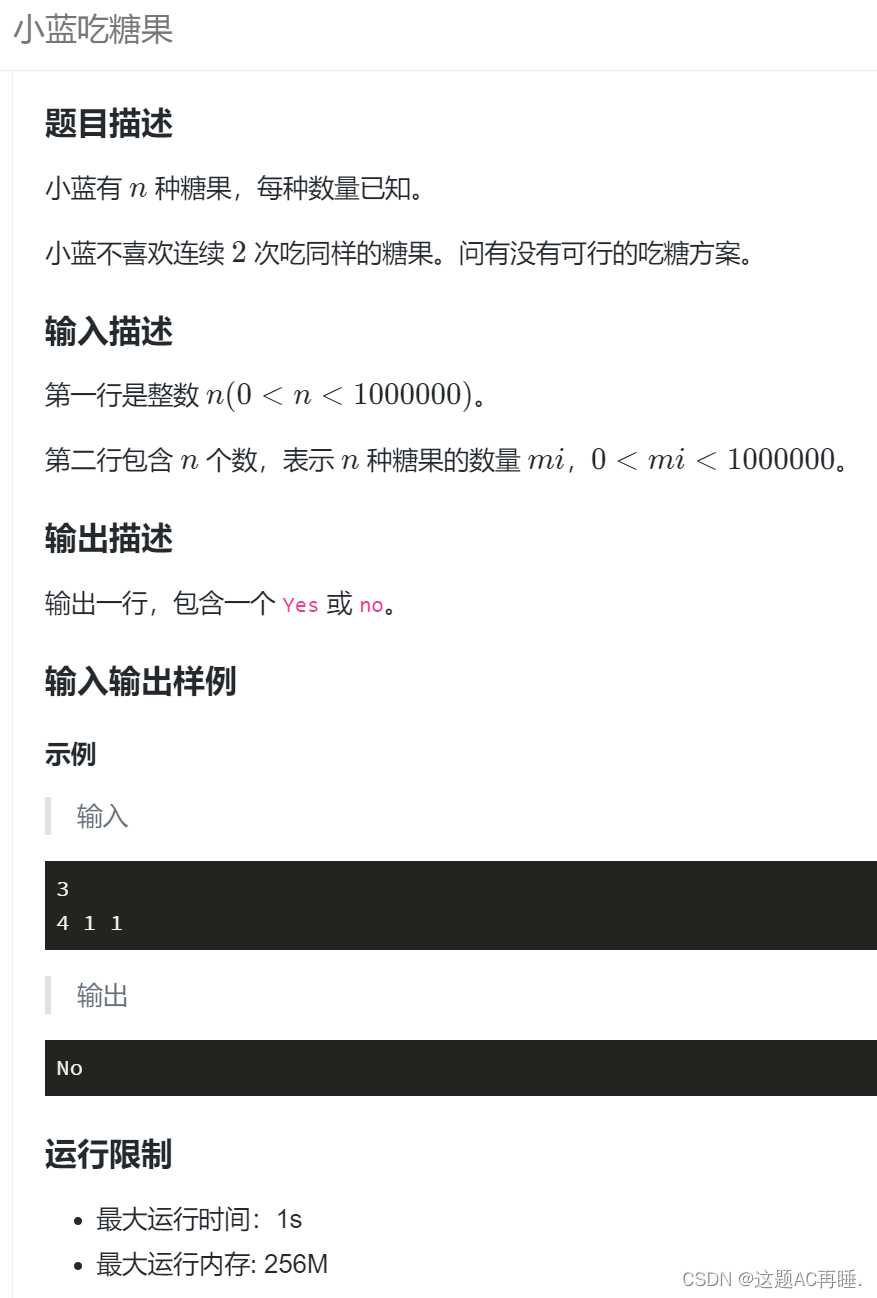
蓝桥杯_小蓝吃糖果_鸽巢原理 / 抽屉原理

JS memory leak

Unity项目优化详解(持续补充ing)
Blue Bridge Cup_ Xiao Lan eats candy_ Pigeon nest principle / drawer principle

Niuke: two numbers that only appear once in the array
随机推荐
WordPress article directory plug-in luckywp table of contents setup tutorial
重磅直播!ORB-SLAM3系列之特征匹配(MLPnP、词袋模型等)。
B_ QuRT_ User_ Guide(19)
com. mchange. v2.c3p0. Combopooleddatasource red
Application of the remote acquisition IOT gateway of the Bashir trough flowmeter in open channel flow monitoring
近期学习和更新计划
CPT 102_ LEC 17
Graphacademy course explanation: Fundamentals of neo4j graph data science
蓝桥杯_小蓝吃糖果_鸽巢原理 / 抽屉原理
PIP installation Qt5.
Array full permutation
Niuke: two numbers that only appear once in the array
同一个用户的两次请求SessionId竟然不一致-----记录问题
Forest v1.5.22 release! Kotlin support
sonarqube平台基础使用
深入解析问号表达式
出栈序列是否是入栈序列
File file = new File(“test.txt“)文件路径
Wechat template message errCode ": 40165," errmsg ":" invalid web pagepath
Longest increasing subsequence