当前位置:网站首页>Implementation of sequencelist sequence table
Implementation of sequencelist sequence table
2022-06-11 22:12:00 【iEucliwood】
The concept of sequence table is simply combed and discussed
Sequential table means that the elements in the table are stored consecutively ,c The built-in type array in the language can be said to be a sequential table , But it does not support dynamic growth , The advantage of this kind of data structure is that the elements in the table can be accessed randomly , You can directly find an element in the sequence table by subscript . Because it is stored tightly in memory , Generally speaking, the access sequence table has better spatial locality , Faster access . The disadvantages are still caused by their close connection in storage , If the sequence table is large , The requested memory space will be relatively long , And if there are many such data structures , It also causes memory fragmentation , Cause some memory waste . In addition, the size of the sequence table may not be predicted in advance , And dynamic development memory if one time development less , It may cause frequent memory development and slow running speed , And if more are opened up at one time , It may also waste some space .
Implementation of sequence table
The basic idea
To store data through arrays , A variable that records the size of the current sequence table and the capacity of a record sequence table .
The following is the function declaration of structure declaration and operation
#pragma once
#include<stdio.h>
#include<stdlib.h>
#include<assert.h>
#define MINSIZE 4
typedef int DataType;
typedef struct SeqList SeqList;
typedef size_t Position;
struct SeqList
{
	DataType* data;
	size_t size;
	size_t capacity;
};

void SeqListInit(SeqList* L, size_t S);
void SeqListPushBack(SeqList* L, DataType D);
void SeqListPopBack(SeqList* L);
void SeqListPushFront(SeqList* L, DataType D);
void SeqListPopFront(SeqList* L);
void SeqListInsert(SeqList* L, DataType D, Position P);
void SeqListErase(SeqList* L, Position P);
void SeqListPrint(SeqList* L);
void SeqListDestroy(SeqList* L);
DataType SeqListFind(SeqList* L, DataType D);
void ExpandCapacity(SeqList* L);
int IsEmpty(SeqList* L);
int IsFull(SeqList* L);
initialization :
void SeqListInit(SeqList* L,size_t S)
{
	L->capacity = S > MINSIZE ? S : MINSIZE;
	L->data = (DataType*)malloc(sizeof(DataType) * L->capacity);
	L->size = 0;
}
Quick judgment Empty and full Function of :
int IsEmpty(SeqList* L)
{
	return L->size == 0;
}
int IsFull(SeqList* L)
{
	return L->size == L->capacity;
}
Dynamic capacity :
void ExpandCapacity(SeqList* L)
{
	DataType* tmp;
	tmp = (DataType*)realloc(L->data, sizeof(DataType) * 2 * L->capacity);
	if (tmp == NULL)
	{
		printf("FatalError:expand capacity failed!\n");
		exit(-1);
	}
	else
	{
		L->data = tmp;
		L->capacity *= 2;
	}
}
Tail insertion and tail deletion :
void SeqListPushBack(SeqList* L, DataType D)
{
	assert(L);
	if (IsFull(L))
		ExpandCapacity(L);

	L->data[L->size] = D;
	L->size++;
}
void SeqListPopBack(SeqList* L)
{
	assert(L);
	if (!IsEmpty(L))
		L->size--;
}
Header insertion and header deletion :
void SeqListPushFront(SeqList* L, DataType D)
{
	assert(L);
	if (IsFull(L))
		ExpandCapacity(L);

	size_t end = L->size;
	while (end > 0)
	{
		L->data[end] = L->data[end - 1];
		end--;
	}
	L->data[0] = D;
	L->size++;
}
void SeqListPopFront(SeqList* L)
{
	assert(L);
	if (!IsEmpty(L))
	{
		size_t begin = 0;
		while (begin < L->size)
		{
			L->data[begin] = L->data[begin + 1];
			begin++;
		}
		L->size--;
	}
}
Random access insert and random access delete :
void SeqListInsert(SeqList* L, DataType D, Position P)
{
	assert(L);
	if (IsFull(L))
		ExpandCapacity(L);

	if (P<0 || P>L->size)
		printf("invaild position!\n");
	else
	{
		size_t end = L->size;
		while (end > P)
		{
			L->data[end] = L->data[end - 1];
		}
		L->data[P] = D;
		L->size++;
	}
}
void SeqListErase(SeqList* L, Position P)
{
	assert(L);
	if (!IsEmpty(L))
	{
		if (P<0 || P>L->size - 1)
			printf("invaild position!\n");
		else
		{
			while (P < L->size - 1)
			{
				L->data[P] = L->data[P + 1];
				P++;
			}
			L->size--;
		}
	}
}
Find value :
int SeqListFind(SeqList* L, DataType D)
{
	assert(L);
	int i;
	for (i = 0; i < L->size; i++)
	{
		if (L->data[i] == D)
			return i;
	}
	return -1;
}
Print and destroy form :
void SeqListDestroy(SeqList* L)
{
	assert(L);
	free(L->data);
	L->data = NULL;
	L->capacity = 0;
	L->size = 0;
}
void SeqListPrint(SeqList* L)
{
int i;
for (i = 0; i < L->size; i++)
{
printf("%d ", L->data[i]);
}
printf("\n");
}Last but not least , Routines can be reused between routines , For example, head to tail insertion is a special case of random position insertion , Head deletion and tail deletion are special cases of random position deletion , You can use this to simplify your code , Enhanced readability and ease of debugging
边栏推荐
- Go encoding package
- Optimization of quick sort
- STM32 Development Notes 112:ads1258 driver design - read register
- 什么是死锁?(把死锁给大家讲明白,知道是什么,为什么用,怎么用)
- 每日一题-1317. 将整数转换为两个无零整数的和
- [Yu Yue education] General English of Shenyang Institute of Engineering (4) reference materials
- Maze problem in C language
- Learning bit segment (1)
- R语言书籍学习03 《深入浅出R语言数据分析》-第七章 线性回归模型
- R language book learning 03 "in simple terms R language data analysis" - Chapter 7 linear regression model
猜你喜欢

Popular science | what are the types of NFT (Part 1)

机器学习之线性回归简单实例
![[niuke.com] ky41 put apples](/img/55/cc246aed1438fdd245530beb7574f0.jpg)
[niuke.com] ky41 put apples
![[Yu Yue education] Yancheng Normal University Advanced Algebra reference](/img/3f/cd7f6f420fb1d453acca9aa73665ba.jpg)
[Yu Yue education] Yancheng Normal University Advanced Algebra reference

Learning bit segment (1)

Classes and objects (2)
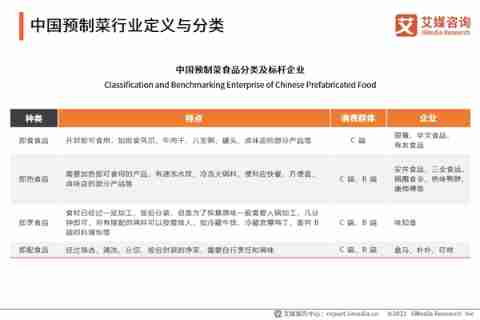
Prefabricated dishes in the trillion market have also begun to roll inside. How can brands stand out in the fierce competition?

206. reverse linked list

超标量处理器设计 姚永斌 第2章 Cache --2.4 小节摘录

R语言书籍学习03 《深入浅出R语言数据分析》-第十章 关联规则 第十一章 随机森林
随机推荐
How to view the installation date of the win system
Implementation stack and queue
360 online enterprise security cloud is open to small, medium and micro enterprises for free
go io模块
Is it safe for qiniu business school to send Huatai account? Really?
Uncover the secret of the popular app. Why is it so black
[Yu Yue education] Yancheng Normal University Advanced Algebra reference
MATLAB点云处理(二十四):点云中值滤波(pcmedian)
仅需三步学会使用低代码ThingJS与森数据DIX数据对接
189. rotation array
R语言相关文章、文献整理合集(持续更新)
点云读写(二):读写txt点云(空格分隔 | 逗号分隔)
MySQL事务简介
Prefabricated dishes in the trillion market have also begun to roll inside. How can brands stand out in the fierce competition?
Basic operation and question type summary of binary tree
Latex combat notes 3- macro package and control commands
Study notes of mattlotlib and Tkinter (I)
详解异步任务:函数计算的任务触发去重
[niuke.com] dp31 [template] complete Backpack
Optimization of quick sort