当前位置:网站首页>Genicam gentl standard ver1.5 (3) Chapter 4
Genicam gentl standard ver1.5 (3) Chapter 4
2022-06-29 07:10:00 【CoderIsArt】
From system module to data flow module , Each module supports GenTL Port to configure the internal settings of the module , And send a signal to the caller GenTL consumer . For buffer modules ,GenTL Ports are optional .
of C Detailed description of functional interfaces and data types , Please refer to the first 6 Chapter software interface . The module to be accessed must be instantiated before configuring the module or registering the event . This is done through module enumeration , Just like No 3 Chapter module enumeration and instantiation
4.1 To configure Configuration
To configure the module and access specific settings based on transport layer technology , It is necessary to use a device that conforms to GenApi Of XML Description of the GenTL port . The concerns of module specific functions are : enumeration 、 Instantiation 、 Configuration and basic information retrieval . Configuration is through virtual register mapping and this register mapping GenApi XML Describe the completed .
about GenApi Reference implemented IPort Interface ,TLI Port functions have been released . One GenApi IPort A read / write function is required to read or write data blocks from the associated device . About GenTL Producer function access , Each module does
by GenAPi Devices in implementation , By implementing virtual register mapping . When some registers are written or read , Implementation dependent operations are performed in the specified module . therefore , The abstraction of camera configuration has also been transferred to GenTL On the producer side .
The memory layout of the virtual register map does not specify , Therefore, from GenTL The producer's implementation determines . Therefore, a specific set of mandatory functions must be implemented , This will be in the 7 Chapter GenTL Standard feature naming conventions for (GenTL SFNC) In detail .
C The port functions of the interface include GCReadPort Functions and GCWritePort function , Can be used to implement GenApi Realized IPort object . These functions behave like IPort Read and write functions .
Register access through port functions is always byte aligned . If the supporting technology does not allow byte aligned access ,GenTL The producer must imitate this feature by :1. The number of bytes read exceeds the number of bytes requested , And only return the requested number of bytes ;2. Read port register mapping / modify / Write access .
4.1.1 modular Modules
In addition to the buffer module , Every GenTL All modules must support TLI Port function of . The buffer module can support these functions . To access the register of the module . for example , Call... On the module handle GCReadPort and GCWritePort function , for instance , In the system module TL_HANDLE On .GenApi XML Description documents and GenApiGenICam The module is used to use GenApi Access the virtual register mapping feature in the module .
Include the corresponding GenICam XML Describe the location of URL It can be by calling C Interface GCGetNumPortRls and GCGetPortURLInfo Function to retrieve . of GenTL Additional information about the actual port implementation in the producer , Please see use GCGetPortInfo retrieval . This information includes, for example, port byte order or allowed access ( read / Write 、 read-only …). The two modules are special in the way they handle port access , It will be described in the following chapters .
4.1.1.1 Device modules
In the device module , Two ports are available :
First , The port function can be associated with the... That allows access to the device DEV_HANDLE Handle to use the module's internal functions .
secondly ,GenTL Consumers can call DevGetPort Function to get the... Of the remote device PORT_HANDLE.
These two ports are for GenTL For producers , Must be realized .
4.1.1.2 Buffer module
For buffers , The implementation of port functions is not mandatory . Check whether there is implementation , You can call GCGetPortInfo function , for example PORT_INFO_MODULE command . If there is no implementation of the function , The return value of the function must be GC_ERR_NOT_IMPLEMENTED.
4.1.2 XML describe
To use similar GenApi Feature access , The last thing missing is XML Description contains to retrieve XML A list of possible locations can be called GCGetNumPortURLs Functions and GCGetPortURLInfo function . Similar to URL Three possible positions are defined in the symbol of ( of URL The definition of , see also RFC 3986):
Module register mapping ( Suggest GenTL Producers use )
Local directory
Supplier website
need GenTL Consumers to achieve “ Module register mapping ” and “ Local directory ”. Downloading from the supplier's website is optional .
Supported formats include :
Uncompressed XML Description file
Compression of the XML Description file . The compression method used is DEFLATE And in accordance with the RFC 1951 The description in .
4.1.2.1 Module register mapping ( recommend )
URL The format is “local:[///]filename.extension;address;length[?SchemaVersion=x.x.x]” instructions XML The description file is located in the module's virtual register map . This square bracket is optional .“x.x.x” Stands for quoted XML Of SchemaVersion Conform to the version format :” Main version . Small version . Sub version ”. If you omit SchemaVersion, be URL To quote SchemaVersion 1.0.0 Of XML References to . This option is only available with older functions GCGetPortURL Use it together . For the current implementation GCGetPortURLInfo Function to get a specific XML Of documents SchemaVersion. Optionally , It can be omitted “//”behind“local:” In order to GigE Vision local Compatible with the overall arrangement if XML The description is stored in the local register map , By calling GCReadPort function .
Italicized input must be replaced with actual value , As shown in the table below :
entry point | describe |
local | instructions XML The description file is located in the module's virtual register map . |
filename | Information file name . It is recommended that the supplier 、 model / The device and version information is placed in the file name , Separate it with an underline . for example : First edition “tlguru_system_rev1” GenTL Manufacturer company tlguru System module file for |
extension | Indicates the file type . The allowed types are “xml”, For uncompressed xml Description file . “zip”, For compression XML Description file . |
address | The starting address of the file in the virtual register map . it Must be expressed in hexadecimal , Without prefix |
length | The length of the file ( byte ). Must be expressed in hexadecimal form without prefix . |
SchemaVersion | Refer to the XML Compliant version . The format of this version is : Major.minor.subminor. This only involves outdated GCGetPortURL function , Because the old mechanism has no other purpose XML File reports SchemaVersion Methods . For new GCGetPortURLInfo function It shall be through information retrieval SchemaVersion command . |
A complete local URL It seems to have the following format :
local:tlguru_system_rev1.xml;F0F00000;3BF?SchemaVersion=1.0.0
The information file name of this file is “tlguru_system_rev1.xml”, Located in the virtual register mapping slave address 0xF0F00000(C
Style notation ) Start , The length is 0x3BF byte .GenTL There are no further restrictions on memory alignment in modules ( Byte alignment ). If the platform or transport layer technology requires some memory alignment , GenTL Producers need to consider this factor in their implementation .
4.1.2.2 Local directory
In the following two formats URL:
- “file:///filepath.extension[?SchemaVersion=1.0.0]” or
- “file:filename.extension[?SchemaVersion=1.0.0]”
Indicates that a file exists in a certain location and is running GenTL On the consumer's machine . This symbol follows URL Definition , Such as RFC 3986 For local files . Italicized input must be replaced with actual value .
for instance :
file:///C|program%20files/genicam/xml/genapi/tlguru/tlguru_system_rev.xml?
SchemaVersion=1.0.0
This will apply to English Microsoft Windows Uncompressed on the operating system XML File system C Driver .
You can choose to omit “file:” hinder “//”, In order to GigE Visually compatible symbols . This symbol does not specify the exact location . For example, the graphical user interface can be used to determine the location using the file dialog box . In order to conform to certain Windows Mark , It is also allowed to take “:” The drive letter for . It is recommended that the supplier 、 Model or device and version information is placed in underlined names in the file . for example :tlguru_system_rev1, be used for GenTL Manufacturer company TLGuru System module file for .
Supported extensions include :
“xml”, For uncompressed xml Description file
“zip“, be used for zip Compression of the xml Description file
4.1.2.3 Supplier website ( Optional )
A format such as “http://host/path/filename.extension[?SchemaVersion=1.0.0]“ Of URL,
It means that the supplier's web download XML Describe where the document is located . This symbol follows http agreement RFC 3986 Medium URL Definition . Italicized input must be replaced with actual value , for example ,http://www.tlguru.org/xml/tlguru_system_rev1.xml , This will apply to TLGuru On the company website xml Uncompressed found in subdirectories XML file . It is recommended that the supplier 、 The model or equipment and version information is placed in the file name , Separate it with an underline . for example :tlguru_system_rev1, be used for GenTL Manufacturer company TLGuru System module file for .
Supported extensions include :
“xml”, For uncompressed xml Description file
“zip“, be used for zip Compression of the xml Description file
4.1.3 Example
The following example shows how to get the port module xmls.
{
// Retrieve the number of available URLs
GCGetNumPortURLs( hModule, NumURLs );
for( i=0; i<NumURLs; i++ )
{
URLSize = 0;
GCGetPortURLInfo( hModule, i, URL_INFO_URL, 0, 0, &URLSize );
// Retrieve an string buffer to store the URL
GCGetPortURLInfo( hModule, i, URL_INFO_URL, 0, pURL, &URLSize );
if ( ParseURLLocation( pURL ) == local )
{
// Retrieve the address within the module register map from the URL
Addr = ParseURLLocalAddress( pURL );
Length = ParseURLLocalLength( pURL );
// Retrieve an XMLBuffer to store the XML with the size Length
…
// Load xml from local register map into memory
GCReadPort( hModule, Addr, XMLBuffer, Length );
}
}
}
Signals are used to notify... In the form of asynchronous events GenTL consumer . Usually all communications are made by GenTL Consumer initiated .GenTL Consumers can get information about specific GenTL Notification of producer actions . This mechanism is the observer mode , One call GenTL Our consumers are observers , and GenTL The producer is the object being observed .
The main reason for choosing the event object method instead of the callback function is the thread priority problem . The callback function that signals the arrival of a new buffer is usually executed in the thread context of the collection engine . therefore , All processing functions in this callback are also completed with their priority . If no other precautions are taken , So as long as the callback function is processing , The engine will be blocked .
for instance , If you use an event object - based method , The collection engine only needs to prepare the necessary data , Then through the previously registered event object , Signal that data is available .GenTL The consumer can decide in which thread context to use the priority of data processing . therefore , The processing of events and the occurrence of signals are decoupled , Not related to each other .
4.2.1 Event object event object
Event objects allow calls to GenTL The user sends an asynchronous signal . Event objects have two states : Signaled or Unsignalized .EventGetData Function block calling thread , Until a user-defined timeout occurs 、 Signal or... To an event object GenTL Consumer ends waiting .
If you're calling EventGetData Function before , The event object has signaled , Function will return immediately , And transmit the data associated with the signaling event .
Not every event type can be registered in every module , Not every module needs to implement every possible event type . If the module for an event is not listed , It is not necessary to implement in this module .
The maximum size of data transmitted by an event is defined in the event description , Can pass EventGetInfo Function to obtain . The actual size is determined by EventGetData The function returns , This function retrieves the data associated with the event .
There is no mandatory event type . If GenTL The event type... Is not implemented in the producer GCRegisterEvent Should return GC_ERR_NOT_IMPLEMENTED. If the event type is GenTL The producer module implements , It is recommended to register an event object for this event type .
The following table describes the event types .
surface 4-2 modular - Event type
Event type | modular | describe |
Error | All | GenTL The consumer can receive an error in the asynchronous module . These are not due to mistakes C Interface or GenApi Function call function access in . They have their own error reports . for example , This event is applicable to collecting data in the collection engine of the data flow module |
New Buffer | Data Stream | In the collection engine , New data exists in the buffer . If you implement a new buffer event It must be registered on the data flow module . Notification call after registration GenTL Consumer about each new buffer in the data stream . If EventFlush Function call , Then the output buffer queue is discarded . If one DSFlushQueue Events that are called to all event queues will also be deleted . Please use BUFFER_INFO_IS_QUEUED Command to query the queue status of the buffer . |
Feature Invalidate | Local Device | This event calls... To GenTL The consumer sends the following signals :GenTL The producer driver changed the mapping of the registered remote device , If this value is in GenApi Implementation in cache , The cache must be invalidated . This is especially useful for remote devices GenTL The producer may change some information GenTL Consumers will also use it . For local modules, the implementation knows which functions cannot be cached . Using this mechanism means that the user must ensure that all end node dependencies are invalid , To update GenApi cache . The function name provided may not be SFNC Standardization . If you pass SFNC Functions are overwritten , Should be used by GenTL What the producer has provided is correct SFNC name . If the function name provided is located in GenTL Consumer's selector , Traverse all selector values , And invalidate all nodes on which all provided functions and their selector values depend . |
Feature Change | Local Device | This event is directed to GenTL The consumer communicates the following message :GenApi The function must be set to a specific value . This is currently only used with “TLParamsLocked” Standard functions . Only GenTL Producer Know that flow related functions must be locked . This event indicates a lock “1” Or unlock the function “0”. Future use cases may be added when appropriate . Specifies the value of the feature through its IValue Interface , So set the string information . No error reports complete . If the function is not set or an error occurs , No action was performed , And it won't inform GenTL producer . |
Remote Device Event | Local Device | This event is related to the call GenTL Consumer communications , Think GenApi An understandable event occurs , Started by remote device . Event is passed along with this event ID And optional data can be put into GenApi Adapter , Then disable all relevant nodes . This event was previously known as a function device event , But renamed , To synchronize enumeration of event types with . |
Module Event | All | This event is related to the call GenTL Consumer communications , Think GenApi An understandable event occurs , from GenTL The producer module starts , This event has been registered in advance . event ID And the data delivered with this event ( Optional ) Put in GenApi Adapter , Then fail all relevant nodes . |
4.2.2 Event object queue Event Object Queue
The event data queue is the core of the signal . This is thread safe queue holding event type specific data . Operations on this queue must be locked in some way , For example, through mutual exclusion , When one of the event functions is accessing it or a module specific thread is accessing it . therefore ,GenTL The producer implementation must ensure that the access time to the queue is as short as possible . perhaps , Lockless queues can be used to support dequeue operations from multiple threads .
As long as the event data queue is not empty , The status of the event object will be notified .
Each event data queue must have its own lock ( If there is ), To protect the state of each instance and achieve the necessary parallelism . Both read and write operations must be locked . Two event data retrieval operations and event object signal state processing EventGetData A function must be an atomic function . in other words , If locks are used, the event data queue must be maintained on these two operations . There is also the operation of placing data in the queue , The state handling of an event object must be atomic .
4.2.3 Event handling Event Handling
The handling of event objects is always the same , Independent of event type . The cause of the signal and the signal data depend, of course, on the type of event . The complete state processing is performed by GenTL Producer driven completion .GenTL Consumers can call EventKill Function to terminate the wait EventGetData A single instance of an operation . This means that if there are multiple threads waiting for an event ,EventKill Function terminates only one wait operation , Other threads will continue to execute .
4.2.3.1 register Registration
In the GenTL Before the consumer notifies the event , The event object must be registered . After the module instance is created during enumeration , have access to GCRegisterEvent Function to create an event object . This function returns a that uniquely identifies the registered event object EVENT_HANDLE Handle . have access to EventGetInfo Function to get information about registered events . Only one event must be registered by module and event type . If an event object is registered twice in the same module ,GCRegisterEvent The function must return an error GC_ERR_RESOURCE_IN_USE.
To unregister an event object , Must call GCUnregisterEvent function . If the module to be given has been closed , All registered events on it will be automatically unregistered . When the event object logs out , Events in the event queue are automatically discarded . When the event object has passed GCUnregisterEvent Cancellation , Pending wait operations , Yes EventGetData Will be called with GC_ERR_ABORT End .
obtain EVENT_HANDLE After handle ,GenTL The consumer can wait for the event object to call EventGetData Function to signal . Together with event delivery , Event objects can carry data . When EventGetData After successful call , This data is copied to GenTL Consumer provided buffer .
4.2.3.2 Notification and data retrieval
If the event object is signaled , Then the data will be put into the event data queue at a certain point in time . You can call EventGetData Function to retrieve actual data . As long as there is only one listener thread , This function always returns the stored data , If no data is available , Then it returns the event waiting to be notified with the provided timeout . If multiple listener threads display only the event data returned by one of them , Other returns are waiting until a timeout occurs , To send out EventKill, Or until the next event data becomes available .
If the EventKill, Only one pair will be returned EventGetData Call to GC_ERR_ABORT, Even without EventGetData Call waiting , Called EventKill. And return GC_ERR_ABORT Is higher than sending events from the queue , Even if there is one or more events in the queue , Prepare to call EventGetData Pass it on to the user . Calling EventKill after , call EventGetData Will return GC_ERR_ABORT. under these circumstances , No events will be removed from the queue , No data is passed to GenTL consumer . Counter EVENT_NUM_FIRED Not subject to EventKill Impact of call .
If by calling GCUnregisterEvent Unregister event objects , Its previous state will be lost . This also applies to previous studies on EventKill Function call . After re registering , stay EventGetData On this port by calling GCRegisterEvent The event that occurs will be called again EventKill Before , Will not return GC_ERR_ABORT.
When using this function to read data , Data will be deleted from the queue . after GenTL Producer implementation , Check whether the event data queue is empty . If more data is available , The event object remains in signal state , Next call EventGetData The next queue entry will be passed . otherwise , The event object will be reset to a non signaled state . adopt EventGetData Delivered
The maximum size of the buffer can be by using EventGetInfo Functional EVENT_SIZE_MAX The query .GenTL Consumers must not perform data size queries , Because a call with NULL Of EventGetData The buffer pointer will delete data from the queue , Without passing data . In this case, the event will be counted , As if it will be triggered and the data will be discarded .
The exact type of data depends on the event type and GenTL Producer implementation . Data is copied to GenTL Consumer allocated user buffer . have access to EventGetDataInfo Function to query the contents of the event data . The maximum size of the buffer to be filled is defined by the event type , You can use the delivered buffer EVENT_INFO_DATA_SIZE_ MAX. This information can be used EventGetInfo The function finds .
- Follow these steps to handle the event :
- Corresponding GenTL Register on the module DeviceEvent.
- Maximum buffer size required for query .
- Allocate buffer to receive event data .
- Wait for events and data . The data structure in the provided buffer is not defined , It depends on GenTL producer . The only exception is to provide a new buffer event with a defined internal structure .
- Use EventGetDataInfo Extract data from buffer . This step is not necessary , When GenTL Producers know through EventGetData When passing the contents of the buffer , For example, in the case of a new buffer event .
...
- The cancellation of the event .
- Release buffer .
As mentioned above , adopt EventGetData The contents of the retrieved buffer are GenTL The producer specifically implements , have access to EventGetDataInfo Function to parse it . The only exception to this is the new buffer event , It will return EVENT_NEW_BUFFER_DATA structure . Many events for device events (Event_REMOTE_Device),GenTL The producer must provide two types of information about each event , So that we can “ Connect ” Node mapping to remote devices :
- event ID: adopt EventGetDataInfo(Event_DATA_ID) Inquire about .ID A string representation passed as hexadecimal , For example, without leading “0x” Of “CF51”. You can also use EventGetDataInfo Query directly in digital form ID(EVENT_DATA_NUMID).
- Event data : Contains the ( Optional ) Buffer for data . It must correspond to the addressable data in the remote device node map , Must be with nodemap The address of the event port 0 Corresponding . for example , about GigE Vision Equipment as per convention , This is the whole thing EVENTDATA Data packets , No, 8 Bytes GVCP header .
Besides , For module events (EVENT_MODULE),GenTL The producer must provide two types of information about each event , To connect it to the module's node mapping :
- event ID: adopt EventGetDataInfo(Event_DATA_ID) Inquire about .ID A string representation passed as hexadecimal , For example, without leading “0x” Of “CF51”. You can also use EventGetDataInfo Query directly in digital form ID(EVENT_DATA_NUMID).
Event data : Contains the ( Optional ) Buffer for data . It must correspond to the addressable data in the module node mapping buffer . Must be with nodemap The address of the event port 0 Corresponding , Be similar to EVENT_REMOTE_DEVICE I am working . Be careful : To improve interoperability , It is recommended that for “ standard ” Event data format , adopt EventGetData The passed buffer can be directly fed to the corresponding standard GenApi Event adapter buffer . for example , In regard to GigE Vision, It will be the whole EVENTDATA package , Including Baotou . If you no longer need the event data in the queue , Can be associated by calling EVENT_HANDLE Upper EventFlush function . Query buffer GenTL Consumers can use info Command invocation DSGetBufferInfo Buffer information queued . A signal that occurs without registering the corresponding event object GCRegisterEvent Automatically discarded .
A single event notification contains an event and its data . hypothesis , One GigE vision Device events are sent through the message channel , With multiple events in a package ID, It will inevitably lead to multiple GenTL Producer Events . Every GenTL The producer will provide a GigE Vision EventID.
4.2.4 Example Example
The following code snippet demonstrates how to register a new buffer event :
{
GCRegisterEvent(hDS, EVENT_NEW_BUFFER, hNewBufferEvent);
CreateThread ( AcqFunction );
}
4.2.4.1 Data collection thread function AcqFunction
{
while( !EndRun )
{
EventGetData( hNewBufferEvent, EventData );
if ( successful )
{
// Do something with the new buffer
}
}
}
边栏推荐
- 多线程工具类 CompletableFuture
- IDEA常用插件
- Message queue avoiding repeated refund by idempotent design and atomic lock
- QT STL type iterator
- Daily question 1 - force deduction - there are three consecutive arrays of odd numbers
- [answer all questions] CSDN question and answer function evaluation
- 关于端口转发程序的一点思考
- [when OSPF introduces direct connection routes, it makes a summary by using static black hole routes]
- Better than postman! Apipost knows more about Chinese programmers! How delicious!
- Qt 串口编程
猜你喜欢

Ci tools Jenkins installation configuration tutorial
![[when OSPF introduces direct connection routes, it makes a summary by using static black hole routes]](/img/a8/f77cc5e43e1885171e73f8ab543ee4.png)
[when OSPF introduces direct connection routes, it makes a summary by using static black hole routes]

As a qualified network worker, you must master DHCP snooping knowledge!
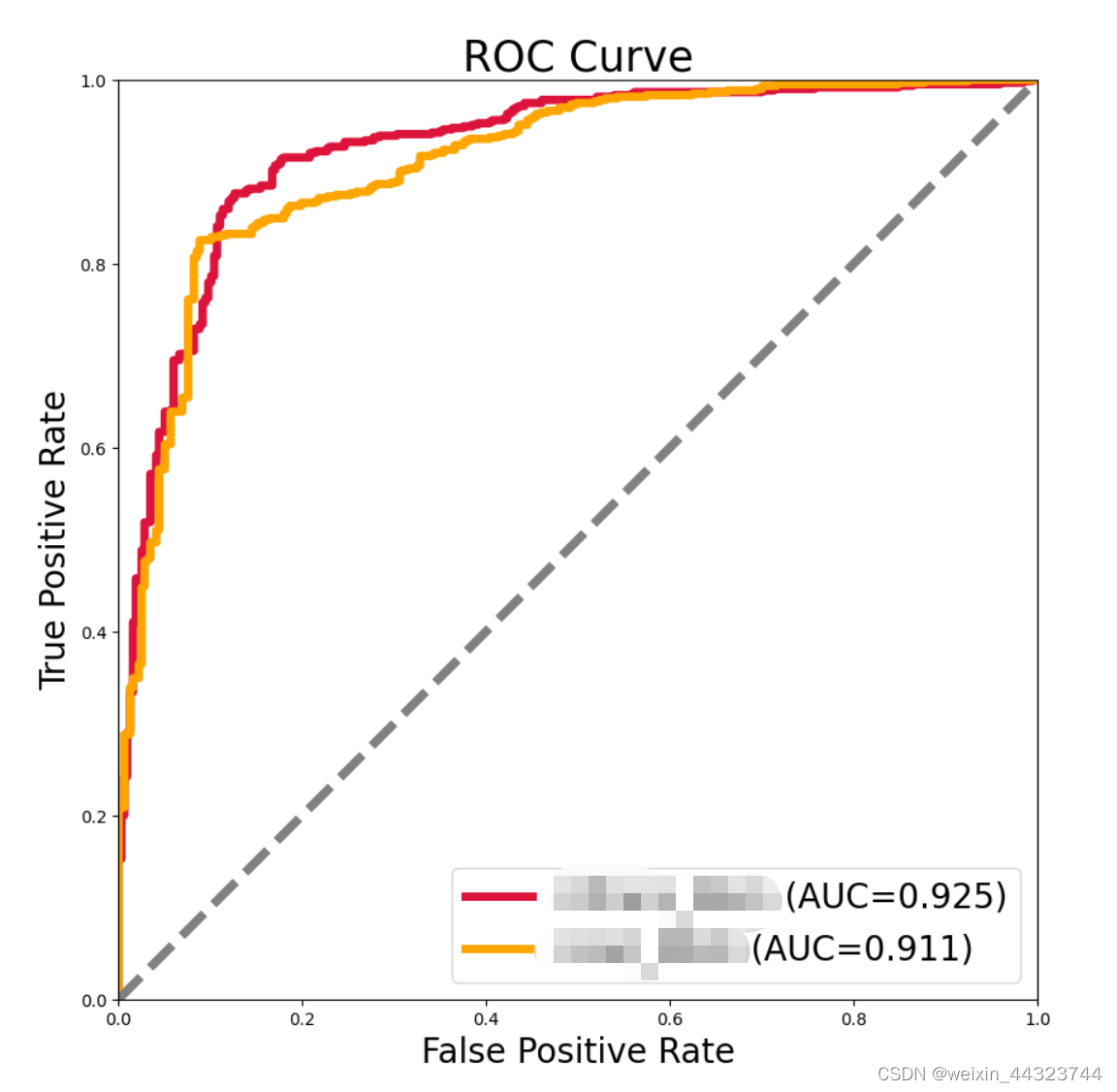
Draw multiple ROC curves on a graph

Two methods for preorder traversal of binary tree

国内代码托管中心- 码云

Error: GPG check FAILED Once install MySQL

package.json的所有配置项及其用法,你都熟悉么

Mongostat performance analysis

Exclusive download. Alibaba cloud native brings 10+ technical experts to bring new possibilities of cloud native and cloud future
随机推荐
存token获取token刷新token发送header头
idea使用
. NETCORE uses redis to limit the number of interface accesses
Multimodal learning pooling with context gating for video classification
Multithreading tool class completabilefuture
Method of changing host name (permanent)
Some thoughts on port forwarding program
解析学习幼儿机器人教育的浪潮
期末总结——Spark
施工企业选择智慧工地的有效方法
As a qualified network worker, you must master DHCP snooping knowledge!
Two methods for preorder traversal of binary tree
[when OSPF introduces direct connection routes, it makes a summary by using static black hole routes]
centos下配置mysql 5.7 和 8
The meaning and calculation method of receptive field
用机器人教育创造新一代生产和服务工具
示波器 符号
[translation] [Chapter 2 ③] mindshare PCI Express technology 3.0
package.json的所有配置项及其用法,你都熟悉么
json tobean