当前位置:网站首页>Go implements distributed locks
Go implements distributed locks
2022-06-29 03:33:00 【. fried eggs with tomatoes】
brief introduction
This paper takes inventory deduction as an example , Implement process lock separately ;mysql The pessimistic lock of ; Optimistic lock and redis Distributed locks for
surface
CREATE TABLE `stocks` (
  `id` bigint(20) unsigned NOT NULL AUTO_INCREMENT,
  `goods` varchar(20) DEFAULT NULL COMMENT ' goods id',
  `stocks` int(11) DEFAULT NULL COMMENT ' stock ',
  `version` int(11) DEFAULT NULL COMMENT ' Optimism lock ',
  PRIMARY KEY (`id`),
  KEY `idx_stocks_goods` (`goods`)
) ENGINE=InnoDB DEFAULT CHARSET=utf8;
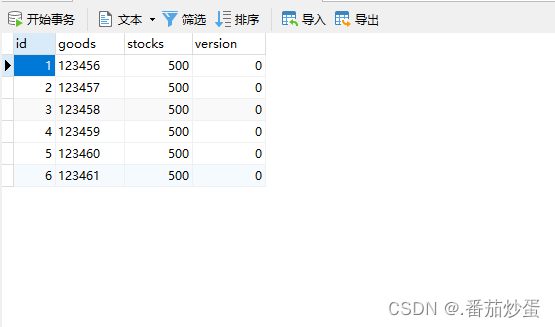
unlocked
service
package service

import (
	context "context"
	"go-locks/no-lock/db"
	"go-locks/no-lock/model"
	"go-locks/no-lock/proto"
	"google.golang.org/grpc/codes"
	"google.golang.org/grpc/status"
	"google.golang.org/protobuf/types/known/emptypb"
)

type Server struct{
    }

func (s Server) SellStock(ctx context.Context, request *proto.StockRequest) (*emptypb.Empty, error) {

	tx := db.DB.Begin()
	for _, info := range request.StockInfos {

		var stock model.Stock
		if result := tx.Where(&model.Stock{
    Goods: info.GoodsId}).First(&stock); result.RowsAffected == 0 {

			return nil, status.Error(codes.NotFound, " Product information does not exist ")
		}
		if stock.Stocks < info.Num {

			//  Insufficient inventory   Roll back the transaction
			tx.Rollback()
			return nil, status.Error(codes.ResourceExhausted, " Insufficient inventory ")
		}
		stock.Stocks -= info.Num
		tx.Save(stock)
	}
	tx.Commit()
	return &emptypb.Empty{
    }, nil
}
client
package main

import (
	"context"
	"go-locks/no-lock/proto"
	"google.golang.org/grpc"
	"google.golang.org/grpc/credentials/insecure"
	"sync"
)

var client proto.StockClient

func main() {

	conn, err := grpc.Dial("127.0.0.1:8088", grpc.WithTransportCredentials(insecure.NewCredentials()))
	if err != nil {

		panic(err)
	}
	client = proto.NewStockClient(conn)
	var wg sync.WaitGroup
	wg.Add(20)
	for i := 0; i < 20; i++ {

		go TestSellStock(&wg)
	}
	wg.Wait()
}

func TestSellStock(wg *sync.WaitGroup) {

	defer wg.Done()
	_, err := client.SellStock(context.Background(), &proto.StockRequest{

		StockInfos: []*proto.StockInfo{

			{

				GoodsId: "123456",
				Num:     1,
			},
		},
	})
	if err != nil {

		panic(err)
	}
}
test

Turn on 20gorouinte De deduction 123456 Inventory of ; Under normal circumstances 123456 Our inventory should be surplus 480 Pieces of , But because we didn't lock it , Resulting in inventory remaining 485 Pieces of . This situation is absolutely unacceptable in the real scene
Process lock
service
package service

import (
	context "context"
	"go-locks/process-lock/db"
	"go-locks/process-lock/model"
	"go-locks/process-lock/proto"
	"google.golang.org/grpc/codes"
	"google.golang.org/grpc/status"
	"google.golang.org/protobuf/types/known/emptypb"
	"sync"
)

type Server struct{
    }

var mutex sync.Mutex

func (s Server) SellStock(ctx context.Context, request *proto.StockRequest) (*emptypb.Empty, error) {

	//  Lock
	mutex.Lock()
	tx := db.DB.Begin()
	for _, info := range request.StockInfos {

		var stock model.Stock
		if result := tx.Where(&model.Stock{
    Goods: info.GoodsId}).First(&stock); result.RowsAffected == 0 {

			return nil, status.Error(codes.NotFound, " Product information does not exist ")
		}
		if stock.Stocks < info.Num {

			//  Insufficient inventory   Roll back the transaction
			tx.Rollback()
			return nil, status.Error(codes.ResourceExhausted, " Insufficient inventory ")
		}
		stock.Stocks -= info.Num
		tx.Save(stock)
	}
	tx.Commit()
	//  Unlock
	mutex.Unlock()
	return &emptypb.Empty{
    }, nil
}
client
package main

import (
	"context"
	"go-locks/process-lock/proto"
	"google.golang.org/grpc"
	"google.golang.org/grpc/credentials/insecure"
	"sync"
)

var client proto.StockClient

func main() {

	conn, err := grpc.Dial("127.0.0.1:8088", grpc.WithTransportCredentials(insecure.NewCredentials()))
	if err != nil {

		panic(err)
	}
	client = proto.NewStockClient(conn)
	var wg sync.WaitGroup
	wg.Add(20)
	for i := 0; i < 20; i++ {

		go TestSellStock(&wg)
	}
	wg.Wait()
}

func TestSellStock(wg *sync.WaitGroup) {

	defer wg.Done()
	_, err := client.SellStock(context.Background(), &proto.StockRequest{

		StockInfos: []*proto.StockInfo{

			{

				GoodsId: "123457",
				Num:     1,
			},
		},
	})
	if err != nil {

		panic(err)
	}
}
test

From the results alone, there is no problem , But there are still problems :
- The lock used here , It's the whole block of locked code , No matter which commodity comes in, it will have to wait for the lock to be released before it can be obtained and executed , There are serious performance problems
- The lock used here , Is a process level lock , yes go Language provided locks , But in real scenarios, they are deployed by multiple instances , In a multi instance scenario , There will still be problems when there is no lock
mysql Pessimistic locking
Pessimistic locking Always assume the worst , Every time I go to get the data, I think others will modify it , So every time I get the data, I lock it , So people who want to take this data will block it until it gets the lock
service
package service

import (
	context "context"
	"go-locks/pessimistic-lock/db"
	"go-locks/pessimistic-lock/model"
	"go-locks/pessimistic-lock/proto"
	"google.golang.org/grpc/codes"
	"google.golang.org/grpc/status"
	"google.golang.org/protobuf/types/known/emptypb"
	"gorm.io/gorm/clause"
)

type Server struct{
    }

func (s Server) SellStock(ctx context.Context, request *proto.StockRequest) (*emptypb.Empty, error) {

	tx := db.DB.Begin()
	for _, info := range request.StockInfos {

		var stock model.Stock
		//  adopt for update  Statements for mysql The pessimistic lock of
		if result := tx.Clauses(clause.Locking{
    Strength: "UPDATE"}).Where(&model.Stock{
    Goods: info.GoodsId}).First(&stock); result.RowsAffected == 0 {

			return nil, status.Error(codes.NotFound, " Product information does not exist ")
		}
		if stock.Stocks < info.Num {

			//  Insufficient inventory   Roll back the transaction
			tx.Rollback()
			return nil, status.Error(codes.ResourceExhausted, " Insufficient inventory ")
		}
		stock.Stocks -= info.Num
		tx.Save(stock)
	}
	tx.Commit()
	return &emptypb.Empty{
    }, nil
}
client
package main

import (
	"context"
	"go-locks/pessimistic-lock/proto"
	"google.golang.org/grpc"
	"google.golang.org/grpc/credentials/insecure"
	"sync"
)

var client proto.StockClient

func main() {

	conn, err := grpc.Dial("127.0.0.1:8088", grpc.WithTransportCredentials(insecure.NewCredentials()))
	if err != nil {

		panic(err)
	}
	client = proto.NewStockClient(conn)
	var wg sync.WaitGroup
	wg.Add(20)
	for i := 0; i < 20; i++ {

		go TestSellStock(&wg)
	}
	wg.Wait()
}

func TestSellStock(wg *sync.WaitGroup) {

	defer wg.Done()
	_, err := client.SellStock(context.Background(), &proto.StockRequest{

		StockInfos: []*proto.StockInfo{

			{

				GoodsId: "123458",
				Num:     1,
			},
		},
	})
	if err != nil {

		panic(err)
	}
}
test

mysql Optimism lock
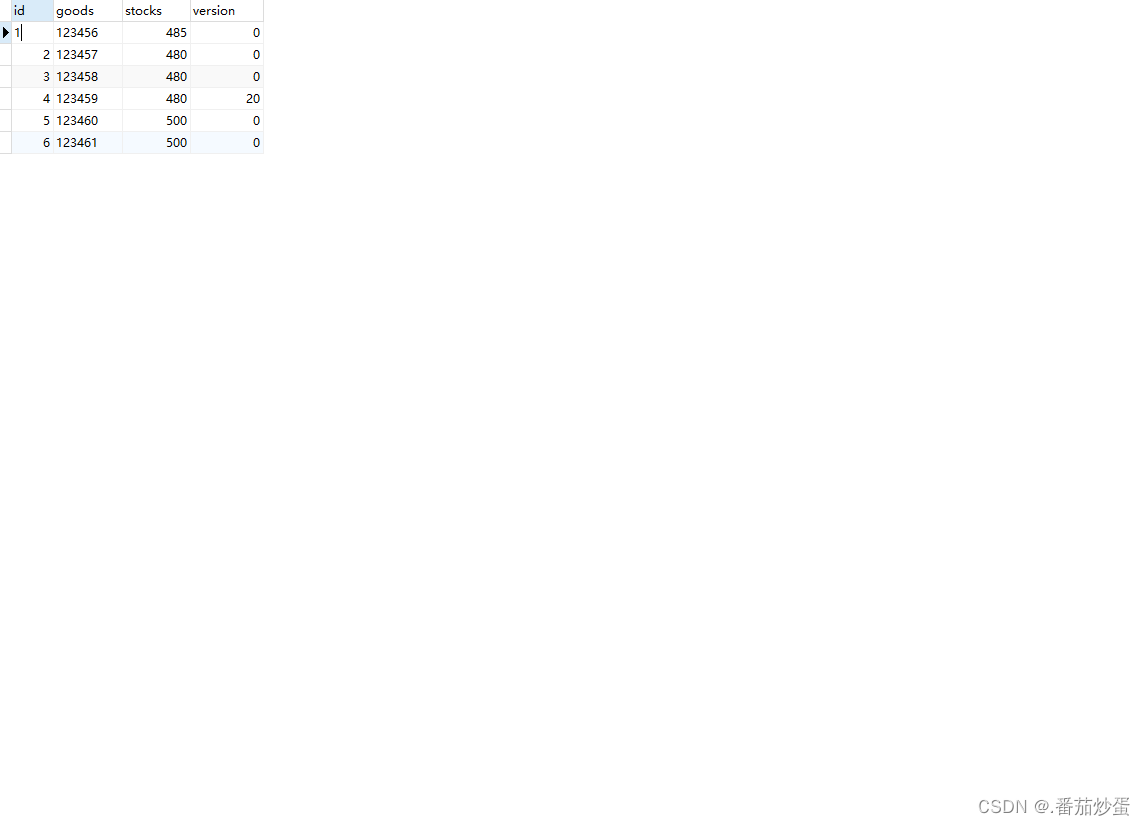
Optimism lock seeing the name of a thing one thinks of its function , Is very optimistic , Every time I go to get the data, I think other people won't modify it , So it won't lock , But in the process of updating, we will judge whether other people have updated this data during this period , You can use mechanisms like version numbers . Optimistic lock is suitable for multi read applications , This can improve throughput ,
service
package service

import (
	context "context"
	"go-locks/optimistic-lock/db"
	"go-locks/optimistic-lock/model"
	"go-locks/optimistic-lock/proto"
	"google.golang.org/grpc/codes"
	"google.golang.org/grpc/status"
	"google.golang.org/protobuf/types/known/emptypb"
	"log"
)

type Server struct{
    }

func (s Server) SellStock(ctx context.Context, request *proto.StockRequest) (*emptypb.Empty, error) {

	tx := db.DB.Begin()
	for _, info := range request.StockInfos {

		var stock model.Stock
		for {

			if result := db.DB.Where(&model.Stock{
    Goods: info.GoodsId}).First(&stock); result.RowsAffected == 0 {

				return nil, status.Error(codes.NotFound, " Product information does not exist ")
			}
			if stock.Stocks < info.Num {

				//  Insufficient inventory   Roll back the transaction
				tx.Rollback()
				return nil, status.Error(codes.ResourceExhausted, " Insufficient inventory ")
			}
			stock.Stocks -= info.Num
			if result := tx.Model(&model.Stock{
    }).Select("Stocks", "Version").
				Where("goods = ? AND version = ?", info.GoodsId, stock.Version).Updates(&model.Stock{
    Stocks: stock.Stocks, Version: stock.Version + 1}); result.RowsAffected == 0 {

				// version  Field conflict ; Deduction failed
				log.Println(" Inventory deduction failed ; retry ")
			} else {

				//  Inventory deduction succeeded
				log.Println(" Inventory deduction succeeded ")
				break
			}
		}
	}
	tx.Commit()
	return &emptypb.Empty{
    }, nil
}
client
package main

import (
	"context"
	"go-locks/optimistic-lock/proto"
	"google.golang.org/grpc"
	"google.golang.org/grpc/credentials/insecure"
	"sync"
)

var client proto.StockClient

func main() {

	conn, err := grpc.Dial("127.0.0.1:8088", grpc.WithTransportCredentials(insecure.NewCredentials()))
	if err != nil {

		panic(err)
	}
	client = proto.NewStockClient(conn)
	var wg sync.WaitGroup
	wg.Add(20)
	for i := 0; i < 20; i++ {

		go TestSellStock(&wg)
	}
	wg.Wait()
}

func TestSellStock(wg *sync.WaitGroup) {

	defer wg.Done()
	_, err := client.SellStock(context.Background(), &proto.StockRequest{

		StockInfos: []*proto.StockInfo{

			{

				GoodsId: "123459",
				Num:     1,
			},
		},
	})
	if err != nil {

		panic(err)
	}
}
test
redis Distributed lock
service
package service

import (
	context "context"
	"fmt"
	"go-locks/redis-lock/db"
	"go-locks/redis-lock/model"
	"go-locks/redis-lock/proto"
	"go-locks/redis-lock/redis"
	"google.golang.org/grpc/codes"
	"google.golang.org/grpc/status"
	"google.golang.org/protobuf/types/known/emptypb"
)

type Server struct{
    }

func (s Server) SellStock(ctx context.Context, request *proto.StockRequest) (*emptypb.Empty, error) {

	tx := db.DB.Begin()
	for _, info := range request.StockInfos {

		var stock model.Stock
		//  Use redis Distributed lock , Lock only the current product , Will not affect other goods
		mutex := redis.Redsy.NewMutex(fmt.Sprintf("goods_%s", info.GoodsId))
		if err := mutex.Lock(); err != nil {

			return nil, status.Error(codes.Internal, " obtain redis Distributed lock exception ")
		}
		if result := tx.Where(&model.Stock{
    Goods: info.GoodsId}).First(&stock); result.RowsAffected == 0 {

			return nil, status.Error(codes.NotFound, " Product information does not exist ")
		}
		if stock.Stocks < info.Num {

			//  Insufficient inventory   Roll back the transaction
			tx.Rollback()
			return nil, status.Error(codes.ResourceExhausted, " Insufficient inventory ")
		}
		stock.Stocks -= info.Num
		tx.Save(stock)
		if ok, err := mutex.Unlock(); !ok || err != nil {

			return nil, status.Error(codes.Internal, " Release redis Distributed lock exception ")
		}
	}
	tx.Commit()
	return &emptypb.Empty{
    }, nil
}
client
package main

import (
	"context"
	"go-locks/redis-lock/proto"
	"google.golang.org/grpc"
	"google.golang.org/grpc/credentials/insecure"
	"sync"
)

var client proto.StockClient

func main() {

	conn, err := grpc.Dial("127.0.0.1:8088", grpc.WithTransportCredentials(insecure.NewCredentials()))
	if err != nil {

		panic(err)
	}
	client = proto.NewStockClient(conn)
	var wg sync.WaitGroup
	wg.Add(20)
	for i := 0; i < 20; i++ {

		go TestSellStock(&wg)
	}
	wg.Wait()
}

func TestSellStock(wg *sync.WaitGroup) {

	defer wg.Done()
	_, err := client.SellStock(context.Background(), &proto.StockRequest{

		StockInfos: []*proto.StockInfo{

			{

				GoodsId: "123460",
				Num:     1,
			},
		},
	})
	if err != nil {

		panic(err)
	}
}
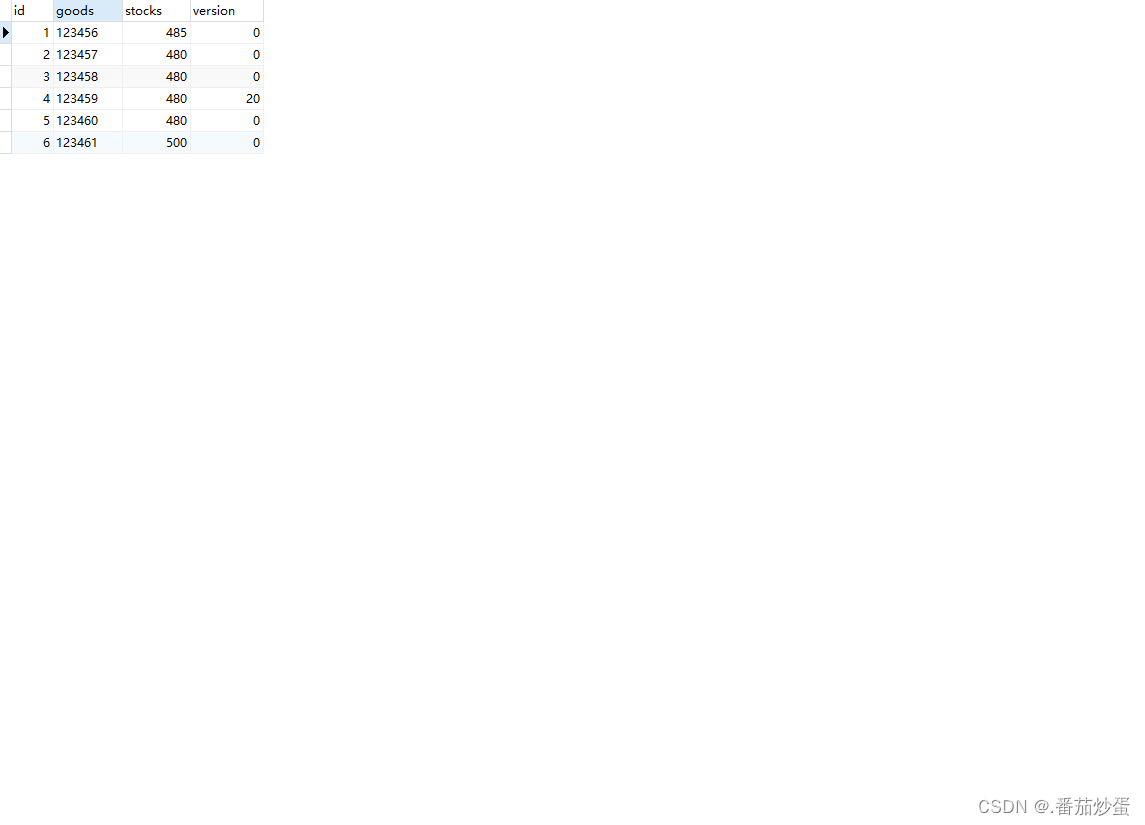
test
summary
- unlocked : No lock can cause problems even in the case of a single machine , Not recommended
- Process lock : The process lock is safe only in the case of a single machine , There is a performance bottleneck
- mysql Pessimistic locking : Security in distributed environment . It is suitable for scenarios with frequent write operations , If there are a lot of read operations , Every time I read it, I lock it , This will increase a lot of lock overhead , Reduce the throughput of the system . In special cases, it will be upgraded to a table lock , Security in distributed environment , But there are still performance bottlenecks
- mysql Optimism lock : Security in distributed environment , It is more suitable for scenarios with frequent read operations , If a large number of write operations occur , The possibility of data conflicts increases , To ensure data consistency , The application layer needs to constantly retrieve data , This will add a lot of query operations , Reduce the throughput of the system .
- redis Distributed lock : Security in distributed environment , also redis It has good performance , And you can lock a single commodity , It will only block requests for the same product , Not all requests are blocked , Greatly increased throughput
边栏推荐
- DevOps笔记-05:IT行业中BA、SM、PO、PM、PD、Dev、Ops、QA都是什么角色
- 不同的二叉搜索樹[自下而上回溯生成樹+記憶搜索--空間換時間]
- Gartner“客户之声”最高分,用户体验成中国数据库一大突破口
- [dynamic planning] change exchange
- Synchronous movement state of Jerry's watch [chapter]
- Linear and nonlinear structures
- How to keep source code secret in embedded development
- 问题——adb shellerror: insufficient permissions for device: verify udev rules.
- django model生成docx数据库设计文档
- 2D human posture estimation deeppose
猜你喜欢

【TcaplusDB知识库】TcaplusDB表数据缓写介绍

Connect error: no route to host (errno:113)

The four traversal methods of the map set can be seen at a glance
[tcaplusdb knowledge base] Introduction to tcaplusdb tcaplusadmin tool

Problème - Ajouter shellerror: permissions d'instrumentation pour le périphérique: vérifier les règles udev.
[tcapulusdb knowledge base] Introduction to tcapulusdb table data caching
![二叉树的层序遍历 II[层序遍历方式之一 ->递归遍历 + level]](/img/f9/efb73dd6047e6d5833581376904788.png)
二叉树的层序遍历 II[层序遍历方式之一 ->递归遍历 + level]

leetcode:560. 和为 K 的子数组
![Jerry's watch stops moving [chapter]](/img/04/0238701722e1f90410b37385b164e2.jpg)
Jerry's watch stops moving [chapter]
![Jerry's watch pause [chapter]](/img/57/487ca3dd40e5a7bafdbbe4a7c331e6.jpg)
Jerry's watch pause [chapter]
随机推荐
Problem - ADB shellerror: insufficient permissions for device: verify udev rules
What is the gold content of the equipment supervisor certificate? Is it worth it?
Supplement to the scheme of gateway+nacos+knife4j (swagger)
【TcaplusDB知识库】TcaplusDB-tcapsvrmgr工具介绍(三)
Restore the binary search tree [simulate according to the meaning of the question - > find the problem - > analyze the problem - > see the bidding]
2022-2028 global secondary butyl lithium industry research and trend analysis report
【若依(ruoyi)】ztree初始化
[tcaplusdb knowledge base] Introduction to tcaplusdb tcaplusadmin tool
【TcaplusDB知识库】TcaplusDB-tcaplusadmin工具介绍
Get error: Unsupported fork ordering: eip150block not enabled, but eip155block enabled at 0
【TcaplusDB知识库】TcaplusDB限制条件介绍
Different binary search trees [bottom-up backtracking spanning tree + memory search -- space for time]
【云原生】这么火,你不来了解下?
【世界海洋日】TcaplusDB号召你一同保护海洋生物多样性
【TcaplusDB知识库】TcaplusDB技术支持介绍
Set up nexus service
不同的二叉搜索樹[自下而上回溯生成樹+記憶搜索--空間換時間]
深度解析“链动2+1”模式的商业逻辑
分布式id解决方案
Jerry's watch obtains alarm mode settings [chapter]