当前位置:网站首页>20000 words will take you from 0 to 1 to build an enterprise level microservice security framework
20000 words will take you from 0 to 1 to build an enterprise level microservice security framework
2022-07-26 06:42:00 【Bulst】
《 Core technology of microservice 》 Column included , Welcome to subscribe to
List of articles
Based on the above Spring Security The study of dozens of chapters , You must be right Spring Security The framework has a certain understanding .
Then we start to build a security framework for microservices from scratch , I hope some of these ideas can give you some inspiration .
Technology stack
- spiring security
- jwt
- redis
- nacos registry
- spring cloud gateway
- sentinel
- nacos config
- seata
- mybatis
- mybatis-plus
- xxl-job
- rocketmq
Data interaction and implementation
When it comes to security, it involves authentication and authorization , So what kind of certification , Authorization for what , So the following tables are drawn .
- User table
- Role table
- Permissions on the table
This is also typical of RBAC Model .
All data sheets and project source codes can be searched for official numbers 【 Brest 】 reply 「1024」 You can get .
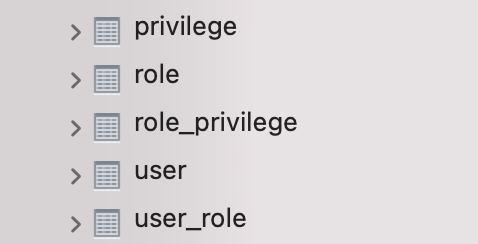
With the data sheet , Let's improve the specific code implementation .
Implementation of data interaction

Part of the code :
package com.ossa.system.mapper;

import com.baomidou.mybatisplus.core.mapper.BaseMapper;
import com.ossa.common.api.bean.User;
import org.springframework.stereotype.Component;

@Component
public interface UserMapper extends BaseMapper<User> {

}
package com.ossa.system.service;

import com.baomidou.mybatisplus.extension.service.IService;
import com.ossa.common.api.bean.User;

public interface UserService extends IService<User> {

}
package com.ossa.system.service.impl;

import com.baomidou.mybatisplus.extension.service.impl.ServiceImpl;
import com.ossa.common.api.bean.User;
import com.ossa.system.mapper.UserMapper;
import com.ossa.system.service.UserService;
import org.springframework.stereotype.Service;

@Service
public class UserServiceImpl extends ServiceImpl<UserMapper, User>  implements UserService {

}
Certification design
Complete authentication through login , First, the login request should be spared in the configuration class , I implement an anonymous annotation here , The code and analysis will be given later .
The overall design idea : Complete authentication through user name and password , Confirm that the user is trusted , Get according to user information token, Every time you ask, bring token, Complete the verification .
- Get the user information of parameter transmission , user name 、 Password etc. .
String password = authUser.getPassword(); - Put the user name 、 password 、 Encapsulated into UsernamePasswordAuthenticationToken object
UsernamePasswordAuthenticationToken authenticationToken = new UsernamePasswordAuthenticationToken(authUser.getUsername(), password); - Get the authentication manager
AuthenticationManager authenticationManager = authenticationManagerBuilder.getObject(); - authentication
Authentication authentication = authenticationManager.authenticate(authenticationToken); - rewrite
UserDetailsService, Getting user information from a database , To complete the certification process . - After successful certification , Generate according to the authentication information token
- Can be token As key Deposit in redis, use redis The expiration time of jwt Of token Expiration time of token
- Get user identity information
- take token Information and user information return .
Code implementation :
    @PostMapping("/login")
    @AnonymousAccess
    public ResponseEntity<Object> login(@Validated @RequestBody AuthUserDto authUser){

        //  Password decryption
// String password = RsaUtils.decryptByPrivateKey(RsaProperties.privateKey, authUser.getPassword());
        String password = authUser.getPassword();
        //  Put the user name 、 password 、 Encapsulated into UsernamePasswordAuthenticationToken object
        UsernamePasswordAuthenticationToken authenticationToken =
                new UsernamePasswordAuthenticationToken(authUser.getUsername(), password);
        //  Get the authentication manager
        AuthenticationManager authenticationManager = authenticationManagerBuilder.getObject();
        //  Certification core method
        Authentication authentication = authenticationManager.authenticate(authenticationToken);
// //  After successful certification , Save the authentication information to SecurityContext in
// SecurityContextHolder.getContext().setAuthentication(authentication);
        //  Generate according to the authentication information token
        String token = tokenProvider.createToken(authentication);
        //  Get user identity information
        User one = userService.getOne(new QueryWrapper<User>().eq("username", authUser.getUsername()));
        UserDto userDto = new UserDto();
        BeanUtils.copyProperties(one,userDto);

        stringRedisTemplate.opsForValue().set(properties.getOnlineKey() + token, JSONUtil.toJsonStr(userDto), properties.getTokenValidityInSeconds()/1000, TimeUnit.SECONDS);

        //  return  token  And   User information
        Map<String, Object> authInfo = new HashMap<String, Object>(2) {
    {

            put("token", properties.getTokenStartWith() + token);
            put("user", userDto);
        }};
        return ResponseEntity.ok(authInfo);
    }
package com.ossa.system.filter;

import com.baomidou.mybatisplus.core.conditions.query.QueryWrapper;
import com.ossa.common.api.bean.Privilege;
import com.ossa.common.api.bean.Role;
import com.ossa.common.api.bean.User;
import com.ossa.system.mapper.PrivilegeMapper;
import com.ossa.system.mapper.RoleMapper;
import com.ossa.system.service.UserService;
import lombok.RequiredArgsConstructor;
import org.springframework.security.core.authority.SimpleGrantedAuthority;
import org.springframework.security.core.userdetails.UserDetails;
import org.springframework.security.core.userdetails.UserDetailsService;
import org.springframework.security.core.userdetails.UsernameNotFoundException;
import org.springframework.stereotype.Service;

import javax.persistence.EntityNotFoundException;
import java.util.ArrayList;
import java.util.List;
import java.util.stream.Collectors;

@RequiredArgsConstructor
@Service("userDetailsService")
public class UserDetailsServiceImpl implements UserDetailsService {


    private final UserService userService;
    private final RoleMapper roleMapper;
    private final PrivilegeMapper privilegeMapper ;


    @Override
    public UserDetails loadUserByUsername(String username) {

        User user;
        org.springframework.security.core.userdetails.User userDetails;
        try {

            user = userService.getOne(new QueryWrapper<User>().eq("username", username));

        } catch (EntityNotFoundException e) {

            // SpringSecurity It will automatically switch UsernameNotFoundException by BadCredentialsException
            throw new UsernameNotFoundException("", e);
        }
        if (user == null) {

            throw new UsernameNotFoundException("");
        } else {


            List<Role> roles = roleMapper.listByUserId(user.getId());

            ArrayList<Privilege> privileges = new ArrayList<>();

            roles.forEach(role -> privileges.addAll(privilegeMapper.listByRoleId(role.getId())));

            ArrayList<String> tag = new ArrayList<>();

            privileges.forEach(p -> tag.add(p.getTag()));

            List<SimpleGrantedAuthority> collect = tag.stream().map(SimpleGrantedAuthority::new)
                    .collect(Collectors.toList());
            userDetails = new org.springframework.security.core.userdetails.User(username, user.getPassword(), collect);

        }
        return userDetails;
    }
}
package com.ossa.system.filter;


import cn.hutool.core.date.DateField;
import cn.hutool.core.date.DateUtil;
import cn.hutool.core.util.IdUtil;
import com.ossa.common.bean.SecurityProperties;
import io.jsonwebtoken.*;
import io.jsonwebtoken.io.Decoders;
import io.jsonwebtoken.security.Keys;
import lombok.extern.slf4j.Slf4j;
import org.springframework.beans.factory.InitializingBean;
import org.springframework.data.redis.core.StringRedisTemplate;
import org.springframework.security.authentication.UsernamePasswordAuthenticationToken;
import org.springframework.security.core.Authentication;
import org.springframework.security.core.userdetails.User;
import org.springframework.stereotype.Component;

import javax.servlet.http.HttpServletRequest;
import java.security.Key;
import java.util.ArrayList;
import java.util.Date;
import java.util.concurrent.TimeUnit;

@Slf4j
@Component
public class TokenProvider implements InitializingBean {


    private final SecurityProperties properties;
    private final StringRedisTemplate stringRedisTemplate;
    public static final String AUTHORITIES_KEY = "user";
    private JwtParser jwtParser;
    private JwtBuilder jwtBuilder;

    public TokenProvider(SecurityProperties properties, StringRedisTemplate stringRedisTemplate) {

        this.properties = properties;
        this.stringRedisTemplate = stringRedisTemplate;
    }

    @Override
    public void afterPropertiesSet() {

        byte[] keyBytes = Decoders.BASE64.decode(properties.getBase64Secret());
        Key key = Keys.hmacShaKeyFor(keyBytes);
        jwtParser = Jwts.parserBuilder()
                .setSigningKey(key)
                .build();
        jwtBuilder = Jwts.builder()
                .signWith(key, SignatureAlgorithm.HS512);
    }

    /** *  establish Token  Settings never expire , * Token  The time validity of goes to Redis  maintain  * * @param authentication / * @return / */
    public String createToken(Authentication authentication) {

        return jwtBuilder
                //  Join in ID Make sure that the generated  Token  It's not consistent
                .setId(IdUtil.simpleUUID())
                .claim(AUTHORITIES_KEY, authentication.getName())
                .setSubject(authentication.getName())
                .compact();
    }

    /** *  basis Token  Obtain authentication information  * * @param token / * @return / */
    Authentication getAuthentication(String token) {

        Claims claims = getClaims(token);
        User principal = new User(claims.getSubject(), "******", new ArrayList<>());
        return new UsernamePasswordAuthenticationToken(principal, token, new ArrayList<>());
    }

    public Claims getClaims(String token) {

        return jwtParser
                .parseClaimsJws(token)
                .getBody();
    }

    /** * @param token  What needs to be checked token */
    public void checkRenewal(String token) {

        //  Determine whether to renew token, Calculation token The expiration time of
        Long expire = stringRedisTemplate.getExpire(properties.getOnlineKey() + token, TimeUnit.SECONDS);
        long time = expire == null ? 0 : expire * 1000;
        Date expireDate = DateUtil.offset(new Date(), DateField.MILLISECOND, (int) time);
        //  Judge the time difference between the current time and the expiration time
        long differ = expireDate.getTime() - System.currentTimeMillis();
        //  If it is within the scope of renewal inspection , Then it will be renewed
        if (differ <= properties.getDetect()) {

            long renew = time + properties.getRenew();
            stringRedisTemplate.expire(properties.getOnlineKey() + token, renew, TimeUnit.MILLISECONDS);
        }
    }

    public String getToken(HttpServletRequest request) {

        final String requestHeader = request.getHeader(properties.getHeader());
        if (requestHeader != null && requestHeader.startsWith(properties.getTokenStartWith())) {

            return requestHeader.substring(7);
        }
        return null;
    }
}
Authorized design
- Design yourself filter, Intercept our generated token, If token legal , Will token Parse and encapsulate into
UsernamePasswordAuthenticationToken, Save in the security context - To ensure the success of authorization , We need to filter Put it in
UsernamePasswordAuthenticationFilterPre execution
package com.ossa.system.filter;

import cn.hutool.core.util.StrUtil;
import com.ossa.common.bean.SecurityProperties;
import io.jsonwebtoken.ExpiredJwtException;
import org.slf4j.Logger;
import org.slf4j.LoggerFactory;
import org.springframework.data.redis.core.StringRedisTemplate;
import org.springframework.security.core.Authentication;
import org.springframework.security.core.context.SecurityContextHolder;
import org.springframework.util.StringUtils;
import org.springframework.web.filter.GenericFilterBean;

import javax.servlet.FilterChain;
import javax.servlet.ServletException;
import javax.servlet.ServletRequest;
import javax.servlet.ServletResponse;
import javax.servlet.http.HttpServletRequest;
import java.io.IOException;

public class OssaTokenFilter extends GenericFilterBean {

    private static final Logger log = LoggerFactory.getLogger(OssaTokenFilter.class);

    private final StringRedisTemplate stringRedisTemplate;

    private final TokenProvider tokenProvider;
    private final SecurityProperties properties;

    /** * @param tokenProvider Token * @param properties JWT */
    public OssaTokenFilter(TokenProvider tokenProvider, SecurityProperties properties, StringRedisTemplate stringRedisTemplate) {

        this.properties = properties;
        this.tokenProvider = tokenProvider;
        this.stringRedisTemplate = stringRedisTemplate;
    }

    @Override
    public void doFilter(ServletRequest servletRequest, ServletResponse servletResponse, FilterChain filterChain)
            throws IOException, ServletException {

        HttpServletRequest httpServletRequest = (HttpServletRequest) servletRequest;
        String token = resolveToken(httpServletRequest);
        //  about  Token  If it is empty, you don't need to check  Redis
        if (StrUtil.isNotBlank(token)) {

            String s = null;
            try {

                s = stringRedisTemplate.opsForValue().get(properties.getOnlineKey() + token);
            } catch (ExpiredJwtException e) {

                log.error(e.getMessage());
            }
            if (s != null && StringUtils.hasText(token)) {

                Authentication authentication = tokenProvider.getAuthentication(token);
                SecurityContextHolder.getContext().setAuthentication(authentication);
                // Token  Renewal
                tokenProvider.checkRenewal(token);
            }
        }
        filterChain.doFilter(servletRequest, servletResponse);
    }

    /** *  Preliminary test Token * * @param request / * @return / */
    private String resolveToken(HttpServletRequest request) {

        String bearerToken = request.getHeader(properties.getHeader());
        if (StringUtils.hasText(bearerToken) && bearerToken.startsWith(properties.getTokenStartWith())) {

            //  Remove the token prefix
            return bearerToken.replace(properties.getTokenStartWith(), "");
        } else {

            log.debug(" illegal Token:{}", bearerToken);
        }
        return null;
    }
}
The core configuration
package com.ossa.common.security.core.config;

import com.ossa.common.api.anno.AnonymousAccess;
import com.ossa.common.api.bean.SecurityProperties;
import com.ossa.common.api.enums.RequestMethodEnum;
import com.ossa.common.security.core.filter.OssaTokenFilter;
import com.ossa.common.security.core.filter.TokenProvider;
import com.ossa.common.security.core.handler.JwtAccessDeniedHandler;
import com.ossa.common.security.core.handler.JwtAuthenticationEntryPoint;
import lombok.RequiredArgsConstructor;
import org.springframework.context.ApplicationContext;
import org.springframework.context.annotation.Bean;
import org.springframework.context.annotation.Configuration;
import org.springframework.data.redis.core.StringRedisTemplate;
import org.springframework.http.HttpMethod;
import org.springframework.security.authentication.AuthenticationManager;
import org.springframework.security.config.annotation.method.configuration.EnableGlobalMethodSecurity;
import org.springframework.security.config.annotation.web.builders.HttpSecurity;
import org.springframework.security.config.annotation.web.configuration.EnableWebSecurity;
import org.springframework.security.config.annotation.web.configuration.WebSecurityConfigurerAdapter;
import org.springframework.security.config.core.GrantedAuthorityDefaults;
import org.springframework.security.config.http.SessionCreationPolicy;
import org.springframework.security.crypto.bcrypt.BCryptPasswordEncoder;
import org.springframework.security.crypto.password.PasswordEncoder;
import org.springframework.security.web.authentication.UsernamePasswordAuthenticationFilter;
import org.springframework.web.bind.annotation.RequestMethod;
import org.springframework.web.method.HandlerMethod;
import org.springframework.web.servlet.mvc.method.RequestMappingInfo;
import org.springframework.web.servlet.mvc.method.annotation.RequestMappingHandlerMapping;

import java.util.*;

@Configuration
@EnableWebSecurity
@RequiredArgsConstructor
@EnableGlobalMethodSecurity(prePostEnabled = true, securedEnabled = true)
public class OssaSecurityConfigurer extends WebSecurityConfigurerAdapter {

    private final TokenProvider tokenProvider;
    private final SecurityProperties properties;
    private final ApplicationContext applicationContext;
    private final JwtAuthenticationEntryPoint authenticationErrorHandler;

    private final JwtAccessDeniedHandler jwtAccessDeniedHandler;

    private final StringRedisTemplate stringRedisTemplate;

    @Bean
    public AuthenticationManager authenticationManagerBean() throws Exception {

        return super.authenticationManagerBean();
    }

    @Bean
    GrantedAuthorityDefaults grantedAuthorityDefaults() {

        //  Remove  ROLE_  Prefix
        return new GrantedAuthorityDefaults("");
    }

    @Bean
    public PasswordEncoder passwordEncoder() {

        //  Password encryption
        return new BCryptPasswordEncoder();

    }

    @Override
    protected void configure(HttpSecurity httpSecurity) throws Exception {


        OssaTokenFilter customFilter = new OssaTokenFilter(tokenProvider, properties,stringRedisTemplate);

        //  Search for anonymous tags  url: @AnonymousAccess
        RequestMappingHandlerMapping requestMappingHandlerMapping = (RequestMappingHandlerMapping) applicationContext.getBean("requestMappingHandlerMapping");
        Map<RequestMappingInfo, HandlerMethod> handlerMethodMap = requestMappingHandlerMapping.getHandlerMethods();
        //  Get anonymous tags
        Map<String, Set<String>> anonymousUrls = getAnonymousUrl(handlerMethodMap);
        httpSecurity
                //  Ban  CSRF
                .csrf().disable()
                .addFilterBefore(customFilter, UsernamePasswordAuthenticationFilter.class)

                //  Authorization exception
                .exceptionHandling()
                .authenticationEntryPoint(authenticationErrorHandler)
                .accessDeniedHandler(jwtAccessDeniedHandler)
                //  prevent iframe  Create cross domain
                .and()
                .headers()
                .frameOptions()
                .disable()
                //  Do not create session
                .and()
                .sessionManagement()
                .sessionCreationPolicy(SessionCreationPolicy.STATELESS)
                .and()
                .authorizeRequests()
                //  Static resources and so on
                .antMatchers(
                        HttpMethod.GET,
                        "/*.html",
                        "/**/*.html",
                        "/**/*.css",
                        "/**/*.js",
                        "/webSocket/**"
                ).permitAll()
                // swagger  file
                .antMatchers("/swagger-ui.html").permitAll()
                .antMatchers("/swagger-resources/**").permitAll()
                .antMatchers("/webjars/**").permitAll()
                .antMatchers("/*/api-docs").permitAll()
                //  file
                .antMatchers("/avatar/**").permitAll()
                .antMatchers("/file/**").permitAll()
                //  Alibaba  druid
                .antMatchers("/druid/**").permitAll()
                //  release OPTIONS request
                .antMatchers(HttpMethod.OPTIONS, "/**").permitAll()
                //  Customize anonymous access to all url release : Allow anonymity and band Token visit , Delicacy to every  Request  type
                // GET
                .antMatchers(HttpMethod.GET, anonymousUrls.get(RequestMethodEnum.GET.getType()).toArray(new String[0])).permitAll()
                // POST
                .antMatchers(HttpMethod.POST, anonymousUrls.get(RequestMethodEnum.POST.getType()).toArray(new String[0])).permitAll()
                // PUT
                .antMatchers(HttpMethod.PUT, anonymousUrls.get(RequestMethodEnum.PUT.getType()).toArray(new String[0])).permitAll()
                // PATCH
                .antMatchers(HttpMethod.PATCH, anonymousUrls.get(RequestMethodEnum.PATCH.getType()).toArray(new String[0])).permitAll()
                // DELETE
                .antMatchers(HttpMethod.DELETE, anonymousUrls.get(RequestMethodEnum.DELETE.getType()).toArray(new String[0])).permitAll()
                //  All types of interfaces are released
                .antMatchers(anonymousUrls.get(RequestMethodEnum.ALL.getType()).toArray(new String[0])).permitAll()

                //  All requests require authentication
                .anyRequest().authenticated();
    }

    private Map<String, Set<String>> getAnonymousUrl(Map<RequestMappingInfo, HandlerMethod> handlerMethodMap) {

        Map<String, Set<String>> anonymousUrls = new HashMap<>(6);
        Set<String> get = new HashSet<>();
        Set<String> post = new HashSet<>();
        Set<String> put = new HashSet<>();
        Set<String> patch = new HashSet<>();
        Set<String> delete = new HashSet<>();
        Set<String> all = new HashSet<>();
        for (Map.Entry<RequestMappingInfo, HandlerMethod> infoEntry : handlerMethodMap.entrySet()) {

            HandlerMethod handlerMethod = infoEntry.getValue();
            AnonymousAccess anonymousAccess = handlerMethod.getMethodAnnotation(AnonymousAccess.class);
            if (null != anonymousAccess) {

                List<RequestMethod> requestMethods = new ArrayList<>(infoEntry.getKey().getMethodsCondition().getMethods());
                RequestMethodEnum request = RequestMethodEnum.find(requestMethods.size() == 0 ? RequestMethodEnum.ALL.getType() : requestMethods.get(0).name());
                switch (Objects.requireNonNull(request)) {

                    case GET:
                        get.addAll(infoEntry.getKey().getPatternsCondition().getPatterns());
                        break;
                    case POST:
                        post.addAll(infoEntry.getKey().getPatternsCondition().getPatterns());
                        break;
                    case PUT:
                        put.addAll(infoEntry.getKey().getPatternsCondition().getPatterns());
                        break;
                    case PATCH:
                        patch.addAll(infoEntry.getKey().getPatternsCondition().getPatterns());
                        break;
                    case DELETE:
                        delete.addAll(infoEntry.getKey().getPatternsCondition().getPatterns());
                        break;
                    default:
                        all.addAll(infoEntry.getKey().getPatternsCondition().getPatterns());
                        break;
                }
            }
        }
        anonymousUrls.put(RequestMethodEnum.GET.getType(), get);
        anonymousUrls.put(RequestMethodEnum.POST.getType(), post);
        anonymousUrls.put(RequestMethodEnum.PUT.getType(), put);
        anonymousUrls.put(RequestMethodEnum.PATCH.getType(), patch);
        anonymousUrls.put(RequestMethodEnum.DELETE.getType(), delete);
        anonymousUrls.put(RequestMethodEnum.ALL.getType(), all);
        return anonymousUrls;
    }
}
Custom permission annotation
package com.ossa.common.security.core.config;

import org.springframework.security.core.GrantedAuthority;
import org.springframework.security.core.context.SecurityContextHolder;
import org.springframework.stereotype.Service;

import java.util.Arrays;
import java.util.List;
import java.util.stream.Collectors;

@Service(value = "pc")
public class PermissionConfig {


    public Boolean check(String... permissions) {

        //  Get all permissions of the current user
        List<String> permission = SecurityContextHolder.getContext()
                .getAuthentication()
                .getAuthorities()
                .stream()
                .map(GrantedAuthority::getAuthority)
                .collect(Collectors
                        .toList());
        //  Judge whether all permissions of the current user include the permissions defined on the interface
        return permission.contains("ADMIN") || permission.contains("INNER") || permission.contains("OFFICEIT") || Arrays.stream(permissions).anyMatch(permission::contains);
    }
}
Permission exception handling
package com.ossa.common.security.core.handler;

import org.springframework.security.access.AccessDeniedException;
import org.springframework.security.web.access.AccessDeniedHandler;
import org.springframework.stereotype.Component;

import javax.servlet.http.HttpServletRequest;
import javax.servlet.http.HttpServletResponse;
import java.io.IOException;


@Component
public class JwtAccessDeniedHandler implements AccessDeniedHandler {


    @Override
    public void handle(HttpServletRequest request, HttpServletResponse response, AccessDeniedException accessDeniedException) throws IOException {

        // When a user accesses protected without authorization REST Resource time , This method will be called to send 403 Forbidden Respond to
        response.sendError(HttpServletResponse.SC_FORBIDDEN, accessDeniedException.getMessage());
    }
}
package com.ossa.common.security.core.handler;

import org.springframework.security.core.AuthenticationException;
import org.springframework.security.web.AuthenticationEntryPoint;
import org.springframework.stereotype.Component;

import javax.servlet.http.HttpServletRequest;
import javax.servlet.http.HttpServletResponse;
import java.io.IOException;


@Component
public class JwtAuthenticationEntryPoint implements AuthenticationEntryPoint {


    @Override
    public void commence(HttpServletRequest request,
                         HttpServletResponse response,
                         AuthenticationException authException) throws IOException {

        //  When users try to access secure REST Resources without providing any credentials , This method will be called to send 401  Respond to
        response.sendError(HttpServletResponse.SC_UNAUTHORIZED, authException == null ? "Unauthorized" : authException.getMessage());
    }
}
Gateway processing
The gateway only needs to forward token To specific services
Before writing this article , I have upgraded this part to UAA Certification Authority Center , Therefore, there is no relevant code here .
Internal flow processing
In the design process of internal flow , We don't need gateway distribution token, Therefore, in this design , I only in feign Of api Uniformly add permission identification at the interface , And after simple encryption .
And let go of the logo at the above customized permission annotation , Do not verify permissions .
package com.ossa.feign.config;

import com.ossa.feign.util.EncryptUtil;
import feign.Logger;
import feign.Request;
import feign.RequestInterceptor;
import feign.RequestTemplate;
import org.springframework.context.annotation.Bean;
import org.springframework.context.annotation.Configuration;
import org.springframework.web.context.request.RequestAttributes;
import org.springframework.web.context.request.RequestContextHolder;
import org.springframework.web.context.request.ServletRequestAttributes;

import javax.servlet.http.HttpServletRequest;
import java.util.Enumeration;
import java.util.Objects;
import java.util.concurrent.TimeUnit;

/** * @author issavior * * ================================= * ** * *  Modify the contract configuration , Support Feign Original notes  * * @return  return  new Contract.Default() * * * @Bean * public Contract feignContract(){ * return new Contract.Default(); * } * ==================================== */
@Configuration
public class FeignClientConfig implements RequestInterceptor {


    /** *  Timeout configuration  * * @return Request.Options */
    @Bean
    public Request.Options options() {


        return new Request.Options(5, TimeUnit.SECONDS,
                5, TimeUnit.SECONDS, true);
    }

    /** * feign Log level of  * * @return  The level of logging  */
    @Bean
    public Logger.Level feignLoggerLevel() {

        return Logger.Level.FULL;
    }

    /** *  Rewrite request interceptor apply Method , Loop request header  * * @param requestTemplate  Request template  */
    @Override
    public void apply(RequestTemplate requestTemplate) {


        RequestAttributes requestAttributes = RequestContextHolder.getRequestAttributes();
        if (Objects.isNull(requestAttributes)) {

            return;
        }
        HttpServletRequest request = ((ServletRequestAttributes) (requestAttributes)).getRequest();
        Enumeration<String> headerNames = request.getHeaderNames();
        if (headerNames != null) {

            while (headerNames.hasMoreElements()) {

                String name = headerNames.nextElement();
                String values = request.getHeader(name);
                requestTemplate.header(name, values);
            }
        }
        Enumeration<String> bodyNames = request.getParameterNames();
// body.append("token").append("=").append(EncryptUtil.encodeUTF8StringBase64("INNER")).append("&");
        if (bodyNames != null) {

            while (bodyNames.hasMoreElements()) {

                String name = bodyNames.nextElement();
                String values = request.getParameter(name);
                requestTemplate.header(name,values);
            }
        }

        requestTemplate.header("inner",EncryptUtil.encodeUTF8StringBase64("INNER"));
    }

// /**
// *  Modify the contract configuration , Support Feign Original notes
// * @return  return  new Contract.Default()
// */
// @Bean
// public Contract feignContract(){

// return new Contract.Default();
// }
}
Hot column Welcome to subscribe to
边栏推荐
猜你喜欢

Press in and pop-up sequence of "Niuke | daily question" stack

深度学习——CV、CNN、RNN
![[untitled]](/img/42/5e8b62edc0aa289098425b26df2453.jpg)
[untitled]

JVM class loading and GC garbage collection mechanism

"Final review" 16/32-bit microprocessor (8086) basic register

C language file operation

Which "digital currencies" can survive this winter? 2020-03-30

归并排序(merge_sort)

Heap sort

Quick sort
随机推荐
Go channel
Go 的切片与数组
C language introduction practice (8): switch case calculates the month, year and day of the next day (normal year / leap year calculation)
The creation of "harmonyos" project and the use of virtual machines
"Niuke | daily question" template stack
数据库性能测试(mysql)
[untitled]
Vim中删除^M
UIToolkit中显示汉字
Differences and relations between varchar and nvarchar in database
抖音web端 s_v_web_id 参数生成分析与实现
[pytorch] picture enlargement
【毕业季_进击的技术er】送别过去两年迷茫的自己。重整旗鼓,大三我来啦
@ConstructorProperties注解理解以及其对应使用方式
CS5801_HDMI转EDP优势替代LT6711A方案
Why the server is stuck
带你搞透IO多路复用原理(select、poll和epoll)
力扣5: 最长回文子串
C#使用log4net插件,输出日志到文件
[Web3 series development tutorial - create your first NFT (4)] what can NFTs bring to you