当前位置:网站首页>To understand the difference between Gram-positive and Gram-negative bacteria and the difference in pathogenicity
To understand the difference between Gram-positive and Gram-negative bacteria and the difference in pathogenicity
2022-06-25 07:55:00 【Guhe Niubo】
Gu He health

Gram positive and negative bacteria
In everyday life , We often see Drugs or antibacterial product indication I'll write like this , Effective against Gram-positive bacteria , Sensitive to Gram-negative bacteria , Or it is effective against Gram-negative bacteria , Not effective against Gram-positive bacteria . Many people may not know or understand the difference between the two .
This paper mainly introduces Gram positive and negative bacteria , The difference between them , Representative strains and specific drugs, etc .
1884 year , Bacteriologist Hans Christian Gram Invented Gram staining To identify and distinguish bacteria . This technique divides bacteria into two broad groups , namely Gram positive bacteria (G+) And gram negative bacteria (G-). The distinction is mainly between these two types of bacteria cell wall The ingredients are different , thus To color Also caused by different .
The physiological structure of these two kinds of bacteria , The cause of the disease and the antibacterial effect are different , therefore , Distinguish pathogenic bacteria It's a Gram-positive bacterium , Or negative bacteria , Clinically determined infection and Choose medication Aspects are of great significance .
Gram negative bacteria cause Most patients have basic diseases or poor physique , Diarrhea caused by intestinal bacterial infection is mostly caused by the intestinal flora Gram negative bacteria Caused by , Such as E. coli 、 Salmonella 、 Shigella , Brucella etc. , Treat this kind of bacterial infection , Generally, three generations of cephalosporins and quinolones are used . Note that most Gram-negative bacteria are resistant or insensitive to penicillin .
Most pyogenic cocci All belong to Gram positive bacteria , They can produce exotoxins to make people sick , Common strains Yes staphylococcus 、 streptococcus 、 Diplococcus pneumoniae 、 Listeria 、 Anthrax 、 Diphtheria bacilli 、 Tetanus etc. . Especially in the human intestines , Gram positive pathogenic bacteria are more likely to cause disease . Most infections caused by Gram-positive bacteria can be treated with a fairly small amount of antibiotics . penicillin 、 Clozacillin and erythromycin are sufficient to cover 90% Gram positive infection .
Besides , some Broad spectrum antibiotics It has antibacterial effect on both Gram-positive and Gram-negative bacteria , Such as ampicillin 、 Gentamicin 、 Oxytetracycline 、 Fosfomycin, ciprofloxacin, etc , But the effect may not be optimal . Besides , Sulfonamides Also belong to Broad spectrum antibacterial drugs .
In clinical application , If the bacterial infection Compare clear , Use as much as possible Narrow spectrum antibiotics , If not clear , Optional Broad spectrum antibiotics . therefore , In the clinical treatment of diseases , First of all, we should have a detailed understanding of the role and use of drugs , And then based on The type of infection or the result of diagnosis should be reasonably selected , Only in this way can we achieve The best treatment effect . otherwise , Improper drug selection , There will be Ineffective or worse Result .
Gram's Yang / The main difference between negative bacteria
The main difference between Gram-negative and Gram-positive bacteria is Thickness of peptidoglycan layer and The presence or absence of an external lipid membrane .
- Gram positive bacteria have thick peptidoglycan cell wall structure , It is purple in Gram staining test / Blue .
- Gram negative bacteria have thin cell walls , It is red to pink in the Gram staining test .
Gram staining of different bacteria

A) Rod-shaped Gram-positive Bacillus anthracis in cerebrospinal fluid samples ( Cause anthrax ), It also contains white blood cells .B) Gram positive Staphylococcus aureus ( Purple or purple ) And gram negative Escherichia coli ( Pink ) Gram stain of , They are the most commonly used gram stain reference bacteria . Reference source :Wikipedia commons and tmedweb)
Gram positive bacteria
// Lack of adventitia , More susceptible to antibiotics
The cell walls of Gram-positive bacteria contain peptidoglycans 、 Lipids 、 Phosphoglucuronic acid and phosphoteichoic acid . This structural component is different from that of peptidoglycan and outer membrane ( By lipids 、 Protein and lipopolysaccharide composition ) Composed of the cell walls of Gram-negative bacteria . Although gram positive bacteria have Thick peptidoglycan layer , But they are more susceptible than Gram-negative bacteria to certain antibiotics that target the cell wall , Because of them Lack of adventitia .
// Common pathogenic bacteria
The most common gram-positive bacteria include staphylococcus 、 streptococcus 、 Bacillus 、 Clostridium sp 、 Listeria 、 Corynebacterium, etc . The representative species of these Gram-positive bacteria are Pathogenic , And may cause a variety of diseases .
// A treatable antibiotic
penicillin It affects Gram-positive bacteria One of the main antibiotics .
Erythromycin is another powerful antibiotic used to treat Gram-positive bacterial infections . Erythromycin belongs to a class of antibiotics called macrolides , It belongs to the same class as azithromycin and clarithromycin . It is usually used by people who are allergic to penicillin .
Trimethoprim / Sulfamethoxazole , Clindamycin , Clindamycin , Doxycycline , Vancomycin can also be used in Specific Gram-positive bacterial infections .
Gram negative bacteria
// Layers of resistance are harder to kill : The cell walls are harder , The outer membrane can be changed
Gram negative bacteria have Hard protective shell . Their Peptidoglycan layer Gram positive bacilli Much thinner .
When their cell walls are disturbed , Gram negative bacteria can Release endotoxin , The symptoms are worse . meanwhile , Most antibiotics try to get close to their target , Must pass through the outer membrane . for example , Hydrophilic antibiotics pass through porin . Gram negative bacteria They can be modified by changing their hydrophobic properties or by mutations in porins Change their outer membrane . This is for these bacterial cells It creates resistance .
// Hidden mystery : More dangerous than Gram-positive bacteria
Compared with Gram-positive bacteria , Gram negative bacteria are more dangerous as disease organisms , Because of the existence of the outer membrane Capsule or mucous layer . In this way , Microbes can hide surface antigens , This antigen can Trigger the human immune response .
Gram negative bacteria are a group of notorious bacteria , can Lead to a variety of diseases , Including pneumonia 、 Meningitis 、 gonorrhea 、 bacterial dysentery 、 Cholera 、 Gastritis, etc. . In the intensive care unit (ICU) Of patients , At high risk of morbidity and mortality , It is easier to meet such bacteria , So they have Important clinical significance .
// A treatable antibiotic
Many different kinds of antibiotics have been developed to kill Gram-negative bacteria , For example, cephalosporins 、 Folic acid antagonists 、 Piperacillin - Tazobactam 、 Ureapenicillin 、 Lactam -β- lactamase inhibitor 、 Carbapenems and quinolones . They are specially developed for Gram-negative bacteria , But sometimes it is also effective for some gram-positive bacteria .
Summary of the differences between Gram-positive bacteria and Gram-negative bacteria

Reference source :microbenotes
These are the main differences between Gram-positive bacteria and Gram-negative bacteria , Next we will focus on gram Yang / Negative bacteria , from Bacterial characteristics , Shape representation , Cell structure Other aspects , For a more detailed introduction .
Bacterial characteristics
Characteristics of Gram-positive bacteria
The definition of Gram-positive bacteria is based on their brief washing with alcohol in Gram staining Ability to retain crystal violet dye . Gram positive bacteria are purple .
These bacteria have very unique characteristics , It can be distinguished from other types of bacteria . These include :
- One of the characteristics of Gram-positive bacteria is the existence of cytoplasmic lipid membrane surrounded by cell wall
- The cell walls of Gram-positive bacteria contain peptidoglycans 、 Polysaccharide 、 Teichoic acid and protein
- When viewed under a microscope , Gram positive bacteria were purple after Gram staining test
- The volume of periplasm is much smaller than that of Gram-negative bacteria
- There is a thick peptidoglycan layer
- With phosphoteic acid , Lipoteichoic acid is used as a chelating agent , It can also be used for certain types of adhesion
- Some species have certain surface appendages , Such as flagella , Can help them move
- Gram positive bacteria without flagella have two basal rings that support them
- Peptidoglycan chains pass through bacterial enzymes DD- Transpeptidase crosslinks to form rigid cell walls
- Some gram-positive bacteria have a capsule composed of polysaccharides
- They have a membrane attached to the peptidoglycan layer S layer
- They don't have the outer membrane of Gram-negative bacteria
- The cell wall structure of Gram-positive bacteria is complex , Easy to absorb foreign matters
- They rarely have hairy structures called pili . Fimbriae can be seen in a small number of Gram-positive bacteria , Such as Streptococcus and Corynebacterium
Characteristics of gram negative bacteria
In the process of Gram staining , Gram negative bacteria are washed with alcohol Will lose the color of crystal violet dye , and Absorb the pink color of saffron / Red .
Gram negative bacteria can be found in almost every living area on earth .
- They have an outer membrane made of lipopolysaccharide . The outer membrane contains lipopolysaccharide (LPS, By lipids A、 Central polysaccharide and O Antigen composition )
- They have a periplasmic space ( more ), The outer membrane is separated from the cytoplasmic layer .
- There is an inner cell membrane ( cytoplasm )
- There is a thin peptidoglycan layer ( Thicker in Gram-positive bacteria )
- Their cell walls have outer membranes , The adventitia is further divided into outer and inner lobes . The outer leaves contain lipids A、O Lipopolysaccharide composed of antigen and core polysaccharide , The inner leaf is composed of phospholipids .
- The pores exist in the outer membrane , Pores as specific molecules
- There is no teichoic acid or lipoteichoic acid
- There is also a covalent connection between peptidoglycan chain and outer membrane , It's called Braun lipoprotein
- With a few exceptions , Most do not produce spores
Shape representation
Characterization of the shape of Gram-positive bacteria
Although most bacteria are distinguished by Gram staining dyes , But microscopic observations reveal more features that can be used to define and characterize these bacteria .
according to shape The definition of , Gram positive bacteria can be divided into Two types of :
- Cocci —— The diameter is 0.5-1.0 um Round or oval shaped bacteria . They are paired 、 chain 、 Clustered or appearing alone . For example, Staphylococcus 、 streptococcus 、 Pneumococcus .
- bacillus —— Also in rod shape ; They are rod-shaped bacteria , Rounded ends 、 cone 、 Square or swollen . Their length is 1-10um, Width is 0.3-1.0um. For example, Bacillus .
Other special shapes formed by Gram-positive bacteria include :
- Tetrad —— A coccal shape , In four square clusters , for example Micrococcus( Micrococcus sp ).
- Octopus —— Collenchyma shape , Four or eight stacks , For example, Sarcocystis .
Gram Characterization of the shape of the negative bacteria
Microscopic observation range of gram negative bacteria cells from Rod to Bacillus , from Cocci to spirals , Spiral shape is the most common shape . However , Some show special shapes , Such as coccobacterium 、 Tetrad 、 fence 、 Trichome, etc . for example :
- bacillus ——Escherichia coli ( E. coli )
- Cocci —— It's a combination of cocci and bacilli , Include Hemophilus influenza( Haemophilus influenzae )
- Streptobacillus is rod-shaped , They are linked together in chains , for example Streptobacillus moniliformis ( Streptococcus moniliformis )
- Trichomes are a series of columnar rod-shaped cells , It can be wrapped in a sheath
- Spirochetes are also called spirochetes , For example, Treponema pallidum
- Filamentous Gram-negative bacteria have filamentous shapes , for example ,Norcadia spp ( Nocardia sp )
Cell structure
Gram positive bacteria
Gram positive bacteria Cell walls contain peptidoglycans 、 Lipids 、 Phosphoglucuronic acid and phosphoteichoic acid . This structural component is different from that of peptidoglycan and outer membrane ( By lipids 、 Protein and lipopolysaccharide composition ) Composed of the cell walls of Gram-negative bacteria . therefore , Gram positive bacteria The cell walls are thick , And absorbed the crystal violet dye dyed by gram . therefore , The Gram-positive bacteria under the microscope are purple .
Structural characteristics of cell wall of gram positive bacteria

Gram positive bacteria have a thick multilayer cell wall composed of peptidoglycans ( Because it contains a mixture of peptides and sugars ). Because peptidoglycans are present in most bacteria , But not in mammalian cells , Therefore, it is a good target for antibacterial drugs ( For example, cell wall synthesis inhibitors , Including penicillin 、 Cephalosporins and vancomycin ).
These antibiotics interfere with transpeptidase ( Also known as penicillin binding protein or PBP Activity of ) Catalyzes the cross-linking between adjacent glycan chains in the cell wall .
The cell wall also contains teichoic acid fibers , Helps bacteria attach to the host cell membrane ( For example, mucosal cells ) On , It will cause septic shock after release , Similar to the endotoxin released by gram-negative bacteria (LPS) The resulting infection .
β- Lactamase ( Penicillinase ) It is a family of enzymes produced by bacteria , Hydrolyzable β- Lactam antibiotics ( Many of them are also bacterial ) Four atoms of β- Lactone ring , So as to inactivate its antibacterial properties .
Bacterial cell membranes can also contain ABC Efflux pump this may lead to antibiotic resistance and resistance to drugs that have intracellular mechanisms of action ( for example DNA Gyrase inhibitors or protein synthesis inhibitors ) Multidrug resistance (MDR).
Crystal violet dye is attached to the thick peptidoglycan layer of the cell wall of Gram-positive bacteria , They are dyed purple or purple when viewed under an optical microscope .
Peptidoglycan
It is also called the cytoplasm (murein), Of bacterial cell wall content 90%.
—— Maintain shape , And maintain the strength and elasticity of the cell wall
It is a high-quality polymer , By two identical sugar derivatives (N- Acetylglucosamine and N- Acetyl muramic acid ) as well as L- Three differences rarely found in amino acid chains and proteins D- Amino acids, ( namely D- Glutamate 、D- Alanine and racemic diaminoheptanoic acid ) form , can Protect cell walls from peptidase attack .
D- Amino acids and L- Amino acids are linked to N- Acetyl teichoic acid ,L- Amino acids, especially lysine, can replace middle diaminoacrylic acid .
This interconnection of peptidoglycan subunits makes peptidoglycans have Strong ability to maintain the shape and integrity of bacteria , And Elasticity and ductility .
Peptidoglycans also have Permeability , Allow molecules to pass in and out of bacterial cells .
—— Biosynthesis of peptidoglycans
Inhibiting the synthesis of peptidoglycan layer of bacterial cell wall is the molecular target of many antibacterial drugs , Include β- Lactam antibiotics ( penicillin 、 cephalosporin 、 Carbapenems and monocyclic lactams ) and Glycopeptide antibiotics ( Vancomycin and other newer analogues ).
The two main molecular targets of these drugs are Transpeptidase , Also known as penicillin binding protein (PBP), Because they combine with penicillin , And glycosyltransferases (GT) It can be inhibited by glycopeptides such as vancomycin .
PBPs There are many subtypes , A given bacterial strain can express a variety of PBPs. these PBP In its physiological characteristics and interaction with antibiotics Sensitivity There may be Different . Depending on PBP Subtype , Glycosyltransferases can exist as individual enzymes or as dimers associated with transpeptidases .
Gram positive cell wall biosynthesis
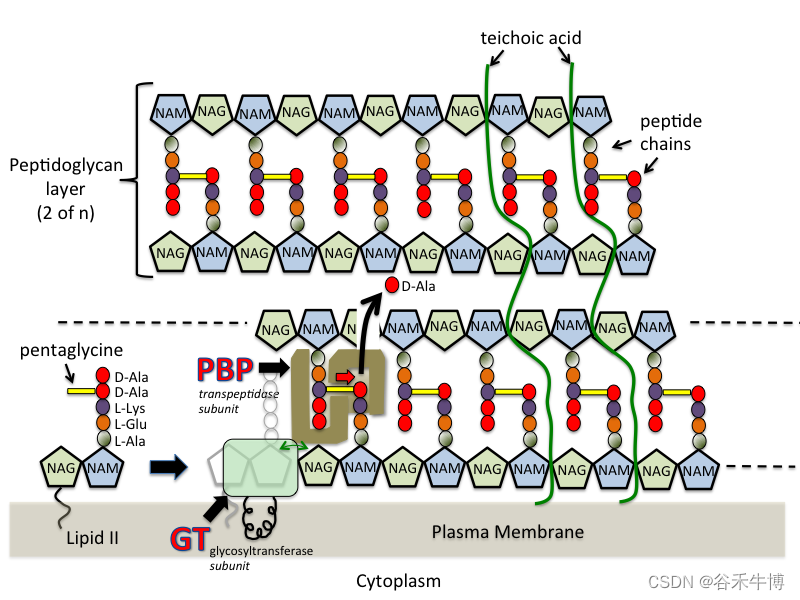
Image from (Wikipedia Commons and tmedweb)
The bacterial cell wall is made up of repeated N- Acetylglucosamine (NAG) and N- Acetyl muramic acid (NAM) Subunit chain composition .NAM Subunits with short peptide chains .
The composition of the peptide chain varies from bacterium to bacterium , But the proximal alanine is usually L-Ala, The two at the far end are usually D-Ala. Cell wall transpeptidase that also binds to penicillin ( Penicillin binding protein :PBPs) Forming bonds between peptide side chains , And expel the terminal from one of the peptide side chains D- Alanine .
Once the crosslink is formed ,PBP Will break away from the wall . With glycosyltransferase (GT) Isolate the enzyme domain NAM and NAG The activity of the residues forms a link . Some high molecular weight PBP( for example PBP2) It is an enzyme complex containing transpeptidase and glycosyltransferase domains .
Teichoic acid fibers are present in the cell walls of Gram-positive bacteria , It consists of a polymer of glycerophosphate or phosphoribosyl alcohol . They are involved in the attachment of bacteria to mucosal cells , Can induce septic shock , Similar to the release of Gram-negative bacteria LPS( Endotoxin ).
Phosphoteic acid
This is from Glycerol copolymer Composed of Reinforce the wall .
Teichoic acid is Water soluble Of , Of the total dry weight of the bacterial cell wall 50%.
It either directly With peptidoglycans Covalent linkage , or And cell membrane ( Lipoteichoic acid ) Connect . adopt 6- hydroxyl N- Acetyl muramic acid is directly linked to peptidoglycan .
With a negative charge , Extend to peptidoglycan surface , Make the bacterial cell wall negatively charged .
It also helps Maintain cell walls Structure .
It's in the gram Yin The sexual bacteria are completely non-existent .
Lipids
They have a thin layer of lipids under the peptidoglycan , about 2-5%, Its effect is Anchoring bacterial cell walls .
Gram negative bacteria
cell wall
—— The cell walls are very complex
Binding to the main role of the extracellular membrane , Add a layer of peptidoglycan , Its functional characteristics are complex , Here is a description of the cell wall and its functional parts .
The cell wall of Gram-negative bacteria has a layer 2-7nm Peptidoglycan thin layer and 7-8nm Thick outer membrane .
—— The surrounding space is large
Under the microscope , Cell membrane and cell wall Between There is a space , Called periplasm Periplasmic space . It can be found in both Gram-negative and Gram-positive bacteria , But in the gram negative In bacteria , The surrounding space is large .
The cell wall of Gram-negative bacteria

On the structure , The Gram-negative cell wall consists of two layers outside the cell membrane : A thin layer of peptidoglycan ( Too thin to absorb a large amount of methyl violet stain ) And an outer membrane ( Gram negative bacteria are unique ), Usually contains promoting small (<700 Da) Hydrophilic molecules ( For example, sugar 、 Amino acids and vitamins ) Diffuse porin .
Many antibiotics ( For example, many penicillins and cephalosporins ) They can also reach their active sites through the diffusion of porins .
However , Vancomycin (1449 Da) The quality of is too big , Unable to reach its action site through porin , This makes it ineffective against Gram-negative bacteria . therefore , The outer membrane provides Gram-negative bacteria with inherent resistance to certain antibiotics “ Internal resistance ”, It can be further modified by changing the expression level of porin or changing the pore characteristics of porin to reduce the permeability of antibiotics .
The outer membrane of Gram-negative bacteria also contains lipopolysaccharide (LPS) Or endotoxin , Can be excreted by bacteria , Cause a strong immune response in the host .
Periplasmic space
The periplasmic space of Gram-negative bacteria consists of Several proteins form , These proteins Help to obtain nutrition , For example, hydrolases that attack nucleic acids and phosphorylated molecules , And binding proteins that actively assist in the transport of substances into bacterial cells . Periplasmic space also has Synthetic peptidoglycans and repair Decoration Of toxic elements that may cause damage to cells enzyme .
Peptidoglycan
The cell wall of Gram-negative bacteria has a layer Thin peptidoglycan layer , Located above the plasma membrane , About% of cell dry weight 5%. The thickness does not exceed 4 nanometer , Some bacteria such as E. coli have only 2 Nano thick peptidoglycans .
Adventitia and lipopolysaccharide
Gram negative bacteria also have a second lipid bilayer , Located outside the peptidoglycan layer . This outer membrane is linked to peptidoglycans via Braun lipoproteins . The tight connection between outer membrane and peptidoglycan is Maintain outer membrane As Many toxic molecules and antibiotics Impermeable barrier Necessary .
On the adventitia Adhesion sites It also strengthens the Gram-negative cell wall , These adhesion sites are located in Allow cells to contact and Membrane fusion Play a role in . Substances enter cells through these adhesion sites .
Gram negative bacteria structure

Picture source :Jeff Dahl,wikipedia
The outer membrane is mainly composed of lipopolysaccharide (LPS) form , Lipopolysaccharide is a large complex molecule composed of lipids and carbohydrates . Lipopolysaccharide is composed of 3 Units make up : Lipids A、 Core polysaccharides and O Side chain .
Lipids A By two Glucosamine derivatives form , Each derivative contains three fatty acids and pyrophosphates , Any remaining portion of lipopolysaccharide will Protruding from the membrane surface .
O Side chains are also called O antigen , Is a chain extending outward from the core . It consists of sugars that cause variation between bacterial strains . these O Antigens are also responsible for Bacteria evade antibody responses .
// The role of outer membrane and its lipopolysaccharide
—— Lipopolysaccharide is responsible for protecting cell walls from external attack
LPS With a negative charge , Make the battery surface negatively charged . therefore , This stabilizes the membrane structure .
Lipids A It is a toxic component of lipopolysaccharide , So it acts as an endotoxin .
—— Antitoxin enters , Prevent loss of ingredients
Adventitia and its lipopolysaccharide Helps prevent antibiotics 、 Bile salts and other toxic elements enter and destroy cells .
The outer membrane is composed of porins , Make it have Permeability , Allow small molecules ( Like glucose ) Get into . vitamin B12 And other larger molecules are transported through the outer membrane through specific carriers .
The outer membrane also helps prevent the loss of ingredients , Especially from the periplasmic space .
It stands for bacteria and pathology
Examples of common gram-positive bacteria and diseases
The following table describes the main Gram-positive pathogens , Their basic morphological characteristics and the diseases they cause in humans .

Examples of common gram-negative bacteria and diseases
Gram negative bacteria are known to be normal flora , Some can cause serious human infections , From community acquired infection to hospital infection .
Gram negative bacteria The structure of the adventitia Is one of its many remarkable features . Lipopolysaccharide (LPS) On the outer leaf of the membrane , Its lipids A Partly used for Endotoxin .
// Gram-negative bacterial infections : Can be life-threatening when serious
If for some reason , Gram negative bacteria can reach the circulatory system of animals , Lipopolysaccharide will activate the immune system , And trigger the innate immune response , Produce cytokines and hormone regulators . at present Cause inflammation , And may lead to Toxic reactions , This leads to fever 、 Shortness of breath and low blood pressure . This is why Gram-negative bacteria are known to cause life-threatening shock .
Some symptoms of endotoxic shock :
Fever and chills or hypothermia 、 inflammation 、 Rash 、 Shortness of breath 、 Increased heart rate 、 Low blood pressure 、 Multiple organ failure, etc .
The following table gives some examples of gram-negative pathogenic bacteria and their clinical characteristics when causing diseases and infections in human hosts .

Drug intervention
Antimicrobial agents for Gram-positive bacteria
As shown in the table above , Gram positive bacteria are known to cause a variety of infections , If not treated and managed in a timely and appropriate manner , It may have a disastrous impact on human beings .
Gram positive bacilli infection is treated with antibiotics . penicillin 、 Clozacillin and erythromycin can Treatment 90% Above Gram-positive bacteria .
Common gram-positive antimicrobial agents and their mechanism of action
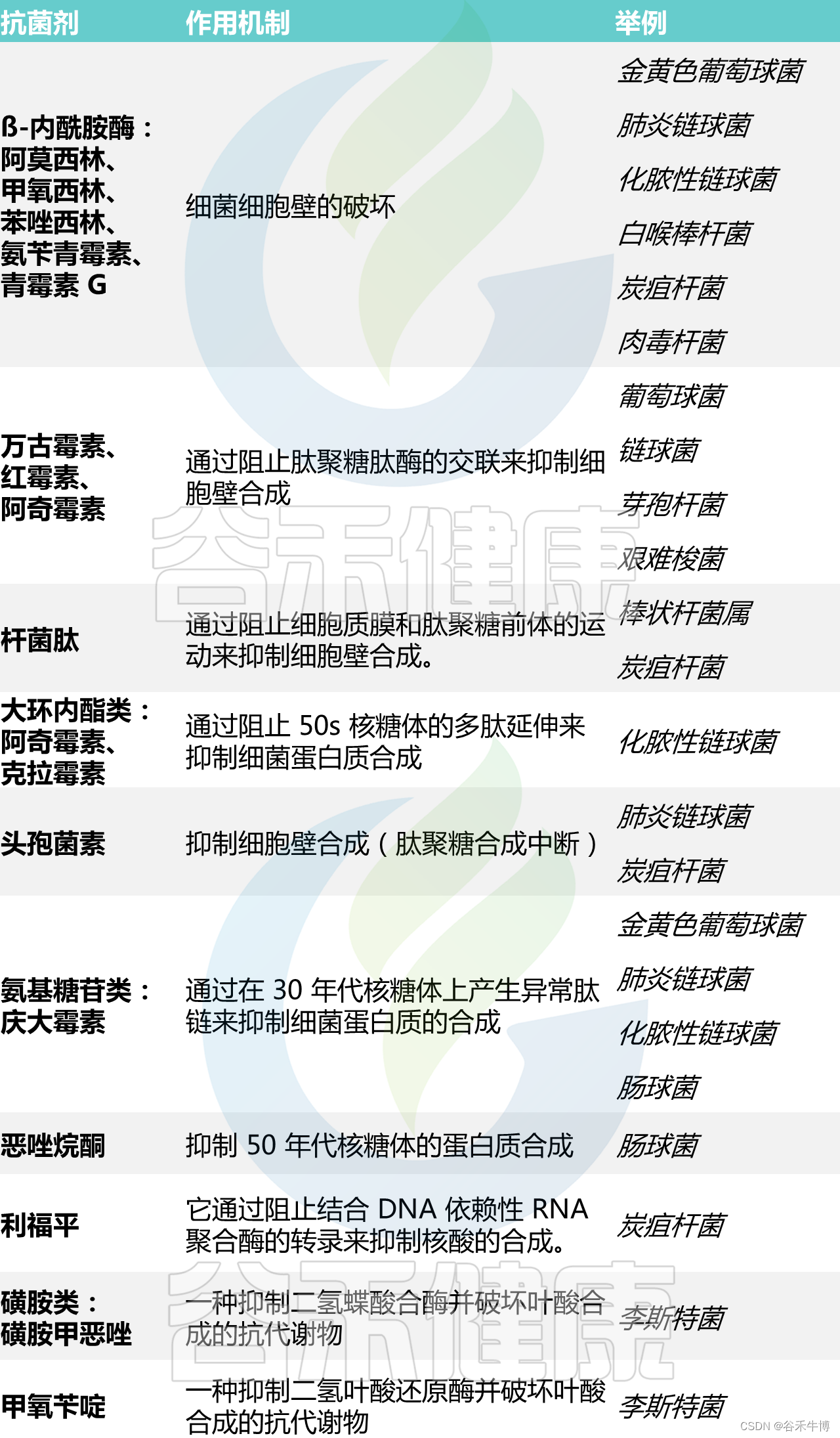
However , Antibiotic resistance It is becoming a serious problem of gram-positive infection . Researchers are developing new drugs to help solve this problem . Antibiotics should only be used when absolutely necessary . Infection control standards need to be strictly followed , To prevent the development and spread of antibiotic resistant infections .
Antimicrobial agents for Gram-negative bacteria
Because of their outer membrane , These bacteria Resistant to lysozyme and penicillin . This is because there is an outer wall that protects the inner membrane and the cell wall .
In the periplasmic space ( The area between two cell membranes ) Enzymes that break down or change antibiotics have also been found in . Methods of treatment for gram negative bacterial infections include carboxyl 、 Amino and urea penicillin . To fight the enzymes that digest these drugs , Sometimes they are associated with β- Use in combination with lactamase inhibitors .β- Lactamase is an enzyme that exists in periplasm .
Antimicrobial agents that target bacterial pathogens are called antibiotics . These antibiotics initiate blocking or inhibiting mechanisms against bacterial cells , To induce bacterial cell proliferation and replication .
Examples of antibiotics used against gram negative bacteria

Drug resistance
Antibiotic resistance is a major clinical problem in the world .
Multi drug resistant bacteria It is becoming more and more common among people , Without effective treatment , This infection can lead to Renal failure 、 septicemia , Even death .
Microorganisms inhibit many antimicrobial agents used in clinical treatment in many ways . These include Change the drug binding site Methods , Change the drug conformation Methods , Change membrane permeability Methods , Can lead to inactivation of drug resistance mechanisms .
For example, there are two membranes in Gram-negative bacteria , Adventitia and intima . Lipopolysaccharide is considered to be a very strong inducer of immune response , It has Three important ingredients : Lipids A、 Hydrophilic polysaccharides 、 antigen O The sparse waters of .
Hydrophobic domains are expressed outside the cell membrane . It is a hydrophobic component lipid a, It is responsible for endotoxin action .LPS It is variable in bacteria Of , And because of genetic variation , Some bacteria produce only one that is not Toll Receptor like recognition Weak antigen . However , There are a large number of Gram-negative bacteria groups that may cause such reactions . The immune system is also affected by some toll Like receptors 4 (TLR4) Thrill live , These receptors are present in many cells involved in the immune system , Like macrophages 、 monocyte 、 Neutrophils and dendritic cells .
from LPS and TLR4 Receptor mediated activation of innate immune response Result in an enhanced response , Produce cytokines 、 Chemokines and interferons, etc .
The response of the immune system Depending on the severity of the infection process And invasive bacteria LPS Structure , This is related to The virulence of bacteria of . therefore , Although some bacteria ( E.coli ) Can induce the immune system , But other bacteria ( Such as Helicobacter pylori ) Only with Weak antigenicity .
// New ideas for dealing with drug-resistant bacteria : Design new drugs according to the principle of charge interaction
2017 year , Professor of chemistry at the University of Illinois and co-author of the current study Paul Hergenrother(ACPP person in charge /MMG) stay 《 natural 》 The magazine reported that , One of the key findings is , If you add positively charged groups to them , For example, amines , Some antibiotics can Use specific membrane pores Penetrate the cell membrane of Gram-negative bacteria .
This work shows that , Antibiotics Positively charged Amino group And bacteria In the hole Negative charge There is good interaction . These attractive forces cause antibiotics with amino groups to be arranged in a more energy friendly manner , Because it passes through the narrowest part of the hole in the contraction zone . Amine free antibiotics face a higher energy barrier to pass through pores .
This may mean that the future can Design new drugs ( Or modify the old medicine ), To attack and kill antibiotic resistant microorganisms .
FAQ
ask
What are the three differences between gram positive cells and gram negative cells ?
answer
Gram positive bacteria have a thick layer of peptidoglycans as their cell walls , Gram negative bacteria have a thin layer of peptidoglycan and outer membrane .
Gram negative bacteria have lipopolysaccharides (LPS), Gram positive bacteria do not .
Some gram-positive bacteria contain mycotic acid , It forms a waxy layer on the cell wall .
ask
What is a Gram-positive infection ?
answer
An infection caused by Gram-positive bacteria , Such as methicillin-resistant Staphylococcus aureus (MRSA)、 Vancomycin resistant enterococci (VRE) And Clostridium difficile are common multidrug-resistant bacterial infections .
ask
Are gram positive bacteria easier to treat ?
answer
Gram positive bacteria , That is, those species that have a peptidoglycan outer layer , More likely to be killed —— Their thick peptidoglycan layer easily absorbs antibiotics and cleaning products . therefore , Certain detergents that easily kill Gram-positive bacteria do not destroy Gram-negative bacteria .
ask
Are many Gram-positive bacteria in the intestinal tract pathogenic ?
answer
Yes , Most of the Gram-positive bacteria in human gastrointestinal tract are opportunistic pathogens . Including Micrococcus 、 enterococcus 、 Staphylococcus aureus 、 Staphylococcus epidermidis 、 Saprophytic Staphylococcus 、 Streptococcus pneumoniae 、 Streptococcus viridis 、 Streptococcus pyogenes 、 Streptococcus agalactis 、 Clostridium tetanus 、 Botox 、 Clostridium perfringens 、 Clostridium perfringens 、 Clostridium difficile , Listeria monocytogenes, etc .
ask
Where are Gram-positive bacteria found ?
answer
According to Gram-positive bacteria , They can be found in human soil 、 Aquatic sediment 、 dust 、 The skin 、 oral cavity 、 Found in the gut or reproductive tract .
ask
Is gram positive coccus dangerous ?
answer
Gram positive bacteria may be cocci or bacilli . These bacteria, called resident bacteria, usually do not cause disease . Gram positive bacilli cause certain infections , Include : Anthrax .
ask
Are gram positive bacteria more resistant to antibiotics ?
answer
No . Compared with Gram-positive bacteria , Gram negative bacteria are more resistant to a variety of antibiotics . Because of their outer membrane , They are more resistant to antibiotics .
Gram positive bacteria are more likely to be killed , Because their thick peptidoglycan layer easily absorbs antibiotics and detergents . On the other hand , Gram negative bacteria have a thin peptidoglycan layer , Will not absorb any foreign matter around .
ask
Does gram positive bacteria have endotoxin ?
answer
Can't . Endotoxin has nothing to do with Gram-positive bacteria . These bacteria have no endotoxins , Because they have no outer membrane . On the other hand , Gram negative bacteria produce endotoxins .
These endotoxins are part of the outer membrane of Gram-negative bacteria , It is released only when cells break down or bacteria die . Endotoxin is a heat stable lipopolysaccharide that forms the cell wall structure of Gram-negative bacteria - Protein complexes .
ask
Why are Gram-positive bacteria more sensitive to antibiotics ?
answer
Although Gram-positive bacteria have a thick peptidoglycan layer , But they are more susceptible than Gram-negative bacteria to the cell walls of some targeted antibiotics , Because they lack outer membrane .
Most antibiotics try to get close to their target , Must pass through the outer membrane . for example , Hydrophilic antibiotics pass through porin . therefore , Gram negative bacteria can change their outer membrane by changing their hydrophobic properties or by mutation of porin . This creates resistance to these bacterial cells . Gram positive bacteria lack this factor , So gram negative bacteria are more resistant to antibiotics than they are .
ask
Whether gram positive bacteria cause disease ?
answer
Yes , Most Gram-positive bacteria are pathogenic . Examples of pathogenic Gram-positive bacteria include Micrococcus 、 enterococcus 、 Staphylococcus aureus 、 Staphylococcus epidermidis 、 Saprophytic Staphylococcus 、 Streptococcus pneumoniae 、 Streptococcus viridis 、 Streptococcus pyogenes 、 Streptococcus agalactis 、 Clostridium tetanus 、 Botox 、 Clostridium perfringens 、 Clostridium perfringens 、 Clostridium difficile , Listeria monocytogenes, etc .
ask
What are the common infections caused by Gram-positive bacteria ?
answer
Anthrax 、 diphtheria 、 diarrhea 、 Meningitis 、 nausea 、 Skin infection 、 urinary tract infection .
ask
Which antibiotic is effective against Gram-positive bacteria ?
answer
Penicillin is an effective antibiotic against Gram-positive bacteria 、 Cloxacillin and erythromycin , It's almost covered 90% Gram positive bacteria infection . Others are vancomycin 、 Trimethoprim / Sulfamethoxazole , Clindamycin , Clindamycin, etc .
ask
What are the common human diseases caused by gram-negative bacteria ?
answer
Gram negative bacteria can cause infection in medical institutions , Including pneumonia 、 Bloodstream infection 、 Wound or surgical site infection and meningitis . There is also cholera 、 Plague 、 Typhoid fever 、 Meningitis and urinary tract infection are common bacterial diseases .
ask
Why are gram negative bacteria more harmful than gram positive bacteria ?
answer
The cell wall of Gram-negative bacteria is hard , Not susceptible to antibiotics , Endotoxin is released under the action of antibiotics .
ask
What kills gram negative bacteria ?
answer
These antibiotics include cephalosporins ( Cefatriaxone - Cefotaxime 、 Ceftazidime et al )、 Fluoroquinolones ( Ciprofloxacin 、 Levofloxacin )、 Aminoglycosides ( Gentamicin 、 Amikacin ) etc.
ask
What is the secretory system of Gram-negative bacteria ?
answer
Gram negative bacteria have a widely closed secretory system , Can transfer tiny molecules 、DNA、 Amino acids, 、 protein .
ask
Where does gram negative bacteria come from ?
answer
Gram negative bacteria are everywhere , Almost all the life supporting environments on the earth . Gram negative bacteria include the model organism E. coli , And many pathogenic bacteria , Such as Pseudomonas aeruginosa 、 Neisseria gonorrhoeae 、 Chlamydia trachomatis and Yersinia pestis .
ask
How to naturally remove gram negative bacteria ?
answer
Natural antibiotics . Some natural antibiotics are garlic 、 honey 、 Cabbage 、 Grapefruit seed extract 、 Raw apple vinegar 、 Extra virgin coconut oil 、 Fermented food, etc .
disclaimer : The contents of this official account are only for exchange and reference , Not as a diagnostic and medical basis . Main references :
Oliveira J, Reygaert WC. Gram Negative Bacteria. 2022 Mar 26. In: StatPearls [Internet]. Treasure Island (FL): StatPearls Publishing; 2022 Jan–. PMID: 30855801.
Carroll K.C., & Hobden J.A., & Miller S, & Morse S.A., & Mietzner T.A., & Detrick B, & Mitchell T.G., & McKerrow J.H., & Sakanari J.A.(Eds.), (2019). Jawetz, Melnick, & Adelberg’s Medical Microbiology, 27e. McGraw Hill.
Acheson DWK (2015): Patient information: Food poisoning (foodborne illness) (Beyond the Basics). In: UpToDate, Basow, DS (Ed), Waltham, MA. Cited 8/1/16
Apicella M (2015): Treatment and prevention of meningococcal infection. In: UpToDate, Basow, DS (Ed), Waltham, MA. Cited 8/1/16
Baum SG (2016): Mycoplasma pneumoniae infection in adults. In: UpToDate, Basow, DS (Ed), Waltham, MA. Cited 8/2/16
Crowe SE (2016): Bacteriology and epidemiology of Helicobacter pylori infection. In: UpToDate, Basow, DS (Ed), Waltham, MA. Cited 8/1/16.
Crowe SE (2016b): Treatment regimens for Helicobacter pylori. In: UpToDate, Basow, DS (Ed), Waltham, MA. Cited 8/1/16.
File TM (2016): Treatment of community-acquired pneumonia in adults in the outpatient setting. In: UpToDate, Basow, DS (Ed), Waltham, MA. Cited 8/1/16
Ghanem KG (2016): Clinical manifestations and diagnosis of Neisseria gonorrhoeae infection in adults and adolescents. In: UpToDate, Basow, DS (Ed), Waltham, MA. Cited 8/1/16
Hicks CB, Clement M (2016): Syphilis: Treatment and monitoring. In: UpToDate, Basow, DS (Ed), Waltham, MA. Cited 8/2/16
Kanafani ZA, Kanj SS (2014): Acinetobacter infection: Epidemiology, microbiology, pathogenesis, clinical features, and diagnosis. In: UpToDate, Basow, DS (Ed), Waltham, MA. Cited 8/10/16
Kanafani ZA, Kanj SS (2016): Acinetobacter infection: Treatment and prevention. In: UpToDate, Basow, DS (Ed), Waltham, MA. Cited 8/10/16
Kelly CP, Lamont JT (2015): Clostridium difficile in adults: Treatment. In: UpToDate, Basow, DS (Ed), Waltham, MA. Cited 8/2/16
Koulenti D et al (2009): Spectrum of practice in the diagnosis of nosocomial pneumonia in patients requiring mechanical ventilation in European intensive care units. Critical Care Med 37(9):2360-2369. doi: 10.1097/CCM.0b013e3181a037ac
Lamont JT (2016): Clostridium difficile in adults: Epidemiology, microbiology, and pathophysiology. In: UpToDate, Basow, DS (Ed), Waltham, MA. Cited 8/2/16
Li X-Z, Nikaido H (2004): Efflux-mediated drug resistance in bacteria. Drugs. 64(2):159–204.
Lowy FD (2016): Methicillin-resistant Staphylococcus aureus (MRSA) in adults: Treatment of skin and soft tissue infections. In: UpToDate, Basow, DS (Ed), Waltham, MA. Cited 8/1/16
Pegram PS, Stone SM (2016): Botulism. In: UpToDate, Basow, DS (Ed), Waltham, MA. Cited 8/1/16
Riley LW (2015): Natural history, microbiology, and pathogenesis of tuberculosis. In: UpToDate, Basow, DS (Ed), Waltham, MA. Cited 8/2/16
Sauvage E et al (2008): The penicillin-binding proteins: structure and role in peptidoglycan biosynthesis. FEMS Microbiol Rev 32:234–258. DOI:10.1111/j.1574-6976.2008.00105.x
Southwick F (2008): Infectious Diseases. A Clinical Short Course. McGraw Hill/Lange.
Sterling TR (2016): Treatment of pulmonary tuberculosis in HIV-uninfected adults. In: UpToDate, Basow, DS (Ed), Waltham, MA. Cited 8/2/16
Stevens DL, Bryant A (2015): Group A streptococcus: Virulence factors and pathogenic mechanisms. In: UpToDate, Basow, DS (Ed), Waltham, MA. Cited 8/1/16
Stevens DL (2016): Group A streptococcal (Streptococcus pyogenes) bacteremia in adults. In: UpToDate, Basow, DS (Ed), Waltham, MA. Cited 8/1/16
Swygard H et al (2016): Treatment of uncomplicated gonococcal infections. In: UpToDate, Basow, DS (Ed), Waltham, MA. Cited 8/1/16
Wanke CA (2015): Pathogenic Escherichia coli. In: UpToDate, Basow, DS (Ed), Waltham, MA. Cited 7/28/16
Wanke CA (2015b): Travelers' diarrhea: Clinical manifestations, diagnosis, and treatment. In: UpToDate, Basow, DS (Ed), Waltham, MA. Cited 8/1/16
Yeh S (2015): Microbiology, epidemiology and treatment of Haemophilus influenzae. In: UpToDate, Basow, DS (Ed), Waltham, MA. Cited 8/1/16
Sagar Aryal,Gram-Positive Vs Gram-Negative Bacteria- 31 Differences With Examples. Microbenotes.2022,January 9
Jawertz M., Alderbergs., Medical Microbiology 28th Edition.
Prescott M. L., Microbiology. 5th Edition
Lippincott Microbiology in review: 3rd edition
Faith Mokobi,Gram-Positive Bacteria- Cell Wall, Examples, Diseases, Antibiotics,2021, April 15
Faith Mokobi,Gram-Negative Bacteria- Cell Wall, Examples, Diseases, Antibiotics ,2021 ,April 15
边栏推荐
- 使用报文和波形记录分析仪RoyalScope的帧统计功能排查CAN总线偶发性故障
- 如何用svn新建属于自己的分支
- 电子学:第011课——实验 10:晶体管开关
- 50 pieces of professional knowledge of Product Manager (IV) - from problem to ability improvement: amdgf model tool
- 使用Adobe Acrobat Pro调整PDF页面为统一大小
- How to resize an image in C #
- 网络模型——OSI模型与TCP/IP模型
- 牛客:飞行路线(分层图+最短路)
- 50. Pow(x, n)-快速幂
- 【补题】2021牛客暑期多校训练营6-n
猜你喜欢

How much do you know about electronic components on PCB?

取消word文档中某些页面的页眉

使用Adobe Acrobat Pro调整PDF页面为统一大小
Anaconda navigator启动慢的一个解决方法

FM信号、调制信号和载波

Invalid Navicat scheduled task
![洛谷P1073 [NOIP2009 提高组] 最优贸易(分层图+最短路)](/img/cb/046fe4b47898fd6db86edc8a267c34.png)
洛谷P1073 [NOIP2009 提高组] 最优贸易(分层图+最短路)

电子学:第014课——实验 15:防入侵报警器(第一部分)

Anaconda based module installation and precautions

420-二叉树的层序遍历2(429. N 叉树的层序遍历、515.在每个树行中找最大值、116.填充每个节点的下一个右侧节点指针、104.二叉树的最大深度、111.二叉树的最小深度)
随机推荐
[little knowledge] PCB proofing process
1742. maximum number of small balls in the box
【莫比乌斯反演】
50. Pow(x, n)-快速幂
Startup, shutdown and restart of Oracle and MySQL on Linux
三台西门子消防主机FC18配套CAN光端机进行光纤冗余环网组网测试
洛谷P2048 [NOI2010] 超级钢琴(RMQ+优先队列)
VSCode很好,但我以后不会再用了
What are the benefits of reserving process edges for PCB production? 2021-10-25
【深度学习 轻量型backbone】2022 EdgeViTs CVPR
bat启动.NET Core
Ph中和过程建模
新版USBCAN卡CAN分析仪的CAN&CANFD综合测试分析软件LKMaster主要功能介绍
Usememo simulation usecallback
Hisilicon 3559 sample parsing: Vio
WebSocket的理解以及应用场景
PCB board design - automatic layout 2021-10-15
【补题】2021牛客暑期多校训练营6-n
Atlas conflict Remote Code Execution Vulnerability (cve-2022-26134 vulnerability analysis and protection
数论模板啊