当前位置:网站首页>C. Planar Reflections-CodeCraft-21 and Codeforces Round #711 (Div. 2)
C. Planar Reflections-CodeCraft-21 and Codeforces Round #711 (Div. 2)
2022-06-25 23:33:00 【Qin Sanma】
C. Planar Reflections
time limit per test
1 second
memory limit per test
256 megabytes
input
standard input
output
standard output
Gaurang has grown up in a mystical universe. He is faced by nn consecutive 2D planes. He shoots a particle of decay age kk at the planes.
A particle can pass through a plane directly, however, every plane produces an identical copy of the particle going in the opposite direction with a decay age k−1k−1. If a particle has decay age equal to 11, it will NOT produce a copy.
For example, if there are two planes and a particle is shot with decay age 33 (towards the right), the process is as follows: (here, D(x)D(x) refers to a single particle with decay age xx)
- the first plane produces a D(2)D(2) to the left and lets D(3)D(3) continue on to the right;
- the second plane produces a D(2)D(2) to the left and lets D(3)D(3) continue on to the right;
- the first plane lets D(2)D(2) continue on to the left and produces a D(1)D(1) to the right;
- the second plane lets D(1)D(1) continue on to the right (D(1)D(1) cannot produce any copies).
In total, the final multiset SS of particles is {D(3),D(2),D(2),D(1)}{D(3),D(2),D(2),D(1)}. (See notes for visual explanation of this test case.)
Gaurang is unable to cope up with the complexity of this situation when the number of planes is too large. Help Gaurang find the size of the multiset SS, given nn and kk.
Since the size of the multiset can be very large, you have to output it modulo 109+7109+7.
Note: Particles can go back and forth between the planes without colliding with each other.
Input
The first line of the input contains the number of test cases tt (1≤t≤1001≤t≤100). Then, tt lines follow, each containing two integers nn and kk (1≤n,k≤10001≤n,k≤1000).
Additionally, the sum of nn over all test cases will not exceed 10001000, and the sum of kk over all test cases will not exceed 10001000. All test cases in one test are different.
Output
Output tt integers. The ii-th of them should be equal to the answer to the ii-th test case.
Examples
input
Copy
4
2 3
2 2
3 1
1 3
output
Copy
4
3
1
2
input
Copy
3
1 1
1 500
500 250
output
Copy
1
2
257950823
Note
Let us explain the first example with four test cases.
Test case 1: (n=2n=2, k=3k=3) is already explained in the problem statement.
See the below figure of this simulation. Each straight line with a different color represents the path of a different particle. As you can see, there are four distinct particles in the multiset. Note that the vertical spacing between reflected particles is for visual clarity only (as mentioned before, no two distinct particles collide with each other)
Test case 2: (n=2n=2, k=2k=2) is explained as follows:
- the first plane produces a D(1)D(1) to the left and lets D(2)D(2) continue on to the right;
- the second plane produces a D(1)D(1) to the left and lets D(2)D(2) continue on to the right;
- the first plane lets D(1)D(1) continue on to the left (D(1)D(1) cannot produce any copies).
Total size of multiset obtained {D(1),D(1),D(2)}{D(1),D(1),D(2)} is equal to three.
Test case 3: (n=3n=3, k=1k=1), there are three planes, but decay age is only one. So no new copies are produced while the one particle passes through the planes. Hence, the answer is one.
Test case 4: (n=1n=1, k=3k=3) there is only one plane. The particle produces a new copy to the left. The multiset {D(2),D(3)}{D(2),D(3)} is of size two.
==================================================================================================================================================
Typical DFS, But I don't know why the local running time exploded cf Hand it in 100ms It's over ....
With a little pruning , Set up dp[nowk][nowpos][fang] Array , Represents the position and direction of energy , Once accessed, you can return the value .
# include<iostream>
# include<cstring>
using namespace std;

# define mod 1000000007

typedef long long int ll;

ll dp[1010][1010][2];

ll n, k;

ll dfs(int nowk,int nowpos,int fang)
{


    if(nowk==1||nowpos==0||nowpos>n)
    {
        return  1;
    }

    if(dp[nowk][nowpos][fang]!=-1)
    {
        return dp[nowk][nowpos][fang]%mod;

    }

    ll ans=0;

    if(fang==1)  // towards the right
    {
       ans=(ans+dfs(nowk,nowpos+1,fang))%mod;

       ans=(ans+dfs(nowk-1,nowpos-1,fang^1))%mod;


    }
    else  // towards the left
    {
        ans=(ans+dfs(nowk,nowpos-1,fang))%mod;

        ans=(ans+dfs(nowk-1,nowpos+1,fang^1))%mod;

    }

    if(dp[nowk][nowpos][fang]==-1)
    dp[nowk][nowpos][fang]=ans;
    else
    {
        dp[nowk][nowpos][fang]=(dp[nowk][nowpos][fang]+ans)%mod;

    }

    return  dp[nowk][nowpos][fang]%mod;


}
int main ()
{


    int t;
    cin>>t;

    while(t--)
    {
        cin>>n>>k;

        for(int i=0;i<=n;i++)
        {
            for(int j=1;j<=k;j++)
            {
                dp[j][i][1]=-1;


                dp[j][i][0]=-1;
            }
        }
        cout<<dfs(k,1,1)<<'\n';


    }


    return 0;

}
边栏推荐
猜你喜欢

Idea auto generator generates constructor get/set methods, etc
Fegin client entry test
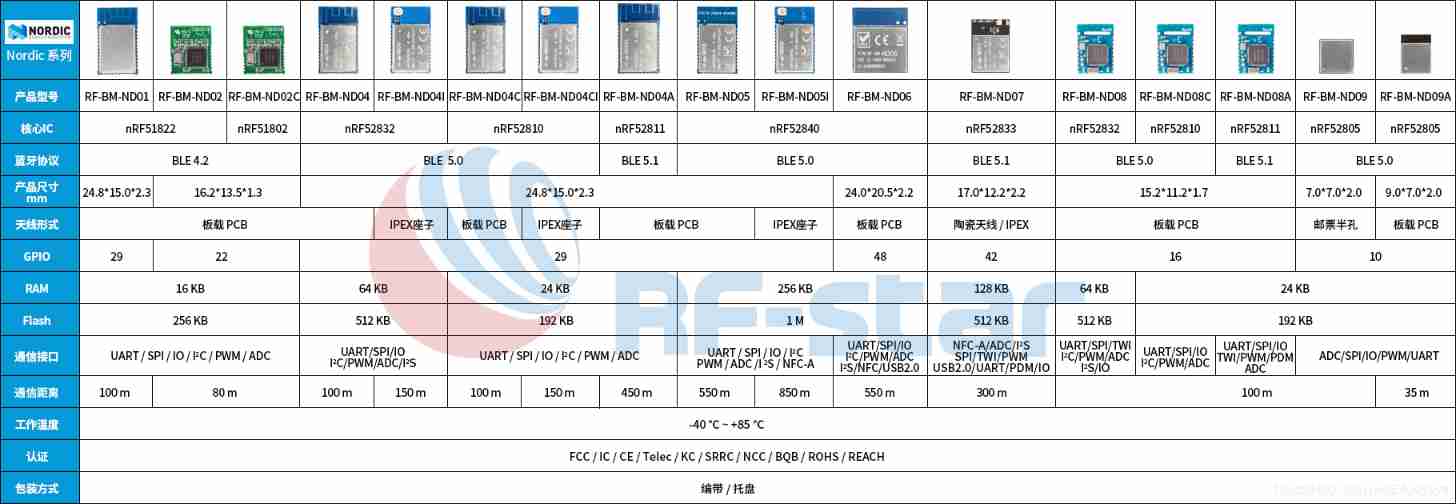
Ble Low Power Bluetooth networking process and Bluetooth role introduction

jdbc常见异常及错误解决办法汇总
hiberate核心API/配置文件/一级缓存详解

#24class静态成员

LeetCode-1528-重新排列字符串-哈希表-字符串

23class introduction

Uni app -- listen for the exit of the return key

STM32 development board + smart cloud aiot+ home monitoring and control system
随机推荐
Kubernetes cluster construction of multiple ECS
Qt自定义实现的日历控件
User interaction scanner usage Advanced Edition example
Multithreaded learning 1
. SQL database import error: / *! 40101 SET @OLD_ COLLATION_ [email protected]@COLLATION_ CONNECTION */
毕业旅行 | 伦敦5日游行程推荐
The software test interview has been suspended. The interviewer always says that the logical thinking is chaotic. What should I do?
Day4 branch and loop summary and operation
Leetcode (605) -- flower planting
关于go协程超时退出控制条件与方式分析
Idea auto generator generates constructor get/set methods, etc
Live800 online customer service system: do business across time and space, starting from each interaction
[Axi] interpretation of Axi protocol atomic access
A. Balance the Bits--Codeforces Round #712 (Div. 1)
Ad20 learning notes II
自定义QComboBox下拉框,右对齐显示,下拉列表滑动操作
信息学奥赛一本通 1353:表达式括号匹配(stack) | 洛谷 P1739 表达式括号匹配
STM32 development board + smart cloud aiot+ home monitoring and control system
My C language learning process
hiberate架构介绍及环境搭建(非常详细)