当前位置:网站首页>Company offensive operation guide
Company offensive operation guide
2022-06-23 17:45:00 【Khan security team】
From low complexity 、 Low business risk and mobility , We have :
- Local spoofing : All network spoofing that can be implemented within the corporate environment , For example, honey coin 、 Honeypot 、 Honey network 、 Canary token 、 cheating / Fake network, etc , To lure opponents into a highly controlled environment and monitor their behavior . Activities , and / Or rapid detection and rejection / Interrupt its operation .
- Offensive action : Entice an opponent into action , Give you the tactical advantage of detecting and responding .
- Complexity : low / in
- Business risk : slight ( Since all these deceptive operations are kept secret , This may have a negative impact on employees / perception , And complex processes within the security team )
- Infrastructure demolition : That is, report and request the removal of malicious infrastructure through the service provider or directly through the hosting company . This includes a request to delete the phishing domain 、 Malware hosting server 、 E-mail accounts, etc .
- Offensive action : According to the demolition , This may be a downgrade of the competitor's infrastructure 、 Refuse 、 To interrupt or sabotage an action , This leads to the cost of rebuilding their infrastructure .
- Complexity : low / in
- Business risks : secondary . The process needs to be clearly defined , To avoid any problems , For example, it is required to delete the legal infrastructure 、 Ask the affected companies to raise legal issues 、 Avoid disclosing sensitive information about deletion requests, etc .
- Indirect public disclosure : Some Threat Intelligence providers and countries CERT Allow anonymous reports / Public disclosure of intelligence reports . This feature allows companies to publicly disclose details , Otherwise, these details may lead to the following “ Public disclosure ” Operational risks .
- Offensive action : Force the opponent to change their TTP( This leads to cost and operational delays ), Let the world know what competitors have done and how to do it , This can enable national state actors or other companies to use these public materials as supporting evidence in more aggressive offensive actions .
- Complexity : low
- Business risk : Discreet anonymization is less .
- Active dark network monitoring : I said This term refers to any type of operation , To gain access and monitor the opponent's communication channels ( for example Telegram group 、 Dark network forum, etc ), To learn about any attacks against your business as early as possible and take appropriate measures . For most companies , This is usually achieved through Threat Intelligence providers .
- Offensive action : Infiltrate the opponent's communication platform and collect intelligence about its activities .
- Complexity : low / in
- Business risk : Smaller when completed by supplier . Medium in internal development , Because it requires strict discipline 、 technological process 、OPSEC measures 、 Legal and privacy sign off, etc .
- Cooperate with the authorities : That is, actively contacting law enforcement and / Or intelligence agencies , To help them take action against specific opponents . for example , Give them evidence 、 Only the information owned by your company .
- Offensive action : The possibility of nation-state action against your opponent , For example, Sue 、 foreign / External action 、 Sanction 、 Covert operations, etc .
- Complexity : secondary
- Business risks : There are obvious risks , That is, enterprises and specific governments and / Or political affiliation , Accidental involvement in unrelated government issues , Become a partner with your authorities “ The agent ”, Other countries regarded as agents of the nation state / Government, etc
- juridical action : This involves any kind of legal action that your company may take against your competitors , E.g. stop and termination letters 、 Seizure of malicious infrastructure 、 A criminal complaint against a particular opponent 、 Sanctions, etc .
- Offensive action : A positive and open method of sabotaging and destroying confrontational activities by legitimate means .
- Complexity : in / high
- Business risks : in / high . This will require experienced investigators 、 Having actual laws / Digital forensics expert with prosecution experience 、 Establish a criminal case and evidence management process 、 Experienced legal resources 、 Interest in public exposure , Of course , You also need to accept that your opponent now knows what you know , And you are always likely to lose the case when it reaches the court .
- Public disclosure : This is the foreign policy tool of many nation-state actors , It can also be implemented in private companies . By letting everyone know who is targeting you , In particular, national state actors , Supply ammunition to the world , Let any other nation-state use this information against your opponent , Without your direct involvement .
- Offensive action : Expose an action intended to conceal , Urge the opponent to change strategy , And give opponents the opportunity to use the disclosed materials against them .
- Complexity : in / high
- Business risks : in / high . Such disclosure may bring a lot of negative news , It will also reveal what you know . This means that these opponents may use more advanced technology the next time they attack your company . Besides , The nation state may request your support in legal proceedings . For less risky approaches , Please check “ Indirect public disclosure ” operation .
- Remote passive SIGINT( Intelligence signals ): This means through third parties ( Such as data brokers or Threat Intelligence providers ) Get the signal ( It is usually the original network traffic or the original communication ), This can help you proactively identify confrontational activities .
- Aggressive action : Examine data collected outside the organization , To proactively identify and reject any confrontational activities against your company .
- Complexity : secondary
- Business risks : slight . The only risk is to ensure that you do not use any illegal or suspicious Services , Instead, it relies on industry standards and well-known suppliers .
- Remote spoofing operation : Such operations include creating false information about your company 、 False public service 、 False disclosure documents with tracking tokens, etc . This will be discussed later “Sting operation ” The lighter version of .
- Offensive action : Chase an opponent by luring him with false targets , In order to catch them before they target the real assets of the company .
- Complexity : secondary
- Business risks : slight . Mainly around having a strong process to avoid security errors , This could jeopardize your safety , And keep these processes well managed , But also run on the basis of what you need to know .
- Data leakage data utilization : This means taking data from data breaches and using them to detect adversarial activities or intelligence , This will help you proactively protect your company . Examples include proactive discovery of infrastructure for malicious purposes 、 Accounts used by competitors 、 De anonymization, etc .
- Offensive action : Use data that was originally kept secret from the organization that owns it , To get a better understanding of your competitors .
- Complexity : secondary
- Business risks : secondary . There are many legal and ethical debates about data disclosure and data utilization , This may have some business impact on the company . Besides , The processing of this kind of data is in access management 、 Who did what and why did it auditable 、 There are some complexities involved in aspects such as retention policies , This means that additional resources may be required 、 Technology and processes .
- False flag operation : An advanced offensive technique , You can entice your opponent into the thinking process to take advantage of their actions . for example , Make the opponent seem to have leaked information about them , Or make them believe that their opponents have broken their systems .
- Offensive action : By forcing opponents to believe what is happening instead of what they see , Dynamically 、 Actively change your opponent's TTP.
- Complexity : in / high
- Business risks : in / high . These actions require very careful planning and discipline , And it's easy to backfire in a variety of ways , Including negative media attention , Shift your competitors to more advanced technologies , Government agencies take legal action , You may have interfered with their actions , It has the opposite effect , wait .
- CNA operation : Computer network attack (CNA) Operation is anything that will lead to the degradation of the opponent's infrastructure and resources 、 Activities that are interrupted or disrupted . Examples include denial of service attacks 、 Take their resources 、 Drown their resources ( For example, mass mailing 、 Automatic call, etc )、 Create countless fake accounts on their platform 、 spam 、 Provide them with false data, etc .
- Aggressive behavior : Make your opponent focus on responding CNA Operationally , Instead of carrying out its intended malicious activities .
- Complexity : high
- Operational risk : high . This is a very gray area , May cause the company to be regarded as a criminal entity . About how these activities will 、 why 、 who 、 When and where , Very thorough legal and business consistency is required , And in most cases , Most companies ( Legal ) It is not possible to perform such operations .
- Stinging action : ad locum , Defenders can try to infiltrate a group by pretending to be criminals , Or set up a fake website to recruit cyber criminals , And other similar actions , The ultimate goal is to penetrate the opponent's entity .
- Offensive action : Proactively identify adversarial plans and reject them by applying appropriate security controls .
- Complexity : high
- Operational risk : high . For most companies , It is impossible to do so legally . however , Some people may be able to work with the authorities to achieve this goal . The risk is high , It involves many levels , From public relations to influencing law enforcement , Then to privacy and legal issues .
- To take over : During takeover operation , Privatecompanies use their knowledge and resources to control the infrastructure that competitors operate . This will not only bring the cost of new infrastructure to competitors , And will reveal their TTP Details of 、 Identifiable information that links them to their true identity, etc .
- Offensive action : Refuse to contact your opponent , Sabotage or reduce their actions , And collect most of their digital abilities and information .
- Complexity : high
- Operational risk : high . in the past , These are very common things , But as the network becomes more and more regulated and controlled , The acquisition may have a very serious legal and public relations impact on the enterprise . Now , These are usually limited to specific companies and government entities operating in the sector . They can still be performed by others , But it's a complicated process , There are many moving parts .
- On-line HUMINT( Human intelligence ): The aim of these actions is both to exploit human weaknesses ( For example, social engineering 、 Recruiting internal personnel, etc ) To understand and penetrate the confrontational groups / In the network , It also disrupts their actions from within . for example , recruit ( Or become ) Influential members and create tension in the team , Shift the focus of the team from operation to internal conflict through debate , Create divisions among members, etc .
- Offensive action : Depending on the level , Collect information about your opponent from TTP From intelligence to active protection of your assets , Until it creates internal conflict , Eventually lead to the destruction or total destruction of a group . In some cases , These tensions may lead members to report to each other .
- Complexity : high
- Operational risk : high . These actions are usually limited to nation-state participants who have dedicated resources for such clandestine activities . It is not unheard of for private companies to support these , However, due to the potential influence of competitors and relevant authorities , So the risk is quite high .
- 3rd/4th Party Collection: Simply speaking , This can be considered as discussed earlier “ To take over ” Operation upgrade . The operation here involves not only taking over the infrastructure of the opponent , It also includes using it to collect data from places that the infrastructure can access . for example , You may have taken over a command and control server , And found some of the servers used by the threat participants VPN Connect . You use them to access and gather intelligence and / Or disrupt its operations . This can also enter multiple levels on the other side . for example , Use C&C Send commands on the infected host ( If the attacker's system is infected ) And collect data there ( Or perform other operations ).
- Offensive action : Leverage adversarial infrastructure at multiple levels , Mask your activities with the system being taken over . This can be used from intelligence gathering to sabotage 、 Downgrade 、 Deny anything .
- Complexity : high
- Operational risk : high . These actions are usually limited to nation-state participants who have dedicated resources for such clandestine activities . For any private company , Trying to do this would be complex and risky , Because it involves breaking into the system at multiple levels .
- CNE operation : This study aims to identify and exploit vulnerabilities , In order to carry out computer network development against competitors (CNE) operation . for example , Found a software vulnerability in their malware , So you can take over their C&C, Or a misconfiguration is found on their operating host , So that you can penetrate and so on . This is commonly referred to as hacking .
- Offensive action : Leverage adversarial infrastructure . This can be used from intelligence gathering to sabotage 、 Downgrade 、 Deny anything .
- Complexity : high
- Operational risk : high . These actions are usually limited to nation-state participants who have dedicated resources for such clandestine activities . For any private company , Trying to do this would be complex and risky , Because it involves breaking into the system .
- automation CNE: That is, to expand by automating development steps “CNE operation ”. in other words , The ability to develop not only exploits identified vulnerabilities in the adversarial infrastructure , And it can automatically ( Or on demand through automation ) Leverage all existing and newly deployed adversarial infrastructure , There is no need to ( Or at least ) Human interaction .
- Offensive action : Leverage adversarial infrastructure . This can be used from intelligence gathering to sabotage 、 Downgrade 、 Deny anything .
- Complexity : high
- Operational risk : high . These actions are usually limited to nation-state participants who have dedicated resources for such clandestine activities . For any private company , Trying to do this would be complex and risky , Because it involves breaking into the system .
边栏推荐
- AMQP协议
- History of storage technology: from tape to hardware liquefaction
- I successfully joined the company with 27K ByteDance. This interview notes on software testing has benefited me for life
- MySQL installation, configuration and uninstall
- 接口的所有权之争
- 单火线设计系列文章10:拓展应用-单火开关实现双控
- 《AN4190应用笔记 天线选择指南》——天线理论2
- Intel arc A380 graphics card message summary: the entry-level price products of running point and bright driving need to be optimized
- Postgresql_ Optimize SQL based on execution plan
- How can the points mall make profits
猜你喜欢
![QT layout manager [qvboxlayout, qhboxlayout, qgridlayout]](/img/62/a0425a325f123ba91a7a69cf854d2c.png)
QT layout manager [qvboxlayout, qhboxlayout, qgridlayout]
I successfully joined the company with 27K ByteDance. This interview notes on software testing has benefited me for life
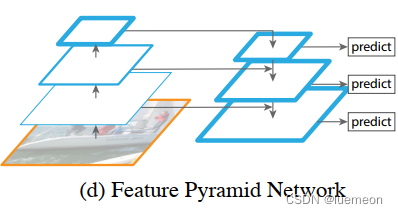
FPN characteristic pyramid network

【网络通信 -- WebRTC】WebRTC 源码分析 -- 接收端带宽估计

C#与数据库连接

Rongyun: let the bank go to the "cloud" easily

接口的所有权之争

美团三面:聊聊你理解的Redis主从复制原理?

Why do we say that the data service API is the standard configuration of the data midrange?

Tupu software builds smart city with lightweight modeling
随机推荐
How to quickly obtain and analyze the housing price in your city?
Spdlog logging example - create a logger using sink
Postgresql_根据执行计划优化SQL
Network remote access raspberry pie (VNC viewer)
《MPLS和VP体系结构》
Réponse 02: pourquoi le cercle Smith peut - il "se sentir haut et bas et se tenir à droite et à droite"?
Three functional forms of intelligent switch
[go]沙盒环境下调用支付宝扫码支付
公司招了个五年经验的测试员,见识到了真正的测试天花板
Read the typical application circuit of microphone
Hands on data analysis unit 2 section 4 data visualization
qYKVEtqdDg
[network communication -- webrtc] analysis of webrtc source code -- supplement of pacingcontroller related knowledge points
How code 39 check bits are calculated
Database Experiment 2 query
Discussion on five kinds of zero crossing detection circuit
解析 | 模-数(A/D)转换器
Comparison of asemi Schottky diode and ultrafast recovery diode in switching power supply
Troubleshooting of datanode entering stale status
Analysis of three battery capacity monitoring schemes