当前位置:网站首页>Multithreading tutorial (XXI) double checked locking problem
Multithreading tutorial (XXI) double checked locking problem
2022-06-11 05:29:00 【Have you become a great God today】
Multithreading tutorial ( The 21st )double-checked locking problem
One 、double-checked locking Imperfect examples of
With the famous double-checked locking Single instance mode as an example
public final class Singleton {

    private Singleton() {
     }
    private static Singleton INSTANCE = null;
    public static Singleton getInstance() {

        if(INSTANCE == null) {
     // t2
            //  The first visit synchronizes , And then the use did not  synchronized
            synchronized(Singleton.class) {

                if (INSTANCE == null) {
     // t1
                    INSTANCE = new Singleton();
                }
            }
        }
        return INSTANCE;
    }
}
The above implementation features are :
Laziness
For the first time to use getInstance() Only use synchronized Lock , There is no need to lock it for subsequent use
There is an implied , But the key point is : first if Used INSTANCE Variable , It's outside the sync block
But in a multithreaded environment , There is something wrong with the code above ,getInstance The bytecode corresponding to the method is :
0: getstatic #2 // Field INSTANCE:Lcn/itcast/n5/Singleton;
3: ifnonnull 37
6: ldc #3 // class cn/itcast/n5/Singleton
8: dup
9: astore_0
10: monitorenter
11: getstatic #2 // Field INSTANCE:Lcn/itcast/n5/Singleton;
14: ifnonnull 27
17: new #3 // class cn/itcast/n5/Singleton
20: dup
21: invokespecial #4 // Method "<init>":()V
24: putstatic #2 // Field INSTANCE:Lcn/itcast/n5/Singleton;
27: aload_0
28: monitorexit
29: goto 37
32: astore_1
33: aload_0
34: monitorexit
35: aload_1
36: athrow
37: getstatic #2 // Field INSTANCE:Lcn/itcast/n5/Singleton;
40: areturn
among
17 Represents the creation object , Stack object references // new Singleton
20 Represents copying an object reference // Refer to the address
21 Means to use an object reference , Call constructor
24 Means to use an object reference , Assign a value to static INSTANCE
Maybe jvm It will be optimized to : Execute first 24, Re execution 21. If two threads t1,t2 Execute according to the following time series :

The key lies in 0: getstatic This line of code is in monitor Out of control , It's like the irregular person in the previous example , You can cross monitor Read
INSTANCE The value of the variable
At this time t1 The constructor has not been fully executed yet , If you need to perform a lot of initialization operations in the constructor , that t2 What you get will be an early
Single case after initialization
Yes INSTANCE Use volatile Can be modified , Command rearrangement can be disabled , But pay attention to JDK 5 The above version of volatile It really works
Two 、double-checked locking The correct use of
private Singleton() {
     }
private static volatile Singleton INSTANCE = null;
public static Singleton getInstance() {

    //  Instance not created , To get inside  synchronized Code block
    if (INSTANCE == null) {

        synchronized (Singleton.class) {
     // t2
            //  There may be other threads that have created instances , So again
            if (INSTANCE == null) {
     // t1
                INSTANCE = new Singleton();
            }
        }
    }
    return INSTANCE;
}
}
I can't see it in the bytecode volatile The effect of the command
// ------------------------------------->  Join in  INSTANCE  Variable read barrier
0: getstatic #2 		// Field INSTANCE:Lcn/itcast/n5/Singleton;
3: ifnonnull 37
6: ldc #3 				// class cn/itcast/n5/Singleton
8: dup
9: astore_0
10: monitorenter ----------------------->  Guaranteed atomicity 、 visibility
11: getstatic #2 		// Field INSTANCE:Lcn/itcast/n5/Singleton;
14: ifnonnull 27
17: new #3 				// class cn/itcast/n5/Singleton
20: dup
21: invokespecial #4 	// Method "<init>":()V
24: putstatic #2 		// Field INSTANCE:Lcn/itcast/n5/Singleton;
// ------------------------------------->  Join in  INSTANCE  Variable write barrier
27: aload_0
28: monitorexit ------------------------>  Guaranteed atomicity 、 visibility
29: goto 37
32: astore_1
33: aload_0
34: monitorexit
35: aload_1
36: athrow
37: getstatic #2 		// Field INSTANCE:Lcn/itcast/n5/Singleton;
40: areturn
As shown in the notes above , Reading and writing volatile Variable will be added to the memory barrier (Memory Barrier(Memory Fence)), Make sure the following two points :
visibility
- Write barriers (sfence) Ensure... Before the barrier t1 Changes to shared variables , All synchronized to main memory .
- And the reading barrier (lfence) Ensure that after this barrier t2 Reading shared variables , Loading is the latest data in main memory
Orderliness
The write barrier ensures that when instructions are reordered , Don't put the code before the write barrier behind the write barrier
The read barrier ensures that when instructions are reordered , The code after the read barrier is not placed before the read barrier
At the bottom is the use of... When reading and writing variables lock Instruction to multicore CPU Visibility and order between

In the picture x Representative band barrier .
On board volatile The role of is ’ Call constructor ’ Operations of cannot be reordered to ‘ assignment ’ Back , You can avoid getting the class without running the constructor .
边栏推荐
- Handle double quotation mark escape in JSON string
- NVIDIA SMI has failed because it could't communicate with the NVIDIA driver
- String sorting times --- bubble sorting deformation
- Traversal of binary tree -- restoring binary tree by two different Traversals
- 袋鼠雲數棧基於CBO在Spark SQL優化上的探索
- Project - Smart City
- SQLite installation and configuration tutorial +navicat operation
- 2021-04-19
- In the future, how long will robots or AI have human creativity?
- Preliminary understanding of multi task learning
猜你喜欢

Paper reproduction: expressive body capture

袋鼠雲數棧基於CBO在Spark SQL優化上的探索

Overview of self attention acceleration methods: Issa, CCNET, cgnl, linformer
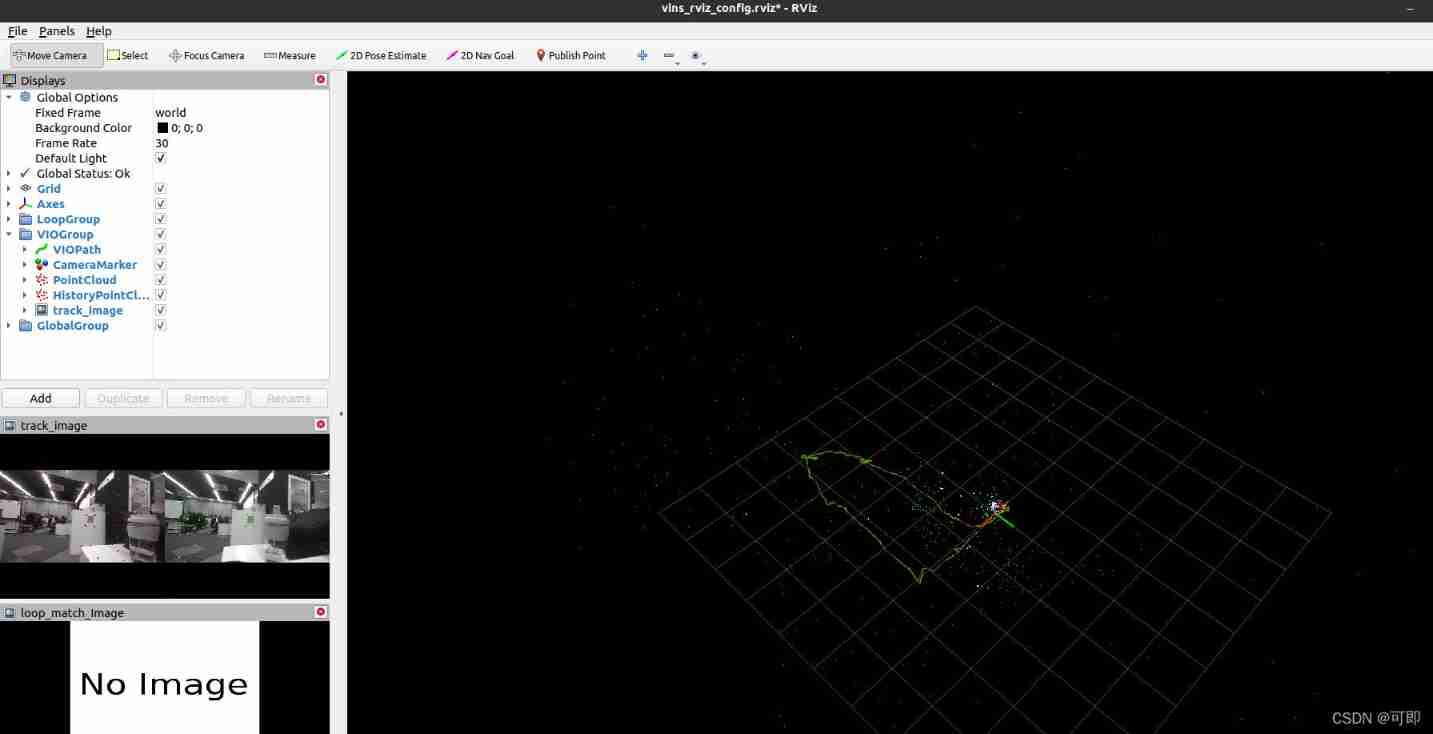
Preliminary test of running vins-fusion with zed2 binocular camera
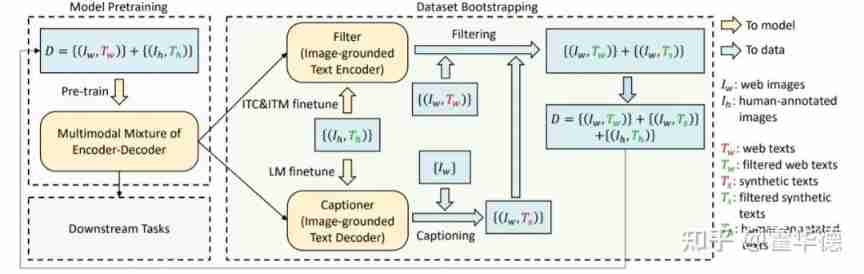
Share | guide language image pre training to achieve unified visual language understanding and generation

Thesis 𞓜 jointly pre training transformers on unpaired images and text

Sealem finance builds Web3 decentralized financial platform infrastructure

Zed2 camera calibration -- binocular, IMU, joint calibration

Introduction to coordinate system in navigation system

在未来,机器人或 AI 还有多久才能具备人类的创造力?
随机推荐
创建酷炫的 CollectionViewCell 转换动画
[go deep into kotlin] - flow advanced
Start the project using the locally configured gradle
1. use alicloud object OSS (basic)
SwiftUI: Navigation all know
Common methods of tool class objectutil
49. grouping of acronyms
Inventory | ICLR 2022 migration learning, visual transformer article summary
String sorting times --- bubble sorting deformation
Deep extension technology: intelligent OCR recognition technology based on deep learning has great potential
Zed2 running vins-mono preliminary test
Analysis while experiment - a little optimization of memory leakage in kotlin
35. search insertion position
Customize the layout of view Foundation
Analyze while doing experiments -ndk article -jni uses registernatives for explicit method registration
工具类ObjectUtil常用的方法
自定义View之基础篇
MySQL string to array, merge result set, and convert to array
PCB走線到底能承載多大電流
Feynman learning method