当前位置:网站首页>Central Limit Theorem
Central Limit Theorem
2022-06-27 00:50:00 【Dreamer DBA】
The central limit theorem is an often quoted, but misunderstood pillar from statistics and machine learning.it has important implications about how and why we can make inferences about the skill of machine learning models, such as whether one model is statistically better than another and confidence intervals on models skill.In this tutorial, you will discover the central limit theorem and the implications of this important pillar of statistics and probability on applied machine learning. After completing this tutorial, you will know:
- The central limit theorem describes the shape of the distribution of sample means as a Gaussian, which is a distribution that statistics knows a lot about.
- How to develop an example of simulated dice rolls in Python to demonstrate the central limit theorem.
- How the central limit theorem and knowledge of the Gaussian distribution is used to make inferences about model performance in applied machine learning.
1.2 Centrol Limit Theorem
The Central Limit Theorem, or CLT for short, is an important finding and pillar in the fields of statistics and probability. It may seem a little esoteric at first, so hang in there. It turns out that the finding is critically important for making inferences in applied machine learning.
The theorem states that as the size of the sample increases, the distribution of the mean across multiple samples will approximate a Gaussian distribution. Let’s break this down.
We can imagine performing a trial and getting a result or an observation. We can repeat the trial again and get a new independent observation. Collected together, multiple observations represents a sample of observations. A sample is a group of observations from a broader population of all possible observations that could be made given trials.
- Observation: Result from one trial of an experiment.
- Sample: Group of results gathered from separate independent trials.
- Population: Space of all possible observations that could be seen from a trial.
Firstly, the central limit theorem is impressive, especially as this will occur no matter the shape of the population distribution from which we are drawing samples. It demonstrates that the distribution of errors from estimating the population mean fit a distribution that the field of statistics knows a lot about. Secondly, this estimate of the Gaussian distribution will be more accurate as the size of the samples drawn from the population is increased. This means that if we use our knowledge of the Gaussian distribution in general to start making inferences about the means of samples drawn from a population, that these inferences will become more useful as we increase our sample size.
One interesting implication of the central limit theorem mentioned to me one time by a very clever scientist is that you can use it to generate Gaussian random numbers. You can generate uniformly random integers, sum groups of them together, and the results of the sums will be Gaussian. Remember that the mean is just the normalized sum of the sample. It’s a slower method for generating random Gaussian variables than other methods (like the Box-Muller method), but a clear (and clever) application of the theorem.
1.2.1 Law of Large Numbers
The central limit theorem is often confused with the law of large numbers by beginners. The law of large numbers is another different theorem from statistics. It is simpler in that it states that as the size of a sample is increased, the more accurate of an estimate the sample mean will be of the population mean. The central limit theorem does not state anything about a single sample mean; instead, it is broader and states something about the shape or the distribution of sample means.
The law of large numbers is intuitive. It is why we think that collecting more data will lead to a more representative sample of observations from the domain. The theorem supports this intuition. The central limit theorem is not intuitive. Instead, it is a finding that we can exploit in order to make claims about sample means.
1.3 Worked Example with Dice
We can make the central limit theorem concrete with a worked example involving the rolling of die.Remember that a die is a cube with a different number on each side from 1-to-6. Each number has a 1-in-6 likelihood to turn up from a roll. The distribution of the numbers that turn up from a dice roll is uniform given the equal likelihood. We can use the randint() NumPy function to generate a specific number of random dice rolls (e.g. 50) between 1 and 6.
# Example of How to simulate dice rolls
# generate a sample of die rolls
rolls = randint(1, 7, 50)
The complete example is listed below.
# generate random dice rolls
from numpy.random import seed
from numpy.random import randint
from numpy import mean
# seed the random number generator
seed(1)
# generate a sample of die rolls
rolls = randint(1, 7, 50)
print(rolls)
print(mean(rolls))
Running the example generates and prints the sample of 50 die rolls and the mean value of the sample. We know that the mean value of the distribution is 3.5 calculated as 1+2+3+4+5+6/ 6 or 21/6 . We can see that the mean of the sample is slightly wrong, which is to be expected because it is an estimate of the population mean.

This is the result of rolling the simulated die 50 times. We can then repeat this process multiple times, such as 1,000. This will give us a result of 1,000 sample means. According to the central limit theorem, the distribution of these sample means will be Gaussian. The example below performs this experiment and plots the resulting distribution of sample means.
# demonstration of the central limit theorem
from numpy.random import seed
from numpy.random import randint
from numpy import mean
from matplotlib import pyplot
# seed the random number generator
seed(1)
# calculate the mean of 50 dice rolls 1000 times
means = [mean(randint(1, 7, 50)) for i in range(1000)]
# plot the distribution of sample means
pyplot.hist(means)
pyplot.show()
Running the example creates a histogram plot of the sample means. We can tell from the shape of the distribution that the distribution is Gaussian. It’s interesting to note the amount of error in the sample mean that we can see in 1,000 trials of 50 dice rolls. Further, the central limit theorem also states that as the size of each sample, in this case 50, is increased, then the better the sample means will approximate a Gaussian distribution.

1.4 Impact on Machine Learning
The central limit theorem has important implications in applied machine learning. The theorem does inform the solution to linear algorithms such as linear regression, but not exotic methods like artificial neural networks that are solved using numerical optimization methods. Instead, we must use experiments to observe and record the behavior of the algorithms and use statistical methods to interpret their results. Let’s look at two important examples.
1.4.1 Significance Tests
In order to make inferences about the skill of a model compared to the skill of another model, we must use tools such as statistical significance tests.
The ability to make inference claims like this is due to the central limit theorem and our knowledge of the Gaussian distribution and how likely the two sample means are to be a part of the same Gaussian distribution of sample means.
1.4.2 Confidence Intervals( confidence interval )
Once we have trained a final model, we may wish to make an inference about how skillful the model is expected to be in practice. The presentation of this uncertainty is called a confidence interval. We can develop multiple independent (or close to independent) evaluations of a model accuracy to result in a population of candidate skill estimates. The mean of these skill estimates will be an estimate (with error) of the true underlying estimate of the model skill on the problem. With knowledge that the sample mean will be a part of a Gaussian distribution from the central limit theorem, we can use knowledge of the Gaussian distribution to estimate the likelihood of the sample mean based on the sample size and calculate an interval of desired confidence around the skill of the model.
边栏推荐
- Technical dry goods | top speed, top intelligence and minimalist mindspore Lite: help Huawei watch become more intelligent
- com. fasterxml. jackson. databind. exc.MismatchedInputException: Expected array or string. at [Source:x
- The [MySQL] time field is set to the current time by default
- 目前哪个证券公司炒股开户是最好最安全的?
- Skills needing attention in selection and purchase of slip ring
- 【Vscode】预览md文件
- Deep learning method for solving mean field game theory problems
- 接口测试框架实战(一) | Requests 与接口请求构造
- How to easily describe the process of machine learning?
- 05 | 规范设计(下):commit 信息风格迥异、难以阅读,如何规范?
猜你喜欢
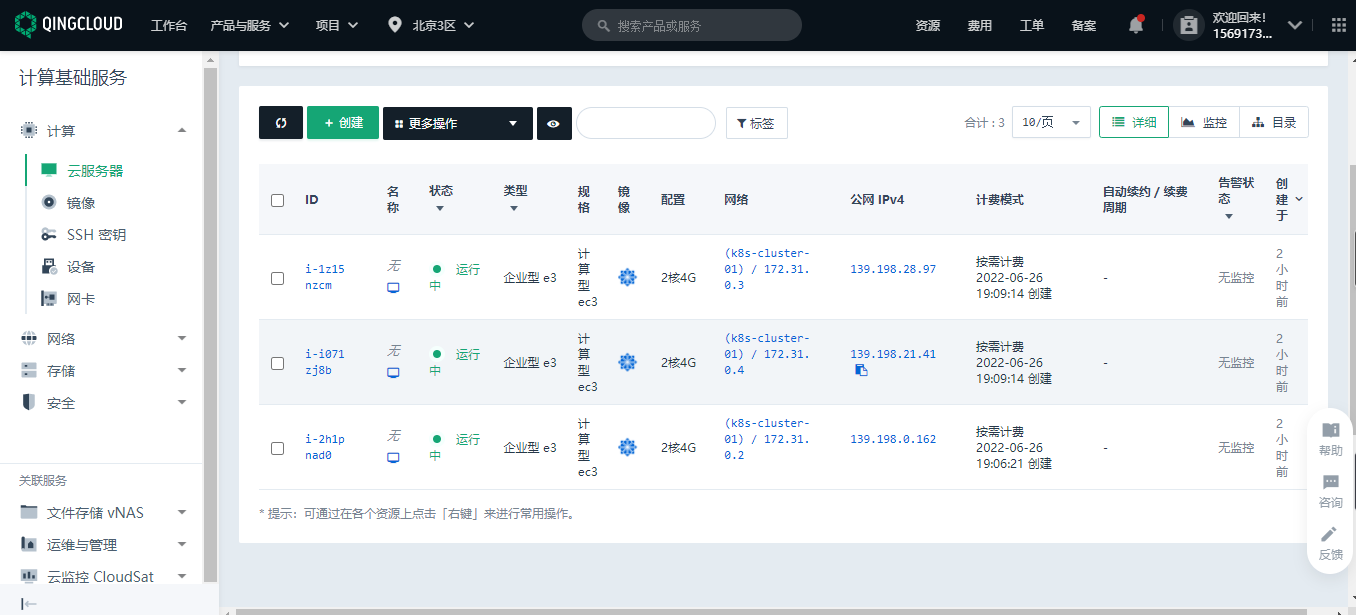
Kubeadm create kubernetes cluster

Using physical information neural network to solve hydrodynamics equations

Sword finger offer 10- ii Frog jumping on steps

冲刺强基计划数学物理专题二

Lwip之ARP模块实现

Lambda expression

When transformer encounters partial differential equation solution

Oracle database basics concepts

How to control the quality of HD slip ring in the production process

Moher College -x-forwarded-for injection vulnerability practice
随机推荐
剑指 Offer 10- II. 青蛙跳台阶问题
Kubeadm create kubernetes cluster
自定义JSP[if,foreach,数据,select]标签
当Transformer遇见偏微分方程求解
Is it safe to open a compass account?
Mindspire, a domestic framework, cooperates with Shanshui nature conservation center to find and protect the treasure life in the "China water tower"
这10款文案神器帮你速码,做自媒体还担心写不出文案吗?
网上开通证券账户安全吗 手机炒股靠谱吗
Reading graph augmentations to learn graph representations (lg2ar)
论文解读(LG2AR)《Learning Graph Augmentations to Learn Graph Representations》
全網最全的混合精度訓練原理
How to easily describe the process of machine learning?
find_ Detailed use guide of CIRC
Technical dry goods | top speed, top intelligence and minimalist mindspore Lite: help Huawei watch become more intelligent
Super hard core! Can the family photo album on Huawei's smart screen be classified automatically and accurately?
Implementation of ARP module in LwIP
滑环选型选购时需要注意的技巧
2022健康博览会,山东养生保健展会,产后健康、睡眠健康展
Interface test framework practice (I) | requests and interface request construction
大健康行业年度必参盛会,2022山东国际大健康产业博览会