当前位置:网站首页>Oracle date format conversion to_ date,to_ char,to_ Timestamp mutual conversion
Oracle date format conversion to_ date,to_ char,to_ Timestamp mutual conversion
2022-07-05 18:47:00 【HaHa_ Sir】
Oracle Date format conversion to_date,to_char,to_timetamp transformation
One 、 summary
1、 Main records of this paper Oracle In the database , Common date format conversion . Use to_char function , Convert date to string ; Use to_date 、to_timetamp function , Convert the string to the corresponding date type .
2、Oracle The database version is :Oracle 11g.
Two 、 Date conversion string to_char
1、 frequently-used 2 A date function :SYSDATE , SYSTIMESTAMP
SELECT SYSDATE , SYSTIMESTAMP FROM dual ;

2、SYSDATE Turn the string
SELECT
	SYSDATE
, TO_CHAR(SYSDATE, 'yyyy-mm-dd hh:mm:ss') AS "h12" -- 12 hourly
, TO_CHAR(SYSDATE, 'yyyy-mm-dd hh24:mi:ss') AS "h24" -- 24 The hour system
FROM dual ;

3、SYSTIMESTAMP Turn the string
SELECT
	SYSTIMESTAMP
	, TO_CHAR(SYSTIMESTAMP, 'yyyy-mm-dd hh24:mi:ss') AS "h24" -- 24 Hours
	, TO_CHAR(SYSTIMESTAMP, 'yyyy-mm-dd hh24:mi:ss.ff3') AS "h24mi" -- 24 Hours mi
FROM
	dual ;

4、SYSDATE Common conversion
SELECT
	TO_CHAR(SYSDATE , 'yyyy') AS  year  ,
	TO_CHAR(to_date('2022-07-01', 'yyyy-mm-dd'), 'q') AS  quarter  ,
	TO_CHAR(SYSDATE , 'mm') AS  month  ,
	TO_CHAR(SYSDATE  , 'dd') AS  Japan , --  The day of the month
	TO_CHAR(SYSDATE  , 'd') AS " Japan ( Zhou )", --  What day of the week ( The first day is Sunday )
	TO_CHAR(SYSDATE  , 'ddd') AS " Japan ( year )" , --  What day of the year
	TO_CHAR(SYSDATE  , 'ww') AS " Zhou ( year )", --  The weeks of the year
	TO_CHAR(to_date('2022-01-08', 'yyyy-mm-dd')  , 'ww') AS " Zhou ( year )" --  The weeks of the year
FROM
	dual ;
3、 ... and 、 String to date
1、to_date String rotation date :
SELECT
	TO_DATE('2022-06-20 17:08:06' , 'yyyy-mm-dd hh24:mi:ss') AS "date"
FROM
	dual ;
2、TO_TIMESTAMP String rotation date :
SELECT
	TO_TIMESTAMP('2022-06-20 17:08:06.114', 'yyyy-mm-dd hh24:mi:ss.ff3') AS "t1"
  ,	TO_TIMESTAMP('2022-06-20 17:08:06', 'yyyy-mm-dd hh24:mi:ss') AS "t1"
FROM
	dual ;

Four 、 summary
1、Oracle in , Date to string : Use to_char Function , but to_char Function also supports more format conversions , The parameters you can refer to are as follows :
【 The first parameter is a numeric type 】
Serial number | Format | A brief example | explain |
1 | ,( comma ) | '9999,999' | comma , It usually appears in the thousandth place , Used as a grouping symbol . If you need to, you can also take it as a tenth , The percentile appears , Can appear N Time , It depends on the size of the number . |
An example of perversion is to_char(1234,'9,9,9,9'). | |||
matters needing attention : Can only appear in the integral part . | |||
2 | .( Order number ) | '99.99' | Order number , Don't read it as " Full stop ", A full stop is a circle , A good point can only appear in the place corresponding to the decimal point . Only once . |
to_char(1234.34,'9,9,9,9.99') | |||
matters needing attention : Only in one place , It's the decimal point of the original data | |||
3 | $( Dollar symbol ) | '$999.99' | dollar . You can actually put it anywhere ( stay 10G Next ) |
to_char(1234.34,'9,9,9,9.$99') | |||
matters needing attention : Only once . | |||
4 | 0( zero ) | '0999.99' | zero . Returns the corresponding character in the corresponding position , If not, take '0' fill . |
to_char(0.34,'9,9,9,0.$99')='$0.34';to_char(1234,'9999.00')='1234.00'; | |||
matters needing attention : It's a mandatory symbol , There is no corresponding bit , with 'o' fill , This is a 9 It's very different | |||
5 | 9 | '999.99' | 9. In decimal places , It means to convert to the corresponding character , If not, take 0 Express ; In the whole number , If there is no correspondence, the characters will not be filled . |
to_char(123,'999.99')=123.00; TO_CHAR(123,'99999.9')=123.0; | |||
matters needing attention : about 0 and 9 for , If the number of digits in the format is less than the number of digits in the number , Returns the '#'. | |||
for example to_char(12345,'9999')='#####' | |||
6 | B( Space character ) | 'B999' | No other special effect , Add a space to the front of the integer part , Can appear anywhere . |
'S'||TO_CHAR(1234,'99B99')='S 1234'; | |||
matters needing attention : It can only appear in the integer part . | |||
7 | C( International currency symbol ) | 'C9999' | Returns a... At a specific location ISO Currency symbols ( Namely NLS_ISO_CURRENCY The value represented by the parameter ) |
TO_CHAR(1233,'C9999')='CNY1234' , This is a new international standard RMB, You can find out about this " International currency symbol " | |||
matters needing attention : It can only appear in the first digit of the integer part . | |||
Can pass alter session set NLS_ISO_CURRENCY='JAPAN'; To modify the settings of the current session . | |||
8 | D(ISO Decimal symbols ) | '999D99' | This is a " Order number " International version of (ISO), It's equivalent to a point , It can only appear once . The difference is , The database will be based on NLS_NUMERIC_CHARACTER To set the content . The default value is the dot . |
matters needing attention : There is no special need. Generally, do not use this format symbol . Don't change the parameter value easily . | |||
Also available alter sesssion set To modify the . | |||
alter session set nls_numeric_characters='!,'; to_char(1234.34,'9999d99')=1234!34 | |||
9 | EEEE( Scientific operators ) | 9.9EEEE | Scientific computing symbols |
TO_CHAR(2008032001,'9.9EEEE')='2.01E+09', Because it's a scientific calculation method , So add one before the decimal 9 perhaps 0 that will do , There's no point in having more than one . | |||
10 | G( Grouping symbols ) | 999G999 | It's a comma (,) Of course ISO standard , Used as a grouping symbol , It can be used in many places . |
TO_CHAR(123456,'999G9G99')=123,4,56 | |||
matters needing attention : Same as item 8 -D, In addition, if you want to convert the decimal point , It's going to be with D In combination with , Can't match the point number . | |||
11 | L( Local currency symbol ) | 'L999' | yes C Local version of . It can be placed at the front and back of the whole format . |
TO_CHAR(123456,'999G9G99D00L')=123,4,56.00¥ | |||
matters needing attention : Same as item 7 C | |||
12 | MI( Minus sign ) | '9999MI' | If it's a negative number , Put a minus sign at the end (-), If it's a positive number , Then add a space to the tail |
to_char(1234,'9999mi')||'S'||TO_CHAR(-5678,'9999MI') =1234 S5678- | |||
matters needing attention : Can only be placed at the end of the format | |||
13 | PR( Symbol ) | 9999PR | It's another way to express negative numbers . If it's a positive number , Then add a space to the head ; If it's a negative number , Use parentheses <> Wrap up the numbers . |
TO_CHAR(-1234.89,'9G999D00PR')=<1,234.89> | |||
matters needing attention : Same as 12 | |||
14 | RN(rn) | RN(rn) | Integer (1-3999) Convert to Roman .RN Turn to capital ,rn It means lowercase . |
declare | |||
i int; | |||
begin | |||
for i in 1..20 loop | |||
dbms_output.put_line(to_char(i,'RN')); | |||
end loop; | |||
end; | |||
matters needing attention : You can only use , Cannot be used in combination with other symbols . | |||
15 | S | '9999S' | yes 12,13 A comprehensive and improved version of . Add a positive sign to an integer +, Add a sign to a negative number -.S In the front, add in the front , After, after . |
TO_CHAR(-1234,'S9999')=-1234;TO_CHAR(1234,'S9999')=+1234 | |||
16 | TM | TM9/TMe | To use this parameter is to use no parameter to_char(number) equally , Should be 'tm9' Is the default format parameter . |
to_char(1234,'tme')=1234 | |||
matters needing attention : The format is either TM9, Or TME. | |||
When the number length exceeds 64 At the same time ,TM9 The output of is equivalent to TME Output . | |||
17 | U | U999 | Double Coin symbol , For example, the euro . Work with 11 Of L |
TO_CHAR(999,'U999')=¥999 | |||
matters needing attention : adopt NLS_DUAL_CURRENCY control | |||
18 | V | 999V9 | It's a little weird , It's not a very common symbol . Its purpose is to do a calculation . |
for example TO_CHAR(N,'999V9'), With p Express V The location of , Then the expression =to_char(N×(10 Of P-1 Power )). however 9 The number must be greater than or equal to the number of digits after the product . | |||
TO_CHAR(5,'9V')=5*1=5; | |||
TO_CHAR(5,'9V9')=5*10=50 | |||
TO_CHAR(5,'9V99')=500 | |||
TO_CHAR(50,'9V99')='######' 9 There are not enough of them | |||
matters needing attention : The format cannot be written with decimal expression , But you can mix currencies and so on . | |||
19 | X | xxxx | Convert to 16 Base number . |
TO_CHAR(100,'XX')= 64 | |||
matters needing attention : The value must be greater than or equal to 0 The integer of . The front can only be connected with 0 perhaps FM Use a combination of . | |||
20 |
|
| Through the above example , We learned about the formats of various numbers . It can be said that there are too many formats , It's hard to remember , It's best to exist as a reference . |
classified : | |||
Numerical class : 0,9, | |||
Grouping classes : (.),(,),D,G , There's a dot good and a comma because it's not obvious , So use parentheses to highlight . | |||
Currency : $,C,L,U | |||
Compute transformation class :EEEE,RN,V,X | |||
Positive and negative signs :MI,PR,S | |||
Other classes :B | |||
Orthodox class :TM |
【 The first parameter is zero : Date type 】
Serial number | Format | A brief example | explain |
1 | - / , . ; : | A little | The time separator , Except for the standard ones , Text is also allowed as a segmentation symbol . |
"text" | for example to_char(sysdate,'YYYY" year "mm" month "dd" Japan "')=2008 year 04 month 24 Japan | ||
2 | AD |
| Latin Anno Domini Abbreviation , It means A.D . Will be based on nls The difference between A.D. and A.D ad etc. |
A.D. | No special considerations | ||
3 | AM |
| Short for morning , Same as pm, p.m. ( Afternoon ) , The output of Chinese environment is in the morning ( If it's morning ) |
A.M. | |||
4 | BC |
| Although the standard writing is B.c. (c A lowercase letter ) perhaps BC, Fortunately Oracle I don't care about this . B.C |
B.C. | |||
5 | CC |
| Back in the century , In Arabic numerals |
SCC | If the last two places of the year are between 01-99 that , Back to the top two +1, Otherwise go back to the top two | ||
6 | D |
| One day of the week , It returns the serial number 1-7 |
7 | DAY |
| One day of the week , But it's just the day of the week , It has to do with language settings , In the Chinese environment NLS_DATE_LANGUAGE=SIMPLIFIED CHINESE , From Monday to Sunday |
8 | DD |
| One day in the month (1-31) |
9 | DDD |
| One day in the year (1-366) |
10 | DL | 'DL' | Returns the long date format . suffer NLS_TERRITORY,NLS_LANGUAGE Parameter control . example 2008 year 4 month 28 Japan Monday |
Limit : except DL, Nothing else can be set . | |||
11 | DS |
| Returns the short date format . suffer NLS_TERRITORY,NLS_LANGUAGE Parameter control . for example 2008-04-28 |
Limit : except DL, Nothing else can be set . | |||
12 | DY |
| Abbreviation of date , It's the day of the week ( Of course, this refers to the Chinese environment ) |
13 | E |
| Era is short for , But only for the following centralized calendars : The Japanese royal family , Republic of China , Too much Buddhist calendar |
14 | EE |
| The whole journey of the era , Suitable for the situation E |
15 | FF [1..9] |
| It's milliseconds , If you don't change the number, you use the default precision . |
It can only be used for timestamp Type of . | |||
16 | FM |
| A function worth noting : Don't return anything . |
I don't understand oracle Why set this thing . | |||
17 | FX |
| ditto |
18 | HH |
| For hours , by 12 hourly , Same as hh12(1-12) |
19 | HH12 |
| For hours , by 12 hourly (1-12) |
20 | HH24 |
| For hours , by 24 hourly (0-23) |
21 | IW |
| ISO Standard week number (1-52, perhaps 1-53) |
22 | IYYY |
| IYY,IY,I, ISO year (4 position ) Of 4,3,2,1 Digit number ( Reciprocal ) |
IYY | to_char(to_date(21120401,'yyyymmdd'),'iyyy, iyy,iy,i')=2112, 112,12,2 | ||
IY |
| ||
I |
| ||
23 | J |
| Julian day ( A calendar often used in astronomy ), From b.c. 4712 From January 1, 2008 , The result is an integer , The algorithm is basically ( The date of A.D +4712)* Julian calendar year average days |
24 | MI |
| second (0-59) |
25 | MM |
| 2 A month (1-12) |
26 | MON |
| The abbreviation of the month , It has something to do with the country NLS_DATE_LANGUAGE, for example 04 Using in Chinese environment 4 Monthly representation . |
27 | MONTH |
| The name of the month , The country has something to do with NLS_DATE_LANGUAGE, Now in Chinese 04 Expressed as 4 month . |
28 | PM |
| Same as am,a.m. In the afternoon |
P.M. | |||
29 | Q |
| quarter (1-4) |
30 | RM |
| The month in Roman numerals ,I ,II ,III ,IV ,V ,VI ,VII ,VIII,IX ,X ,XI ,XII |
31 | RR |
| It's a bit of a round off for years , The specific usage is a little complicated . |
With s Represents the last two digits of the year entered ,c Represents the last two digits of the current year , Its output ( The top two in the new year ) You can use functions r=f(s,c) To express ,s2,c2 respectively s,c The first two of . | |||
1)s=[0,49],c=[0,49], be r=c2 | |||
2) s=[0,49],c=[50,99], be r=c2+1 | |||
3) s=[50,99],c=[0,49], be r=c2-1 | |||
4) s=[50,99],c=[50,99], be r=c2 | |||
In short, the principle of being close to the current year , If it's in the same region as the current year, then it's the same , If it's larger than the current area , Then it is regarded as the current century and the previous century , Otherwise it will be the next century . | |||
for instance , With to_date As an example | |||
SQL> select to_date('89-01-01','rr-mm-dd') ,to_date('12-01-01','rr-mm-dd') FROM DUAL; | |||
| |||
TO_DATE('89-01-01','RR-MM-DD') TO_DATE('12-01-01','RR-MM-DD') | |||
------------------------------ ------------------------------ | |||
1989-01-01 2012-01-01 | |||
I think oracle I'm going to do this , It is estimated that there are two considerations. One is for convenience , One is to deal with a century or a millennium problem . | |||
32 | RRRR |
| If the input parameter has only two digits , Same with rr, Otherwise, it will be the same as yyyy effect . |
33 | SS |
| second (0-59), In a minute |
34 | SSSSS |
| The cumulative number of seconds a day from midnight .(0-86399) |
35 | TS |
| Return short date format content , Including hours, minutes, seconds, etc , And the only dl,ds Use a combination of , The format is : |
dl ts perhaps dl ts , The middle is separated by a space .TO_CHAR(SYSDATE,'TS')= Afternoon 4:50:04 | |||
Form is affected by NLS_TERRITORY and NLS_LANGUAGE influence . | |||
36 | TZD |
| Daylight saving time information , Time zone abbreviation plus daylight saving time information , Must be consistent with format tzr The set time zone corresponds to . |
Including the following three TZ At the beginning , It's all about time zones , Not directly for to_char | |||
37 | TZH |
| Hours in a time zone , for example hh:mi:ss.fftzh:tzm' |
38 | TZM |
| Minutes in the time zone . |
39 | TZR |
| Area information in the time zone , It must be a database supported time zone , for example US/Pacific |
40 | WW |
| and iw similar , It's also the serial number of the week , From the first day of the year to the last seventh day of the year . The two values are basically the same .(1-53) , for example 2008-01-01 To 2008-01-07 count 1,2008-01-09~2008-01-13 count 2 |
41 | W |
| The week of the month , The algorithm is the same as ww, It's just limited to one month , and iso Different . |
42 | X |
| Represents the local root symbol , It's not particularly useful , And the only timestamp Type used together . |
43 | Y,YYY |
| Four years , It's good to separate them for example 2,008 |
44 | YEAR |
| The year of articulation , for example 2008=two thousand eight |
SYEAR | S The prefix means B.C BC | ||
45 | YYYY |
| Four years ,S The prefix means B.C BC |
SYYYY | |||
46 | YYY |
| One time for the back 3,2,1 The year of a bit , for example 2008 It can be taken as 008,08,8 |
YY | |||
Y | |||
| summary |
| From the above , It is mainly the format of several parts of time : century 、 year , month , Japan , when , branch , second , millisecond , And other mixed formats . Every part of time can be expressed in many ways , It's easier to remember by classifying in this way . |
Many formats can be combined , In this way, we can finally form a rich enough expression of its situation ; | |||
Secondly, a lot of formats and nls Is closely related ; Finally, some outputs ( return ) It has something to do with format case , This is not reflected in the Chinese environment ( I haven't seen it so far ), however english Under the circumstances, under the name of , With to_char(sysdate,'day') As an example , If it's a western language environment, it's a return sun( hypothesis sysdate On weekends ), If to_char(sysdate,'DAY') Then return to SUN |
2、 Be careful :SYSDATE , SYSTIMESTAMP The time precision of the function is different ;SYSDATE Accurate to seconds ; SYSTIMESTAMP It can be accurate to seconds 6 position .
边栏推荐
- Thoroughly understand why network i/o is blocked?
- Powerful tool for collection processing
- MYSQL中 find_in_set() 函数用法详解
- 如何快速进阶自动化测试?听听这3位BAT大厂测试工程师的切身感想....
- Redhat7.4 configure Yum software warehouse (rhel7.4)
- 技术分享 | 接口测试价值与体系
- Share: ZTE Yuanhang 30 Pro root unlock BL magick ZTE 7532n 8040n 9041n brush mask original brush package root method Download
- EMQX 5.0 正式发布:单集群支持 1 亿 MQTT 连接
- 鱼和熊掌可以兼得!天翼云弹性裸金属一招鲜!
- LeetCode 6109. 知道秘密的人数
猜你喜欢
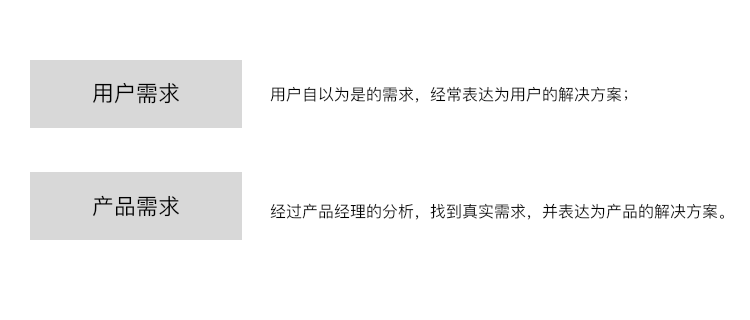
从外卖点单浅谈伪需求
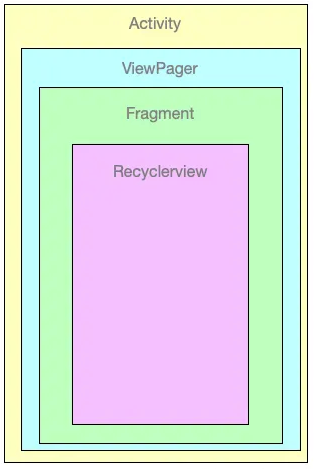
ViewPager + RecyclerView的内存泄漏
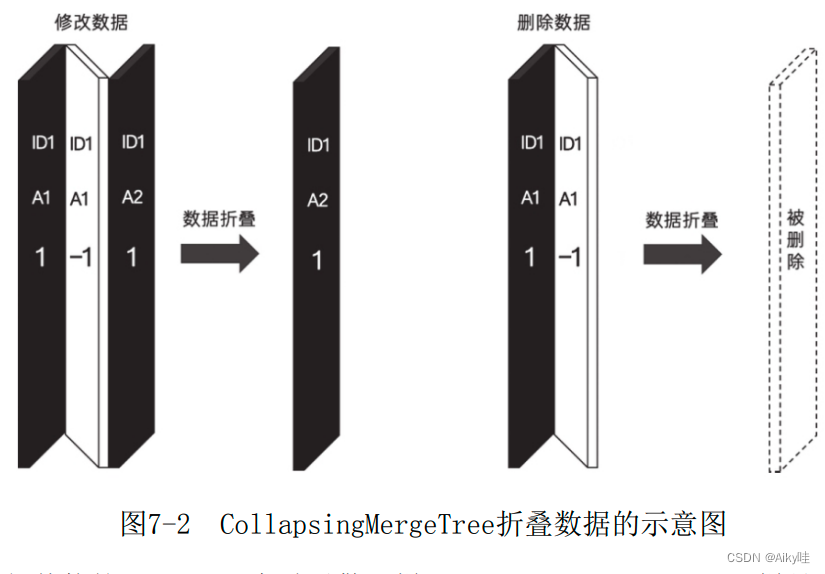
《ClickHouse原理解析与应用实践》读书笔记(5)
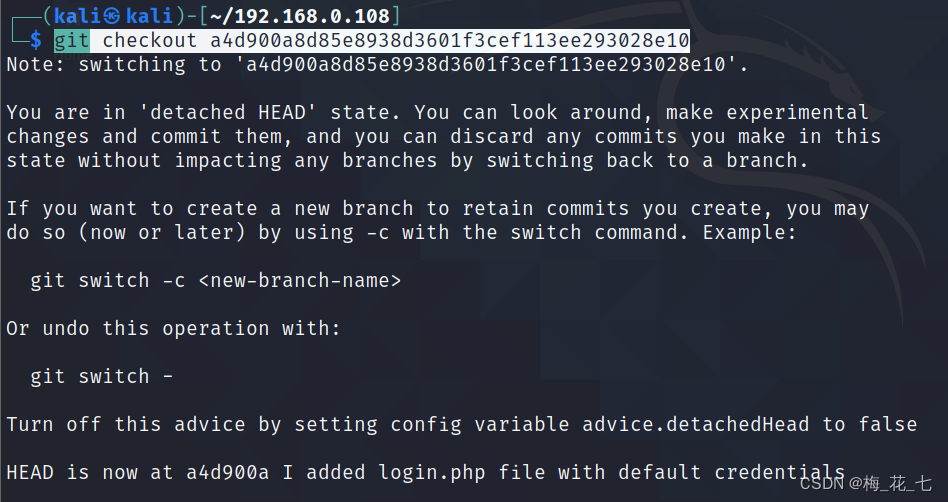
Vulnhub's darkhole_ two
Find in MySQL_ in_ Detailed explanation of set() function usage

瞅一瞅JUC提供的限流工具Semaphore

A2L file parsing based on CAN bus (3)
Rse2020/ cloud detection: accurate cloud detection of high-resolution remote sensing images based on weak supervision and deep learning

2022 Alibaba Android advanced interview questions sharing, 2022 Alibaba hand Taobao Android interview questions
彻底理解为什么网络 I/O 会被阻塞?
随机推荐
Chinese postman? Really powerful!
Low code practice of xtransfer, a cross-border payment platform: how to integrate with other medium-sized platforms is the core
线性表——抽象数据类型
LeetCode 6109. 知道秘密的人数
SAP feature description
快速生成ipa包
Trust counts the number of occurrences of words in the file
Personal understanding of convolutional neural network
The 11th China cloud computing standards and Applications Conference | cloud computing national standards and white paper series release, and Huayun data fully participated in the preparation
2022全网最全的腾讯后台自动化测试与持续部署实践【万字长文】
彻底理解为什么网络 I/O 会被阻塞?
The 11th China cloud computing standards and Applications Conference | China cloud data has become the deputy leader unit of the cloud migration special group of the cloud computing standards working
Isprs2020/ cloud detection: transferring deep learning models for cloud detection between landsat-8 and proba-v
lombok @Builder注解
基于can总线的A2L文件解析(3)
中文版Postman?功能真心强大!
Take a look at semaphore, the current limiting tool provided by JUC
Postman核心功能解析 —— 参数化和测试报告
Common time complexity
集合处理的利器