当前位置:网站首页>06-线程池(3大方法、7大参数,4种拒绝策略)
06-线程池(3大方法、7大参数,4种拒绝策略)
2022-08-02 15:06:00 【念奴娇6】
池化技术
程序运行的本质:占用系统的资源==》优化资源的使用==池化技术:提前准备好资源,如果需要使用,则到池里用,用完后释放返回给池里以备下次或其他线程使用。
线程池、连接池、内存池、对象池、创建销毁都非常的浪费资源。
优点
- 降低资源的消耗
- 提高响应的速度
- 方便管理
- 线程的复用,可以控制最大并发数,管理线程
三大方法
1单个线程池
新建单个线程池
/** * @author * @Date 2022/7/26 * @apiNote */
public class TApi {

    public static void main(String[] args) {

        ExecutorService singlePool=Executors.newSingleThreadExecutor();

            try {

                for (int i = 0; i < 100; i++) {

                singlePool.execute(()->{
    //代替new Thread.start(),利用线程池执行线程
                    System.out.println(Thread.currentThread().getName()+"OK");
                });
                }
            } catch (Exception e) {

                e.printStackTrace();
            } finally {

                singlePool.shutdown();//关闭线程池
            }
    }
}
结果:
无论多少个线程处理,都在同一个线程池里面执行。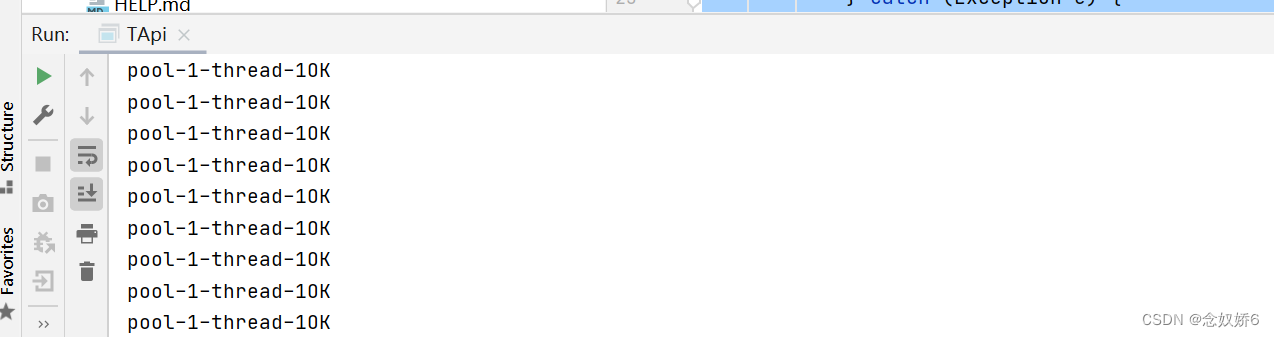
2固定线程池
新建固定个数的线程池
/** * @author * @Date 2022/7/26 * @apiNote */
public class TApi {

    public static void main(String[] args) {

    //新建5个线程池
        ExecutorService fixedPool=Executors.newFixedThreadPool(5);

            try {

                for (int i = 0; i < 100; i++) {

                    fixedPool.execute(()->{

                    System.out.println(Thread.currentThread().getName()+"====OK");
                });
                }
            } catch (Exception e) {

                e.printStackTrace();
            } finally {

                fixedPool.shutdown();//关闭线程池
            }
    }
}
结果:
无论多少个线程执行,都在5个线程池当中。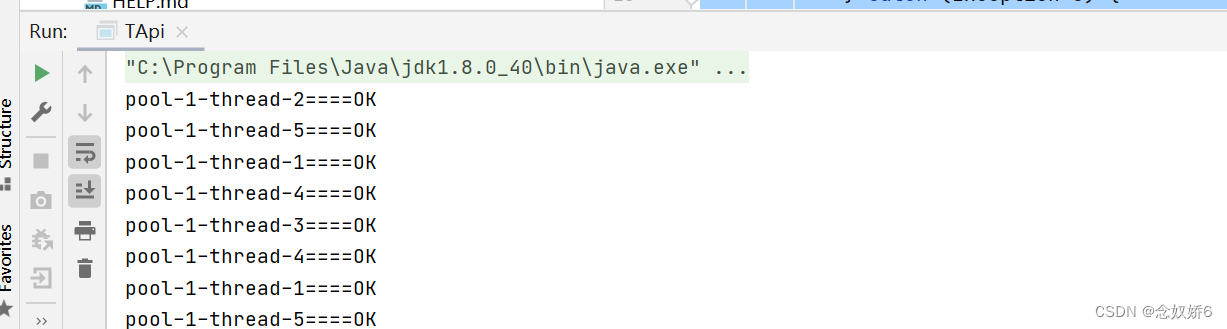
3灵活线程池
根据系统CPU大小,灵活创建线程池,CPU越好,创建线程池越多。
/** * @author * @Date 2022/7/26 * @apiNote */
public class TApi {

    public static void main(String[] args) {

        ExecutorService cachedPool=Executors.newCachedThreadPool();

            try {

                for (int i = 0; i < 100; i++) {

                    cachedPool.execute(()->{

                    System.out.println(Thread.currentThread().getName()+"====OK");
                });
                }
            } catch (Exception e) {

                e.printStackTrace();
            } finally {

                cachedPool.shutdown();//关闭线程池
            }
    }
}
结果:
我的电脑当前可以创建最多线程池30个。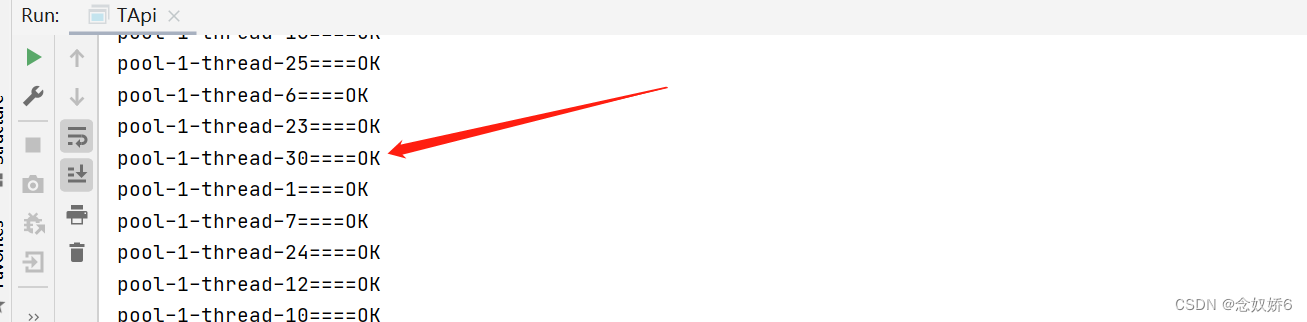
7大参数
源码:
//单个线程池源码
    public static ExecutorService newSingleThreadExecutor() {

        return new FinalizableDelegatedExecutorService
            (new ThreadPoolExecutor(1, 1,
                                    0L, TimeUnit.MILLISECONDS,
                                    new LinkedBlockingQueue<Runnable>()));
    }

//固定线程池源码
    public static ExecutorService newFixedThreadPool(int nThreads) {

        return new ThreadPoolExecutor(nThreads, nThreads,
                                      0L, TimeUnit.MILLISECONDS,
                                      new LinkedBlockingQueue<Runnable>());
    }

//灵活线程池源码
    public static ExecutorService newCachedThreadPool() {

        return new ThreadPoolExecutor(0, Integer.MAX_VALUE,
                                      60L, TimeUnit.SECONDS,
                                      new SynchronousQueue<Runnable>());
    }
//三个线程池的本质都是ThreadPoolExecutor
以下为ThreadPoolExecutor源码
    public ThreadPoolExecutor(int corePoolSize,//核心线程大小
                              int maximumPoolSize,//最大核心线程池大小
                              long keepAliveTime,//超时了没有人调用就会释放
                              TimeUnit unit,//超时单位
                              BlockingQueue<Runnable> workQueue,//阻塞队列
                              ThreadFactory threadFactory,//线程工厂,创建线程的
                              RejectedExecutionHandler handler//拒绝策略) {

        if (corePoolSize < 0 ||
            maximumPoolSize <= 0 ||
            maximumPoolSize < corePoolSize ||
            keepAliveTime < 0)
            throw new IllegalArgumentException();
        if (workQueue == null || threadFactory == null || handler == null)
            throw new NullPointerException();
        this.corePoolSize = corePoolSize;
        this.maximumPoolSize = maximumPoolSize;
        this.workQueue = workQueue;
        this.keepAliveTime = unit.toNanos(keepAliveTime);
        this.threadFactory = threadFactory;
        this.handler = handler;
    }
线程池不允许使用Executor去创建,而是通过ThreadPoolExecutor的方式,这样是为了让我们更好的了解线程池的运行规则,规避资源耗尽的风险。
Executor直接使用弊端为:
- FixedThreadPool和SingleThreadPool:允许的请求队列长度为Integer.MAX_VALUE,可能会堆积大量的请求,导致OOM,
- CachedThreadPool和SceduledThreadPool:允许创建的线程数量为Integer.MAX_VALUE,可能会创建大量线程,导致OOM,
示例:
- 当有两个线程进行时:
/** * @author * @Date 2022/7/26 * @apiNote */
public class TApi {

    public static void main(String[] args) {

        ExecutorService threadPool =new ThreadPoolExecutor(2,
                5,
                3,
                TimeUnit.SECONDS,
                new LinkedBlockingQueue<>(3),
                Executors.defaultThreadFactory(),
                new ThreadPoolExecutor.AbortPolicy()//线程池满了,阻塞队列满了,进入后不再处理并抛出异常
        );

            try {

                for (int i = 1; i <= 2; i++) {

                    threadPool.execute(()->{

                    System.out.println(Thread.currentThread().getName()+"====OK");
                });
                }
            } catch (Exception e) {

                e.printStackTrace();
            } finally {

                threadPool.shutdown();
            }
    }
}
结果: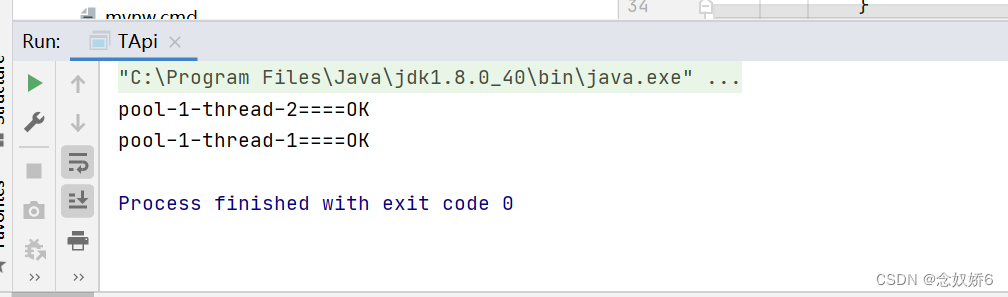
分析:当前两个核心线程池在处理
2.当有3个线程进行时
/** * @author * @Date 2022/7/26 * @apiNote */
public class TApi {

    public static void main(String[] args) {

        ExecutorService threadPool =new ThreadPoolExecutor(2,
                5,
                3,
                TimeUnit.SECONDS,
                new LinkedBlockingQueue<>(3),
                Executors.defaultThreadFactory(),
                new ThreadPoolExecutor.AbortPolicy()//线程池满了,阻塞队列满了,进入后不再处理并抛出异常
        );

            try {

                for (int i = 1; i <= 3; i++) {

                    threadPool.execute(()->{

                    System.out.println(Thread.currentThread().getName()+"====OK");
                });
                }
            } catch (Exception e) {

                e.printStackTrace();
            } finally {

                threadPool.shutdown();
            }
    }
}
结果: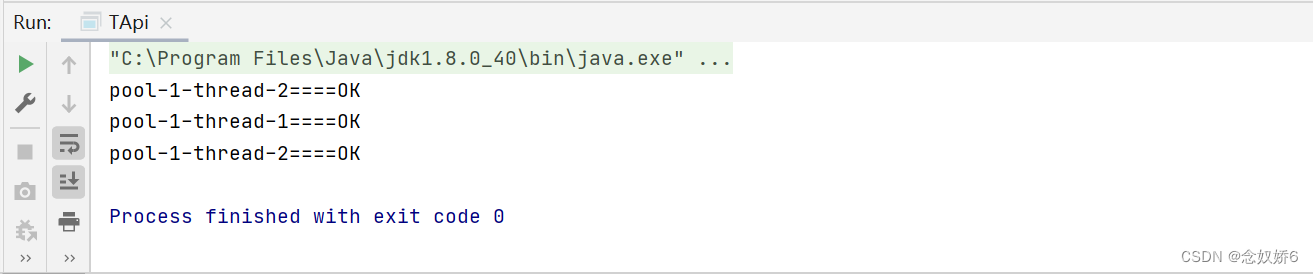
分析:当前两个核心线程池在处理
3.四个线程:
两个核心线程池在处理
4.五个线程: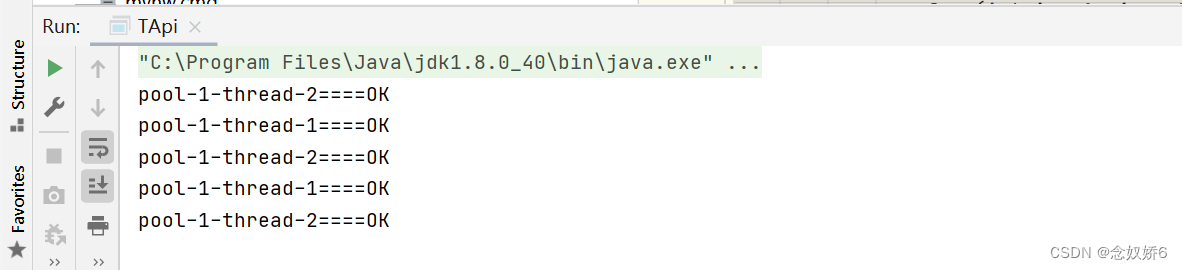
5.六个线程:
两个核心线程池外加一个线程池在处理。
6.八个线程
7.九个线程
当九个线程进行时,超过了设定最大线程池数量(5)+阻塞队列(3)个(8<9),触发拒绝策略abortPolicy,抛出异常。
四种拒绝策略
除去上面的AbortPolicy拒绝策略,以下还有三种:
1.CallerRunPolicy拒绝策略
含义:哪来的回哪去
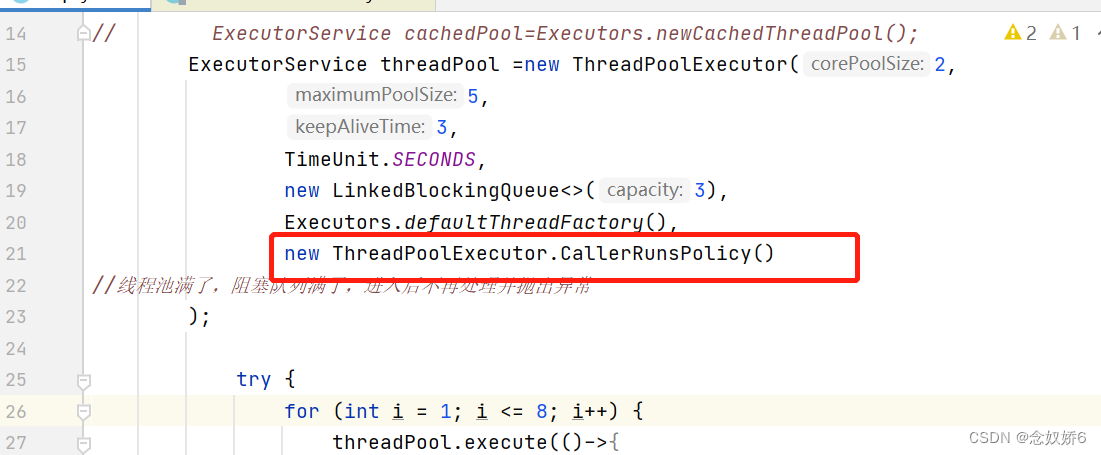
结果:
由主线程发出的,超过设定数量,会返回给主线程。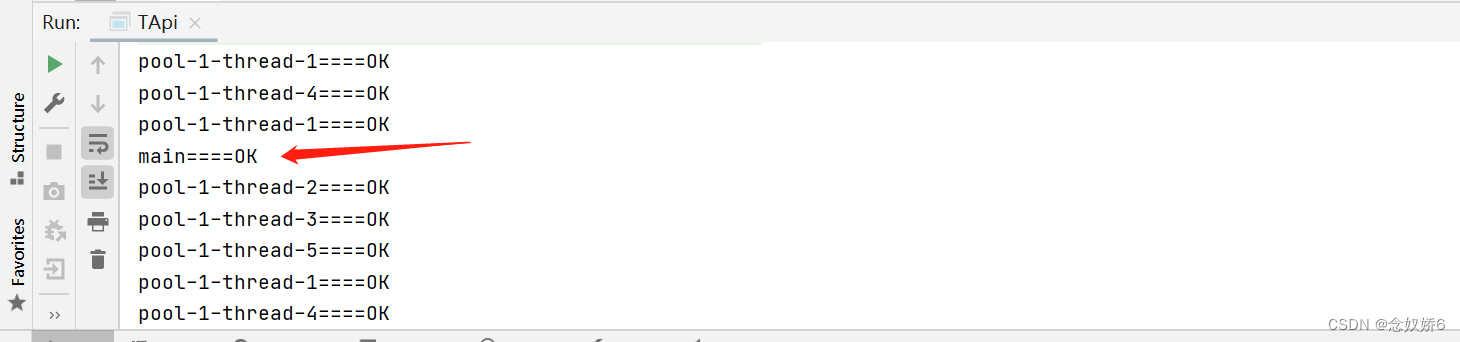
2.DiscardPolicy拒绝策略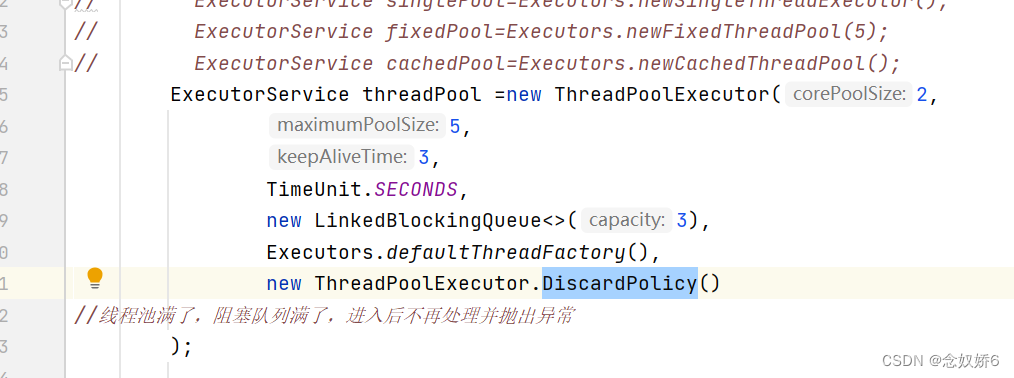
结果: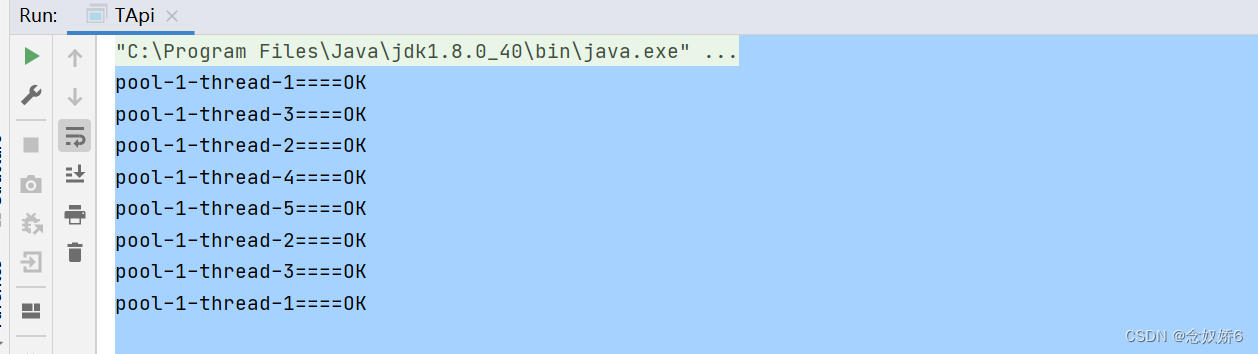
达到设定线程池的数量8后,队列满后,之后第九个线程会被废弃掉,不抛出异常。
3.DiscardOldestPolicy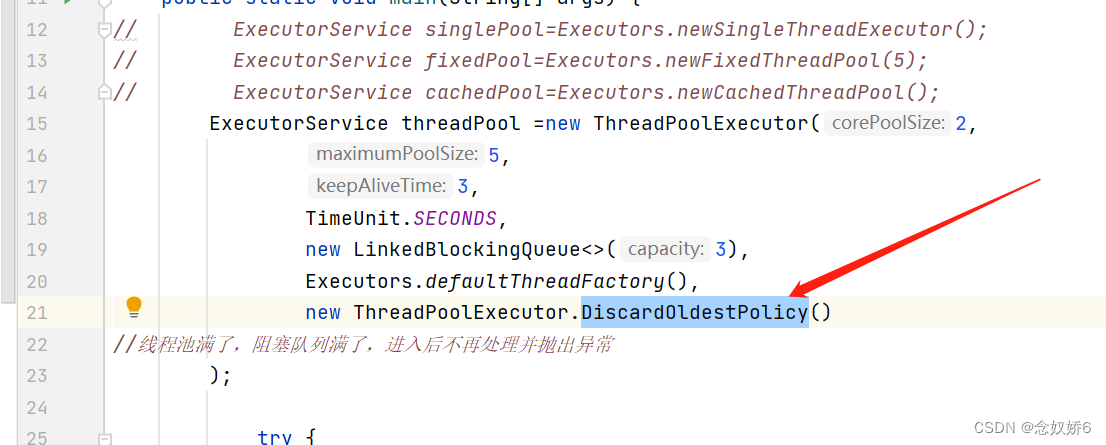
结果:
达到设定的最大线程数量8,第九个会尝试和第一个竞争,竞争成功会占用第一个,竞争失败就会自动丢弃掉。也不会抛出异常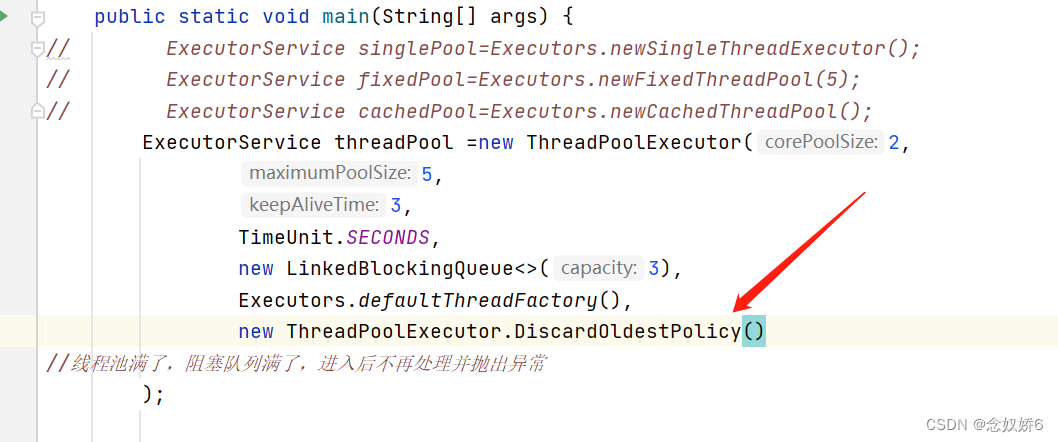
最大线程如何定义
- CPU密集型:服务器几核CPU,就定义最大线程池数,如12核CPU就定义线程池数最大数量为12,可以保证CPU利用效率最高
- IO密集型:判断程序中十分消耗IO的程序,大于这个就可以
边栏推荐
猜你喜欢



随机推荐
Reed-Solomon Codes——RS纠错码
c语言实现三子棋
【知乎高赞】为什么很多资质平庸的女人嫁得很好,很多优质女性却成了剩女?
System delay tasks and scheduled tasks
太帅了!我用炫酷大屏展示爬虫数据!
IDO预售DAPP系统开发(NFT挖矿)
浅聊组合函数
看我如何用多线程,帮助运营小姐姐解决数据校对系统变慢!
ICML/ICLR'22 推荐系统论文梳理
Thinkpad E430c使用u盘安装系统
mysql 索引使用与优化
从特征交互到数据交互,浅谈深度点击率模型的新趋势
Why do I no longer recommend the enumeration strategy pattern?
推荐系统相关顶会整理
继续来学习有关淘宝的API接口的使用——获得店铺的所有商品 API
Based on mobileNet dog breed classification (migration)
NXP i.MX 8M Mini工业核心板B2B版本,4核ARM [email protected]设计
go——协程调度
How to check the WeChat applet server domain name and modify it
Apache的管理及web优化