当前位置:网站首页>pytorch 模型保存的完整例子+pytorch 模型保存只保存可训练参数吗?是(+解决方案)
pytorch 模型保存的完整例子+pytorch 模型保存只保存可训练参数吗?是(+解决方案)
2022-07-02 19:02:00 【FakeOccupational】
测试使用的是一个liner model,还有更多的问题。pytorch 模型保存只保存可训练参数吗?
save模型
# 导入包
import glob
import os

import torch
import matplotlib.pyplot as plt
import random #用于数据迭代器生成随机数据

# 生成数据集 x1类别0,x2类别1
n_data = torch.ones(50, 2)  # 数据的基本形态
x1 = torch.normal(2 * n_data, 1)  # shape=(50, 2)
y1 = torch.zeros(50)  # 类型0 shape=(50, 1)
x2 = torch.normal(-2 * n_data, 1)  # shape=(50, 2)
y2 = torch.ones(50)  # 类型1 shape=(50, 1)
# 注意 x, y 数据的数据形式一定要像下面一样(torch.cat是合并数据)
x = torch.cat((x1, x2), 0).type(torch.FloatTensor) y = torch.cat((y1, y2), 0).type(torch.FloatTensor) # 数据集可视化 plt.scatter(x.data.numpy()[:, 0], x.data.numpy()[:, 1], c=y.data.numpy(), s=100, lw=0, cmap='RdYlGn') plt.show() # 数据读取: def data_iter(batch_size, x, y): num_examples = len(x) indices = list(range(num_examples))
    random.shuffle(indices)  # 样本的读取顺序是随机的
    for i in range(0, num_examples, batch_size):
        j = torch.LongTensor(indices[i: min(i + batch_size, num_examples)]) #最后一次可能不足一个batch
        yield  x.index_select(0, j), y.index_select(0, j)

#############################################################################################################
def saver(model_state_dict, optimizer_state_dict, model_path, epoch, max_to_save=30):
    total_models = glob.glob(model_path + '*')
    if len(total_models) >= max_to_save:
        total_models.sort()
        os.remove(total_models[0])

    state_dict = {
    }
    state_dict["model_state_dict"] = model_state_dict
    state_dict["optimizer_state_dict"] = optimizer_state_dict

    torch.save(state_dict, model_path + 'h' + str(epoch))
    print('models {} save successfully!'.format(model_path + 'hahaha' + str(epoch)))


################################################################################################################

import torch.nn as nn
import torch.optim as optim


class net(nn.Module):
    def __init__(self, **kwargs):
        super(net, self).__init__(**kwargs)
        self.net = nn.Sequential(nn.Linear(2, 1), nn.ReLU())

    def forward(self, x):
        return self.net(x)

def loss(y_hat, y):
    return (y_hat - y.view(y_hat.size())) ** 2 / 2


def accuracy(y_hat, y):  #@save
    """计算预测正确的数量。"""
    cmp = y_hat.type(y.dtype) > 0.5 # 大于0.5类别1
    result=cmp.type(y.dtype)
    acc = 1-float(((result-y).sum())/ len(y))
    return acc;

lr = 0.03
num_epochs = 3 # 迭代次数
batch_size = 10 # 批量大小
model = net()
params =  list(model.parameters())
optimizer = torch.optim.Adam(params, 1e-4)

for epoch in range(num_epochs):
    for X, y_train in data_iter(batch_size, x, y):
        optimizer.zero_grad()
        l = loss(model(X), y_train).sum()  # l是有关小批量X和y的损失
        l.backward(retain_graph=True)
        optimizer.step()
        print(l)
    saver(model.state_dict(), optimizer.state_dict(), "./", epoch + 1,  max_to_save=100)
load模型
# 导入包
import glob
import os

import torch
import matplotlib.pyplot as plt
import random #用于数据迭代器生成随机数据

# 生成数据集 x1类别0,x2类别1
n_data = torch.ones(50, 2)  # 数据的基本形态
x1 = torch.normal(2 * n_data, 1)  # shape=(50, 2)
y1 = torch.zeros(50)  # 类型0 shape=(50, 1)
x2 = torch.normal(-2 * n_data, 1)  # shape=(50, 2)
y2 = torch.ones(50)  # 类型1 shape=(50, 1)
# 注意 x, y 数据的数据形式一定要像下面一样(torch.cat是合并数据)
x = torch.cat((x1, x2), 0).type(torch.FloatTensor) y = torch.cat((y1, y2), 0).type(torch.FloatTensor) # 数据集可视化 plt.scatter(x.data.numpy()[:, 0], x.data.numpy()[:, 1], c=y.data.numpy(), s=100, lw=0, cmap='RdYlGn') plt.show() # 数据读取: def data_iter(batch_size, x, y): num_examples = len(x) indices = list(range(num_examples))
    random.shuffle(indices)  # 样本的读取顺序是随机的
    for i in range(0, num_examples, batch_size):
        j = torch.LongTensor(indices[i: min(i + batch_size, num_examples)]) #最后一次可能不足一个batch
        yield  x.index_select(0, j), y.index_select(0, j)

#############################################################################################################
def saver(model_state_dict, optimizer_state_dict, model_path, epoch, max_to_save=30):
    total_models = glob.glob(model_path + '*')
    if len(total_models) >= max_to_save:
        total_models.sort()
        os.remove(total_models[0])

    state_dict = {
    }
    state_dict["model_state_dict"] = model_state_dict
    state_dict["optimizer_state_dict"] = optimizer_state_dict

    torch.save(state_dict, model_path + 'h' + str(epoch))
    print('models {} save successfully!'.format(model_path + 'hahaha' + str(epoch)))


################################################################################################################

import torch.nn as nn
import torch.optim as optim


class net(nn.Module):
    def __init__(self, **kwargs):
        super(net, self).__init__(**kwargs)
        self.net = nn.Sequential(nn.Linear(2, 1), nn.ReLU())

    def forward(self, x):
        return self.net(x)

def loss(y_hat, y):
    return (y_hat - y.view(y_hat.size())) ** 2 / 2


def accuracy(y_hat, y):  #@save
    """计算预测正确的数量。"""
    cmp = y_hat.type(y.dtype) > 0.5 # 大于0.5类别1
    result=cmp.type(y.dtype)
    acc = 1-float(((result-y).sum())/ len(y))
    return acc;

lr = 0.03
num_epochs = 3 # 迭代次数
batch_size = 10 # 批量大小
model = net()
params =  list(model.parameters())
optimizer = torch.optim.Adam(params, 1e-4)

# for epoch in range(num_epochs):
# for X, y_train in data_iter(batch_size, x, y):
# optimizer.zero_grad()
# l = loss(model(X), y_train).sum() # l是有关小批量X和y的损失
# l.backward(retain_graph=True)
# optimizer.step()
# print(l)
# saver(model.state_dict(), optimizer.state_dict(), "./", epoch + 1, max_to_save=100)


def loader(model_path):
    state_dict = torch.load(model_path)
    model_state_dict = state_dict["model_state_dict"]
    optimizer_state_dict = state_dict["optimizer_state_dict"]
    return model_state_dict, optimizer_state_dict

model_state_dict, optimizer_state_dict = loader("h1")
model.load_state_dict(model_state_dict)
optimizer.load_state_dict(optimizer_state_dict)

print('pretrained models loaded!')
pytorch 模型保存只保存可训练参数吗?是
class net(nn.Module):
    def __init__(self, **kwargs):
        super(net, self).__init__(**kwargs)
        self.net = nn.Sequential(nn.Linear(2, 1), nn.ReLU())
        self.notrain= torch.rand((64, 64), dtype=torch.float)

    def forward(self, x):
        return self.net(x)

解决方案
class net(nn.Module):
    def __init__(self, **kwargs):
        super(net, self).__init__(**kwargs)
        self.net = nn.Sequential(nn.Linear(2, 1), nn.ReLU())
        # self.notrain = torch.rand((64, 64), dtype=torch.float)
        self.notrain = torch.nn.Parameter(torch.ones(64, 64))

    def forward(self, x):
        return self.net(x)
for epoch in range(num_epochs):
    for X, y_train in data_iter(batch_size, x, y):
        optimizer.zero_grad()
        l = loss(model(X), y_train).sum()  # l是有关小批量X和y的损失
        l.backward(retain_graph=True)
        optimizer.step()
        print(l)
        model.notrain.data = model.notrain.data+2
    saver(model.state_dict(), optimizer.state_dict(), "./", epoch + 1,  max_to_save=100)
参考与更多
边栏推荐
猜你喜欢

RPD product: super power squad nanny strategy

为什么我对流程情有独钟?

Registration opportunity of autowiredannotationbeanpostprocessor under annotation development mode

【Hot100】21. 合并两个有序链表

基于SSM实现网上购物商城系统
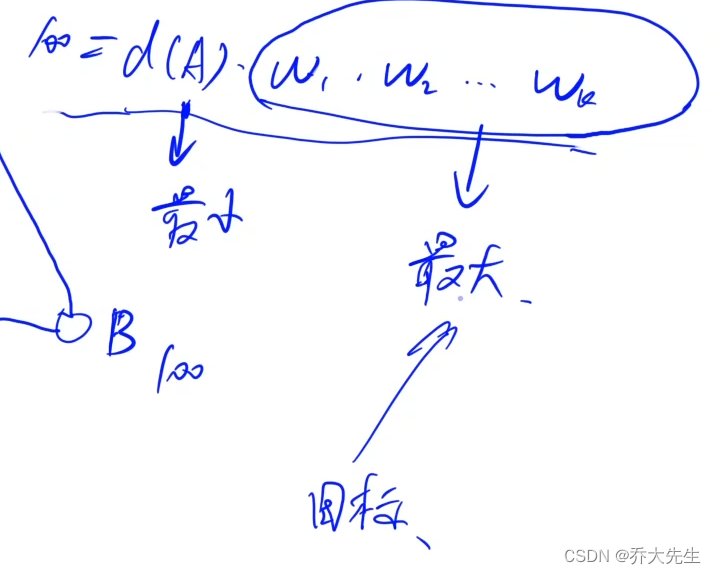
AcWing 1126. 最小花费 题解(最短路—dijkstra)

AcWing 903. 昂贵的聘礼 题解(最短路—建图、dijkstra)
How to avoid duplicate data in gaobingfa?

rxjs Observable 自定义 Operator 的开发技巧
Yes, that's it!
随机推荐
KS004 基于SSH通讯录系统设计与实现
sql-labs
SQLite 3.39.0 release supports right external connection and all external connection
Registration opportunity of autowiredannotationbeanpostprocessor under annotation development mode
AcWing 1127. 香甜的黄油 题解(最短路—spfa)
Understanding and function of polymorphism
[Chongqing Guangdong education] reference materials for labor education of college students in Nanjing University
高并发下如何避免产生重复数据?
SQLite 3.39.0 发布,支持右外连接和全外连接
Codeforces Round #802 (Div. 2) 纯补题
攻防世界pwn题:Recho
JS how to get integer
Detailed tutorial on installing stand-alone redis
Is there any security guarantee for the ranking of stock and securities companies
AcWing 341. 最优贸易 题解 (最短路、dp)
Postman下载安装
面试经验总结,为你的offer保驾护航,满满的知识点
Automated video production
pxe装机「建议收藏」
Cuckoo filter