当前位置:网站首页>Redis avalanche, penetration, breakdown
Redis avalanche, penetration, breakdown
2022-07-02 12:37:00 【Squat in the corner and count the ants】
One 、 Cache avalanche :
Concept :
Cache avalanche refers to the cache key Mass to expiration time , At this time, a large number of requests call at the same time , Causes database pressure to be too big even down machine
Examples in actual production :
Take the second kill as an example ,QPS achieve 5000, At this time , If this 5000 Requests are accessed at the same time , stay redis When the cache of is not invalidated , This magnitude of qps,redis It's bearable .
But if , be-all key It all fails at a certain point in time , And the background hasn't had time to brush the cache again ( The cache is usually refreshed when the scheduled task actively refreshes or modifies ), Then at this time , All requests will be directly entered MySQL database .
As you can imagine ,MySQL It's basically unbearable , And it doesn't work to restart , Because your restart speed can never keep up with the user refresh speed .
This phenomenon is called cache avalanche .
Solution :
1、 in the light of key Cache avalanche caused by simultaneous failure
We usually set key when , Should avoid key The expiration time of is the same , You can set key Valid period of , Add a random number , Refresh the data at the same time key The validity period of is set to different ( For example, hundreds of milliseconds to tens of seconds ).
Of course , You can also use the scheme of data preheating , Before a large concurrent access is about to occur , Manually trigger cache different key, Set different expiration times , Make the cache failure time as uniform as possible .
2、 in the light of redis Cache middleware suddenly hangs , The resulting cache avalanche
For small businesses , We can use redis Of sentinel Sentinel mechanism ;
For large businesses , We can use redis Of cluster Cluster solution to deal with .
Whether it's sentinel、 still cluster, All of them have complete automatic failover , about master All of a sudden , It will not affect the normal operation of the business .
Two 、 Cache penetration
Concept :
Cache penetration , It refers to that malicious attackers frequently query data that must not exist in a database .
Cache miss , It will send the request to the database , The database does not have this data , It will not store the data in the cache , This leads to the same request , Always requested , In fact, it's not a cache , Instead, request directly to the database .
At this time , If someone takes advantage of what doesn't exist key Frequently request our application interface , And the magnitude is very large , This will make the storage tier database unbearable , You may die .
Examples in actual production :
For example, there is an interface ,www.haveyb.com/getProductInfo?product_id=109&porduct_type=2,
In normal use , If you request a nonexistent data , such as product_id = 999999999, In fact, this data does not exist in the database , But there is such a malicious attacker , Take this data , Ask you frequently , It's OK when requests come one by one .
But what if tens of thousands of concurrent calls come at the same time ? After you actually miss the cache , All the requests have been sent to the database , But the database does not have this data , You can't put the data in the cache , The result is that requests continue to hit the database , In fact, the database cannot withstand such a large concurrency , It will cause the database to hang up .
This is buffer penetration .
Solution :
1、 Whether the data actually exists or not , We all store this key in the cache ( The validity period should be set shorter , For example, one to three minutes ), Then set the value to a specific value , If the result obtained in the business is this specific value , It will report an error and return .
2、 Another solution is to use redis The bloom filter (Bloom Filter), Hash all possible data to a large enough bitmap in , A certain nonexistent data will be This bitmap Intercept , Thus, the query pressure on the underlying storage system is avoided .
3、 ... and 、 Cache breakdown
1、 Concept
Buffer breakdown refers to a Key Very hot , Constantly carrying big concurrency , Large concurrent centralized access to this point , When this Key At the moment of failure , Continuous large concurrency breaks through the cache , Request directly to the database , At this time , A large amount of concurrency may directly hang up the database .
notes : The most essential difference between cache breakdown and cache avalanche is
Cache avalanche is due to a large number of key At the same time , Cause all requests to directly call the database at the same time , Cause the database to hang up ;
Cache breakdown is due to a hot spot key invalid , Requests that have been blocked by the cache before , Send directly to the database , Cause the database to hang up .
Examples in production :
We have an interface to get the background settings of the merchant system , The cache to redis in , This interface , Other services are called at all times , Such as the order 、 goods 、 Inventory module .
Originally , This data exists in the cache , All requests are blocked by the cache , It's no problem , But if this key Suddenly expired , Then this hot request will be directly called to the database , In the case of large concurrency , Maybe the database will hang up .
Solution :
1、 Set the data to never expire ( Update only , Do not delete or expire )
2、 For the key Of value Set a timeout value internally , When accessing , It is found that the timeout value has been reached , Just update the cache , And reset the timeout value ( For this key, It can be set not to expire , Or the timeout value is less than the expiration time set externally )
$key = 'system_setting_106976';
$timestamp = time();
$data = [
    'value' => 12345678,
    'timeout' => $time
];
setnx($key, $data, $time + 360);边栏推荐
猜你喜欢
中国交通标志检测数据集

AI mid stage technology research

倍增 LCA(最近公共祖先)

Sparkcontext: error initializing sparkcontext solution

Enhance network security of kubernetes with cilium
Distributed machine learning framework and high-dimensional real-time recommendation system
深拷贝 事件总线
堆(優先級隊列)
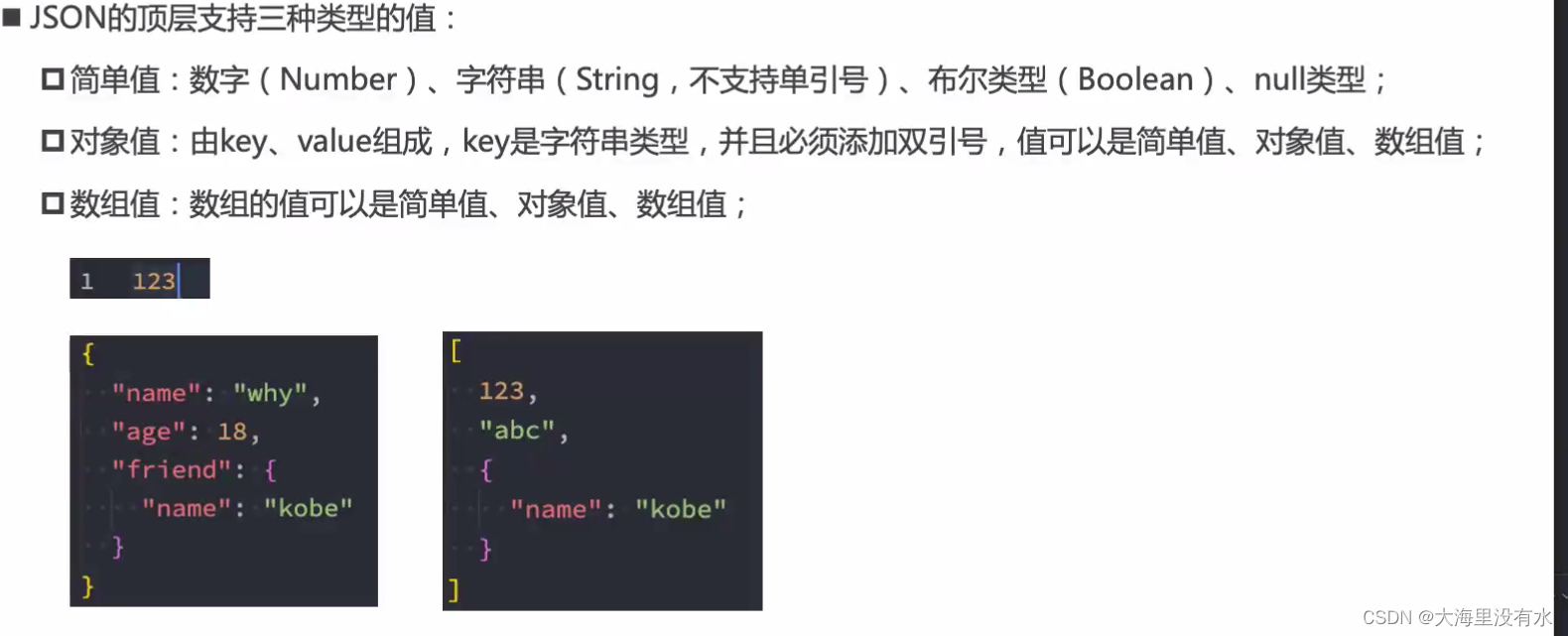
JSON序列化 与 解析

Experiment of connecting mobile phone hotspot based on Arduino and esp8266 (successful)
随机推荐
BOM DOM
浏览器node事件循环
Heap (priority queue)
High performance erasure code coding
Go学习笔记—基于Go的进程间通信
Fastdateformat why thread safe
Shutter encapsulated button
Deep copy event bus
Sort---
2.6 using recursion and stack - [tower of Hanoi problem]
Enhance network security of kubernetes with cilium
OpenCV中cv2.VideoWriter_fourcc()函数和cv2.VideoWriter()函数的结合使用
Lekao.com: experience sharing of junior economists and previous candidates in customs clearance
LeetCode—剑指 Offer 37、38
CDH6之Sqoop添加数据库驱动
考研英语二大作文模板/图表作文,英语图表作文这一篇就够了
Leetcode - Sword finger offer 37, 38
[old horse of industrial control] detailed explanation of Siemens PLC TCP protocol
(C language) 3 small Codes: 1+2+3+ · · +100=? And judge whether a year is a leap year or a normal year? And calculate the circumference and area of the circle?
Sub thread get request