当前位置:网站首页>Topic 1 Single_Cell_analysis(4)
Topic 1 Single_Cell_analysis(4)
2022-06-12 07:38:00 【柚子味的羊】
Topic 1 Single_Cell_analysis(4)
文章目录
Part 1 Scissor() debug——binomial 数据处理
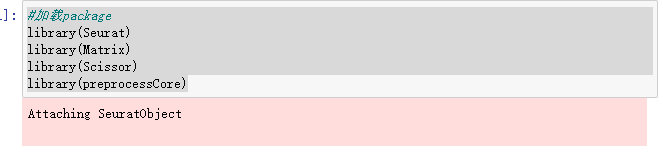
1.1 加载package
#加载package
library(Seurat)
library(Matrix)
library(Scissor)
library(preprocessCore)
1.2 加载单细胞数据
#单细胞数据下载
location <- "https://xialab.s3-us-west-2.amazonaws.com/Duanchen/Scissor_data/"
load(url(paste0(location, 'scRNA-seq.RData')))
dim(sc_dataset)

1.3 将单细胞数据转化为Seurat类型
#将数据转换为Seurat类型,并建立细胞与细胞之间的similarity网络,还会得到多种方法降维后的簇
sc_dataset <- Seurat_preprocessing(sc_dataset, verbose = F)
class(sc_dataset)

1.4 加载bulk数据
#bulk数据下载,TCGA中survival数据作为phenotype
load(url(paste0(location, 'TCGA_LUAD_exp2.RData')))
load(url(paste0(location, 'TCGA_LUAD_TP53_mutation.RData')))
1.5 parameter 赋值
family = "binomial"
phenotype <- TP53_mutation
tag <- c("wild-type", "TP53 mutant")
1.6 检查bulk-cell和single-cell的intersect
#取bulk和single的gene交集
common <- intersect(rownames(bulk_dataset), rownames(sc_dataset))
length(rownames(bulk_dataset))
length(rownames(sc_dataset))
length(common)

1.7 得到processed data 和 细胞间的network
sc_exprs<-as.matrix(sc_dataset@assays$RNA@data)
network<-as.matrix(sc_dataset@graphs$RNA_snn)

1.8 将network的对角元素置0,将所有非零元素置1
diag(network)<-0
network[which(network!=0)]<-1
1.9 将bulk-cell和single-cell拼接(bulk-cell:single-cell)
(bulk 共有498个sample,single共有4102个cell)
dataset0<-cbind(bulk_dataset[common,],sc_exprs[common,])#将bulk-dataset和sc-dataset中的common拼接(bulk-cell and sample)

1.10 对表达矩阵进行矫正
dataset1 <- normalize.quantiles(dataset0)

rownames(dataset1)<-rownames(dataset0)#行赋值
colnames(dataset1)<-colnames(dataset0)#列赋值
1.11 得到bulk和single的表达矩阵
Expression_bulk <- dataset1[,1:ncol(bulk_dataset)]#bulk-cell的基因表达
Expression_cell <- dataset1[,(ncol(bulk_dataset) + 1):ncol(dataset1)]#single-cell的基因表达

Part 2 Scissor() debug——binomial 后续
2.1 合并bulk基因表达和single基因表达
X<-cor(Expression_bulk,Expression_cell)#bulk基因表达矩阵和single基因表达矩阵的相关性

2.2 质控(卡分位数)
#质控
quality_check <- quantile(X)#分位数
print("|**************************************************|")
print("Performing quality-check for the correlations")
print("The five-number summary of correlations:")
print(quality_check)
print("|**************************************************|")

2.3 50% correlation
#50%分位数小于0.01
if (quality_check[3] < 0.01){

    warning("The median correlation between the single-cell and bulk samples is relatively low.")
}
2.4 判断是否有两个label(使用logistic regression)
if (family == "binomial"){

    Y <- as.numeric(phenotype)
    z <- table(Y)
    if (length(z) != length(tag)){

        stop("The length differs between tags and phenotypes. Please check Scissor inputs and selected regression type.")
    }else{

        print(sprintf("Current phenotype contains %d %s and %d %s samples.", z[1], tag[1], z[2], tag[2]))
        print("Perform logistic regression on the given phenotypes:")
    }
}

2.5 存储RData
#保存当前数据(其中X表示bulk-cell和single-cell表达矩阵的相关性,y表示phenotype的table,其中1表示tp53_mutant,0表示wild-type)
save(X, Y, network, Expression_bulk, Expression_cell, file = 'LUAD_TP53_mutant.RData')
2.6 惩罚参数最小化——APML1 function()
#参数和惩罚系数最小化 加惩罚函数降低过拟合现象
APML1=function(x, y, family=c("gaussian", "binomial", "cox"), penalty=c("Lasso","Enet", "Net"), Omega=NULL, alpha=1.0, lambda=NULL, nlambda=50, rlambda=NULL, wbeta=rep(1,ncol(x)), sgn=rep(1,ncol(x)), nfolds=1, foldid=NULL, inzero=TRUE, isd=FALSE, iysd=FALSE, keep.beta=FALSE, ifast=TRUE, thresh=1e-7, maxit=1e+5) {


  #fcall=match.call()
  family=match.arg(family)
  penalty=match.arg(penalty)

  if (penalty=="Net" & is.null(Omega)) {

    penalty="Enet"
    cat("Enet was performed as no input of Omega")
  }
  if (penalty %in% c("Enet","Net") & alpha==1.0) {

    penalty="Lasso"
    cat("Lasso was performed as alpha=1.0")
  }

  if (alpha!=1.0) {

    if (is.null(Omega)) {

      penalty="Enet"
    } else if (!is.null(Omega)) {

      penalty="Net"
    }
  } else {

    penalty="Lasso"
  }

  wbeta=abs(wbeta)

  fit=switch(family,
             "gaussian"=LmL0(x,y,Omega,alpha,lambda,nlambda,rlambda,nfolds,foldid,inzero,wbeta,sgn,isd,iysd,keep.beta,thresh,maxit),
             "binomial"=LogL0(x,y,Omega,alpha,lambda,nlambda,rlambda,nfolds,foldid,inzero,wbeta,sgn,isd,keep.beta,thresh,maxit,threshP=1e-5),
             "cox"=CoxL0(x,y,Omega,alpha,lambda,nlambda,rlambda,nfolds,foldid,inzero,wbeta,sgn,isd,keep.beta,ifast,thresh,maxit))
  fit$family=family

  #fit$call=fcall
  class(fit)="APML1"
  return(fit)
}
2.7 选择有信息的cell(informative cells)
for (i in 1:length(alpha)){

    set.seed(123)
    #惩罚参数最小化
    fit0 <- APML1(X, Y, family = family, penalty = "Net", alpha = alpha[i], Omega = network, nlambda = 100, nfolds = min(10,nrow(X)))
    fit1 <- APML1(X, Y, family = family, penalty = "Net", alpha = alpha[i], Omega = network, lambda = fit0$lambda.min)
    if (family == "binomial"){
    #当family==binomail时,fit1得到的beta共有4103个
        Coefs <- as.numeric(fit1$Beta[2:(ncol(X)+1)])
    }else{

        Coefs <- as.numeric(fit1$Beta)
    }
    Cell1 <- colnames(X)[which(Coefs > 0)]#系数大于0的细胞,作为scissor+细胞
    Cell2 <- colnames(X)[which(Coefs < 0)]#系数小于0的细胞,作为scissor-细胞
    percentage <- (length(Cell1) + length(Cell2)) / ncol(X)#选择的细胞不能太少,cutoff是至少的限制
    print(sprintf("alpha = %s", alpha[i]))
    print(sprintf("Scissor identified %d Scissor+ cells and %d Scissor- cells.", length(Cell1), length(Cell2)))
    print(sprintf("The percentage of selected cell is: %s%%", formatC(percentage*100, format = 'f', digits = 3)))
    if (percentage < cutoff){

        break
    }
    cat("\n")
}

#Scissor的最后返回值alpha,lambda,family,coef,pos_cell和neg_cell
list(alpha = alpha[i], lambda = fit0$lambda.min, family = family)
Coefs = Coefs
Scissor_pos = Cell1
Scissor_neg = Cell2
Coefs
Scissor_pos
Scissor_neg


Question?
惩罚系数的计算方法——APML1()函数详细解析
边栏推荐
- Vs2019 MFC IP address control control inherits cipaddressctrl class redrawing
- R语言dplyr包mutate_at函数和one_of函数将dataframe数据中指定数据列(通过向量指定)的数据类型转化为因子类型
- In depth learning - overview of image classification related models
- ECMAScript6面试题
- Qt实现托盘
- Explain ADC in stm32
- Thyristor, it is a very important AC control device
- Detailed explanation of addressing mode in 8086
- Personalized federated learning with exact stochastic gradient descent
- Summary of machine learning + pattern recognition learning (IV) -- decision tree
猜你喜欢

VS 2019 MFC 通过ACE引擎连接并访问Access数据库类库封装

Golang 快速生成数据库表的 model 和 queryset

Exposure compensation, white increase and black decrease theory

vscode 1.68变化与关注点(整理导入语句/实验性新命令中心等)

Federated meta learning with fast convergence and effective communication

Summary of semantic segmentation learning (I) -- basic concepts

Logistic regression

What is a good recommendation system?

MySQL索引(一篇文章轻松搞定)
Thyristor, it is a very important AC control device
随机推荐
linux下怎么停止mysql服务
Vs 2019 MFC connects and accesses access database class library encapsulation through ace engine
Understanding management - four dimensions of executive power
[yolo-v5 learning notes]
Difference and application of SPI, UART and I2C communication
Right click the general solution of file rotation jam, refresh, white screen, flash back and desktop crash
Chapter 6 - identity authentication, Chapter 7 - access control
Vs2019 MFC IP address Control Control inherit cipaddressctrl class redessine
LeetCode笔记:Weekly Contest 295
R语言使用neuralnet包构建神经网络回归模型(前馈神经网络回归模型),计算模型在测试集上的MSE值(均方误差)
Bi skills - beginning of the month
@DateTimeFormat @JsonFormat 的区别
Acwing - 4269 school anniversary
2022 electrician (elementary) examination question bank and simulation examination
QT realization tray
Continuous local training for better initialization of Federated models
Voice assistant - overall architecture and design
Velocity autocorrelation function lammps v.s MATALB
Exploring shared representations for personalized federated learning paper notes + code interpretation
tmux 和 vim 的快捷键修改