当前位置:网站首页>Derivation of Fourier transform
Derivation of Fourier transform
2022-07-03 09:20:00 【fishfuck】
function f L ( t ) f_L(t) fL(t) With L L L ( L > 0 ) (L>0) (L>0) For cycles , In the interval [ − L 2 , L 2 ] [-\frac L2,\frac L2] [−2L,2L] Continuous on ( Or meet the Dirichlet condition ), be f L ( t ) f_L(t) fL(t) stay [ − L 2 , L 2 ] [-\frac L2,\frac L2] [−2L,2L] Can be expanded into Fourier series
f L ( t ) = a 0 2 + ∑ n = 1 ∞ ( a n cos n ω t + b n sin n ω t ) . f_{L}(t)=\frac{a_{0}}{2}+\sum_{n=1}^{\infty}\left(a_{n} \cos n \omega t+b_{n} \sin n \omega t\right) \text {. } fL(t)=2a0+n=1∑∞(ancosnωt+bnsinnωt).
among
ω = 2 π L a n = 2 L ∫ − L 2 L 2 f L ( t ) cos n ω t d t . n = 0 , 1 , 2 … b n = 2 L ∫ − L 2 L 2 f L ( t ) sin n ω t d t . n = 1 , 2 , ⋯ \begin{aligned} &\omega=\frac{2\pi}{L} \\ &a_{n}=\frac{2}{L} \int_{-\frac{L}{2}}^{\frac{L}{2}} f_{L}(t) \cos n \omega t d t . \quad n=0,1,2 \ldots \\ &b_{n}=\frac{2}{L} \int_{-\frac{L}{2}}^{\frac{L}{2}} f_{L}(t) \sin { n \omega t } d t . \quad n=1,2, \cdots \end{aligned} ω=L2πan=L2∫−2L2LfL(t)cosnωtdt.n=0,1,2…bn=L2∫−2L2LfL(t)sinnωtdt.n=1,2,⋯
So there are
cos t = e i t + e − i t 2 \cos t=\frac{e^{i t}+e^{-i t}}{2} cost=2eit+e−it
sin t = − i e i t − e − i t 2 \sin t=-i \frac{e^{i t}-e^{-i t}}{2} sint=−i2eit−e−it
be
f L ( t ) = a 0 2 + ∑ n = 1 ∞ ( a n cos n ω t + b n sin n ω t ) = a 0 2 + ∑ n = 1 ∞ ( a n e i n ω t + e − i n ω t 2 − i b n e i n ω t − e − i n ω t 2 ) = a 0 2 + ∑ n = 1 ∞ ( a n − i b n 2 e i n ω t + a n + i b n 2 i e − i n ω t ) \begin{aligned} f_{L}(t) &=\frac{a_{0}}{2}+\sum_{n=1}^{\infty}\left(a_{n} \cos n \omega t+b_{n} \sin n \omega t\right) \\ &=\frac{a_{0}}{2}+\sum_{n=1}^{\infty}\left(a_{n} \frac{e^{i n \omega t}+e^{-i n \omega t}}{2}-i b_{n} \frac{e^{i n \omega t}-e^{-i n \omega t}}{2}\right) \\ &=\frac{a_{0}}{2}+\sum_{n=1}^{\infty}\left(\frac{a_{n}-i b_{n}}{2} e^{i n \omega t}+\frac{a_{n}+i b_{n}}{2 i} e^{-i n \omega t}\right) \end{aligned} fL(t)=2a0+n=1∑∞(ancosnωt+bnsinnωt)=2a0+n=1∑∞(an2einωt+e−inωt−ibn2einωt−e−inωt)=2a0+n=1∑∞(2an−ibneinωt+2ian+ibne−inωt)
We make
c 0 = a 0 2 = 1 L ∫ − ∞ ∞ f L ( t ) d t c_{0}=\frac{a_{0}}{2}=\frac{1}{L} \int_{-\infty}^{\infty} f_{L}(t) d t c0=2a0=L1∫−∞∞fL(t)dt
c n = a n − i b n 2 c_{n}=\frac{a_{n}-i b_{n}}{2} cn=2an−ibn
c − n = a n + i b n 2 {c_{-n}}=\frac{a_{n}+i b_{n}}{2} c−n=2an+ibn
So there are
C n = 1 L ∫ − L 2 L 2 f L ( t ) e − i n ω t t d t n = 0 , ± 1 , ± 2 , … C_{n}=\frac{1}{L} \int_{-\frac{L}{2}}^{\frac{L}{2}} f_{L}(t) e^{-i n \omega t t} d t \quad n=0, \pm 1,\pm 2, \ldots Cn=L1∫−2L2LfL(t)e−inωttdtn=0,±1,±2,…
be
f L ( t ) = c 0 + ∑ n = 1 ∞ ( c n e i n ω t + c i n e − i n ω t ) = ∑ n = − ∞ ∞ C n e i n u t t = ∑ n = − ∞ ∞ ( 1 2 ∫ − L 2 L 2 f L ( τ ) e − i n ω t d τ ) e i n ω t \begin{aligned} f_{L}(t) &=c_{0}+\sum_{n=1}^{\infty}\left(c_{n} e^{i n \omega t}+c_{i n} e^{-i n \omega t}\right) \\ &=\sum_{n=-\infty}^{\infty} C_{n} e^{i n u t t} \\ &=\sum_{n=-\infty}^{\infty}\left(\frac{1}{2} \int_{-\frac{L}{2}}^{\frac{L}{2}} f_{L}(\tau) e^{-i n \omega t} d \tau \right) e^{i n \omega t} \end{aligned} fL(t)=c0+n=1∑∞(cneinωt+cine−inωt)=n=−∞∑∞Cneinutt=n=−∞∑∞(21∫−2L2LfL(τ)e−inωtdτ)einωt
We consider nonperiodic functions in the interval [ − L 2 , L 2 ] [-\frac L2,\frac L2] [−2L,2L] On the situation . Make
f ( t ) = ∑ n = − ∞ ∞ c n e i n ω t ( − L 2 < t < L 2 ) . ∗ f(t)=\sum_{n=-\infty}^{\infty} c_{n} e^{ {in\omega t }}\left(-\frac{L}{2}<t<\frac{L}{2}\right). \quad* f(t)=n=−∞∑∞cneinωt(−2L<t<2L).∗
among
c n = 1 L ∫ − L 2 L 2 f ( t ) e − i n ω τ d τ . c_{n}=\frac{1}{L} \int_{-\frac{L}{2}}^{\frac{L}{2}} f(t) e^{-i n \omega \tau} d \tau . cn=L1∫−2L2Lf(t)e−inωτdτ.
We noticed that ( ∗ ) (*) (∗) The right end of the equation defines a period of L L L Function of f L 1 ( t ) = { f ( t ) − L 2 < t < L 2 f ( − L 2 ) + f ( L 2 ) 2 t = ± L 2 f_{L_{1}}(t)=\left\{\begin{array}{l}f(t) \quad-\frac{L}{2}<t<\frac{L}{2} \\ \frac{\left.f\left(-\frac{L }{2}\right)+f(\frac{L}{2}\right)}{2} \quad t=\pm \frac{L}{2}\end{array}\right. fL1(t)={ f(t)−2L<t<2L2f(−2L)+f(2L)t=±2L
Make L → + ∞ L \rightarrow+\infty L→+∞ Then periodic function f L 1 ( t ) f_{L_{1}}(t) fL1(t) The limit is f ( t ) f(t) f(t), That is to say
lim L → + ∞ f L 1 ( t ) = f ( t ) \lim _{L \rightarrow+\infty} f_{L_{1}}(t)=f(t) L→+∞limfL1(t)=f(t)
here , To any − ∞ < t < + ∞ -\infty<t<+\infty −∞<t<+∞, Yes
f ( t ) = lim L → + ∞ ∑ n = − ∞ + ∞ c n e i n ω t . f(t)=\lim _{L \rightarrow+\infty} \sum_{n=-\infty}^{+\infty} c_{n} e^{ {in\omega t. }} f(t)=L→+∞limn=−∞∑+∞cneinωt.
( ∗ ) (*) (∗) The right side of the formula is ∑ n = − ∞ + ∞ c n e i n ω t . \sum_{n=-\infty}^{+\infty} c_{n} e^{ {in\omega t. }} ∑n=−∞+∞cneinωt., among ω = 2 π L \omega=\frac{2 \pi}{L} ω=L2π.
Make
g n = c n L = ∫ − L 2 L 2 f ( t ) e − i n 2 π t L d t g_{n}=c_{n} L=\int_{-\frac{L}{2}}^{\frac{L}{2}} f(t) e^{\frac{-in 2 \pi t} L} d t gn=cnL=∫−2L2Lf(t)eL−in2πtdt
be
f L ( t ) = 1 2 π ∑ n = − ∞ ∞ g n e − i n 2 π t L [ ( n + 1 ) − n ] 2 π L = ∑ n = − ∞ ∞ ( 1 L ∫ − L 2 L 2 f L ( τ ) e − i n ω τ d τ ) e i n ω t \begin{aligned} f_{L}(t) &=\frac{1}{2\pi} \sum_{n=-\infty}^{\infty} g_{n} e^{-\frac{i n 2 \pi t}{L}} \frac{[(n+1)-n] 2\pi}{L} \\ &=\sum_{n=-\infty}^{\infty}\left(\frac{1}{L} \int_{-\frac{L}{2}}^{\frac{L}{2}} f_{L}(\tau) e^{-i n \omega \tau} d \tau\right) e^{ {in\omega t }} \end{aligned} fL(t)=2π1n=−∞∑∞gne−Lin2πtL[(n+1)−n]2π=n=−∞∑∞(L1∫−2L2LfL(τ)e−inωτdτ)einωt
remember ω n = n 2 π L \omega_{n}=\frac{n 2 \pi}{L} ωn=Ln2π, We make F [ f ( t ) ] L ( u ) = ∫ − L 2 L 2 f ( t ) e − i ω t d t \mathscr{F}\left[f(t) \right]_{L}(u)=\int_{-\frac{L}{2}}^{\frac{L}{2}} f(t) e^{-i \omega t} d t F[f(t)]L(u)=∫−2L2Lf(t)e−iωtdt, be :
f L ( t ) = 1 2 π ∑ n = − ∞ ∞ F [ f ( t ) ] L ( ω n ) e i ω n t ( ω n + 1 − ω n ) . ∗ ∗ f_{L}(t)=\frac{1}{2 \pi} \sum_{n=-\infty}^{\infty} \mathscr{F}[f(t)]_{L}\left(\omega_{n}\right) e^{ {i\omega n } t}\left(\omega_{n+1}-\omega_{n}\right) \text {. } \quad** fL(t)=2π1n=−∞∑∞F[f(t)]L(ωn)eiωnt(ωn+1−ωn). ∗∗
When L → ∞ L \rightarrow \infty L→∞ when , F [ f ( t ) ] L ( ω ) \mathscr{F}[f(t)]_{L}\left(\omega\right) F[f(t)]L(ω) Naturally, it tends to a frequency domain function F [ f ( t ) ] ( ω ) = ∫ − ∞ ∞ f ( t ) e − i ω t d t \mathscr{F}[f(t)](\omega)=\int_{-\infty}^{\infty} f(t) e^{-i \omega t} d t F[f(t)](ω)=∫−∞∞f(t)e−iωtdt. So we finished the time domain function f ( t ) f(t) f(t) To frequency domain function F [ f ( t ) ] ( ω ) \mathscr{F}[f(t)]\left(\omega\right) F[f(t)](ω) Transformation of . We call F [ f ( t ) ] ( ω ) \mathscr{F}[f(t)]\left(\omega\right) F[f(t)](ω) It's Fourier transform .
With L → ∞ L \rightarrow \infty L→∞, Δ ω n = w n + 1 − w n → 0 \Delta \omega_{n}=w_{n+1}-w_{n} \rightarrow 0 Δωn=wn+1−wn→0, be ( ∗ ∗ ) (**) (∗∗) The formula can be regarded as 1 2 π ∫ − ∞ + ∞ F [ f ( t ) ] ( ω ) e i ω t d ω \frac{1}{2\pi} \int_{-\infty}^{+\infty} \mathscr{F}[f(t)](\omega) e^{i \omega t} d\omega 2π1∫−∞+∞F[f(t)](ω)eiωtdω Riemann sum of , So export
f ( t ) = 1 2 π ∫ − ∞ ∞ F [ f ( t ) ] ( ω ) e i ω t d ω . f(t)=\frac{1}{2\pi} \int_{-\infty}^{\infty} \mathscr{F}[f(t)](\omega) e^{i \omega t} d \omega . f(t)=2π1∫−∞∞F[f(t)](ω)eiωtdω.
Call the above formula F [ f ( t ) ] ( ω ) \mathscr{F}[f(t)](\omega) F[f(t)](ω) Inverse Fourier transform .
To what is known g ( ω ) g(\omega) g(ω), Its inverse Fourier transform is recorded as
F − 1 [ g ( ω ) ] ( t ) = 1 2 π ∫ − ∞ ∞ g ( ω ) e i ω t d ω \mathscr{F}^{-1} [g(\omega)](t)=\frac{1}{2 \pi} \int_{-\infty}^{\infty} g(\omega) e^{i \omega t} d \omega F−1[g(ω)](t)=2π1∫−∞∞g(ω)eiωtdω
边栏推荐
- Beego learning - JWT realizes user login and registration
- Methods of using arrays as function parameters in shell
- 图像修复方法研究综述----论文笔记
- String splicing method in shell
- LeetCode 57. Insert interval
- 【点云处理之论文狂读前沿版12】—— Adaptive Graph Convolution for Point Cloud Analysis
- LeetCode 324. 摆动排序 II
- 【点云处理之论文狂读前沿版13】—— GAPNet: Graph Attention based Point Neural Network for Exploiting Local Feature
- LeetCode 515. 在每个树行中找最大值
- LeetCode 871. Minimum refueling times
猜你喜欢

LeetCode 438. Find all letter ectopic words in the string

Go language - Reflection
![[point cloud processing paper crazy reading classic version 9] - pointwise revolutionary neural networks](/img/ea/2c4336ee929c26c16627e5c0955704.png)
[point cloud processing paper crazy reading classic version 9] - pointwise revolutionary neural networks

On a un nom en commun, maître XX.
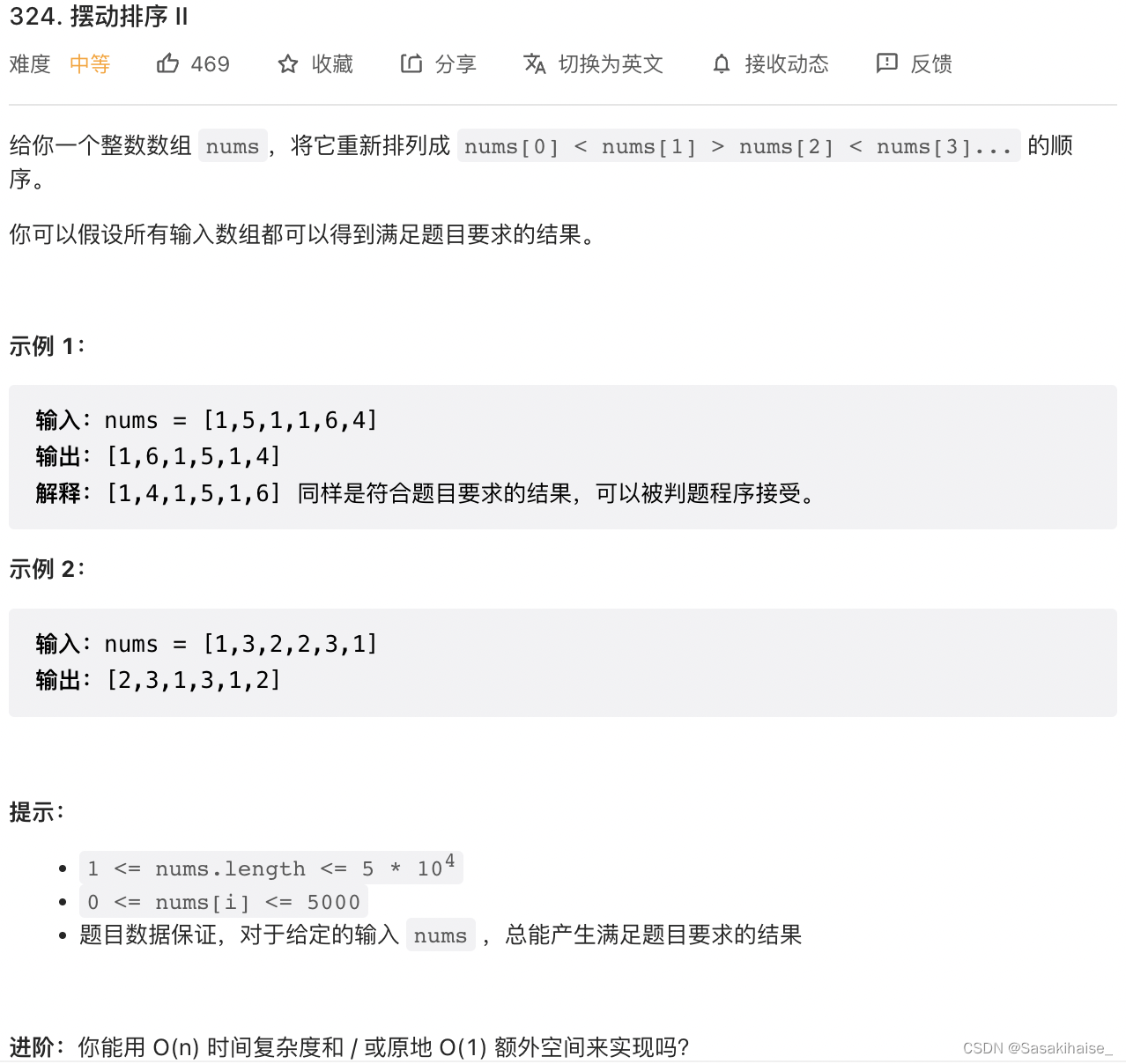
LeetCode 324. Swing sort II

State compression DP acwing 91 Shortest Hamilton path
LeetCode 324. 摆动排序 II

网络安全必会的基础知识

LeetCode 75. Color classification

数字化管理中台+低代码,JNPF开启企业数字化转型的新引擎
随机推荐
AcWing 788. 逆序对的数量
Discussion on enterprise informatization construction
Go language - IO project
[point cloud processing paper crazy reading classic version 10] - pointcnn: revolution on x-transformed points
[point cloud processing paper crazy reading classic version 14] - dynamic graph CNN for learning on point clouds
Computing level network notes
LeetCode 871. 最低加油次数
LeetCode 57. 插入区间
2022-2-13 learning the imitation Niuke project - home page of the development community
Save the drama shortage, programmers' favorite high-score American drama TOP10
【点云处理之论文狂读前沿版8】—— Pointview-GCN: 3D Shape Classification With Multi-View Point Clouds
【点云处理之论文狂读经典版8】—— O-CNN: Octree-based Convolutional Neural Networks for 3D Shape Analysis
Recommend a low code open source project of yyds
Use of sort command in shell
With low code prospect, jnpf is flexible and easy to use, and uses intelligence to define a new office mode
[point cloud processing paper crazy reading classic version 11] - mining point cloud local structures by kernel correlation and graph pooling
LeetCode 241. Design priorities for operational expressions
LeetCode 508. 出现次数最多的子树元素和
即时通讯IM,是时代进步的逆流?看看JNPF怎么说
Simple use of MATLAB