当前位置:网站首页>【Cascade FPD】《Deep Convolutional Network Cascade for Facial Point Detection》
【Cascade FPD】《Deep Convolutional Network Cascade for Facial Point Detection》
2022-07-02 06:26:00 【bryant_meng】

CVPR-2013
文章目录
1 Background and Motivation
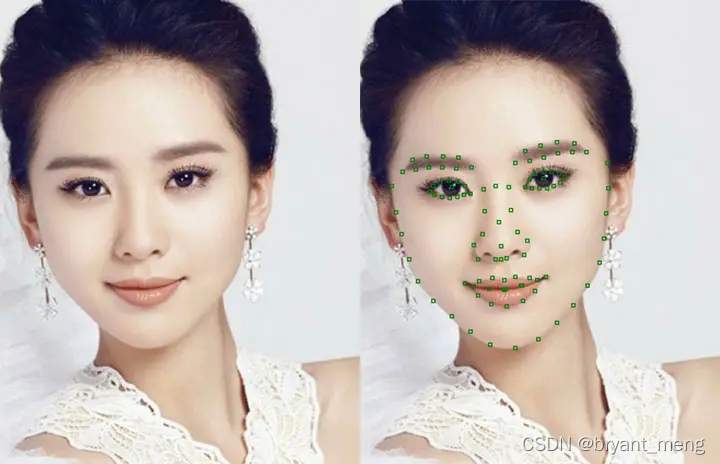
face keypoint detection 有利于 face recognition and analysis
face keypoint detection 难点在于 extreme poses, lightings, expressions, and occlusions 的场景
现有方法:
- classifying(component detector) search windows,要 scanning,利用的是局部特征
- directly predicting keypoint positions (or shape parameters)
作者设计了一种级联的 CNN 结构——a cascaded regression approach for facial point detection with three levels of convolutional networks,significantly improves the prediction accuracy of SOTA and latest commercial software
2 Related Work
- Many used Adaboost, SVM, or random forest classifiers as component detectors and detection was based on local image features.
- regression-based approaches
- Convolutional networks
3 Advantages / Contributions
- 提出级联的 CNN 结构用于人脸关键点的精确定位,在一些数据上的效果优于 SOTA 和商业软件
- 采用 locally sharing weights 对人脸不同关键点进行更有针对性的训练
4 Method
级联网络结构如下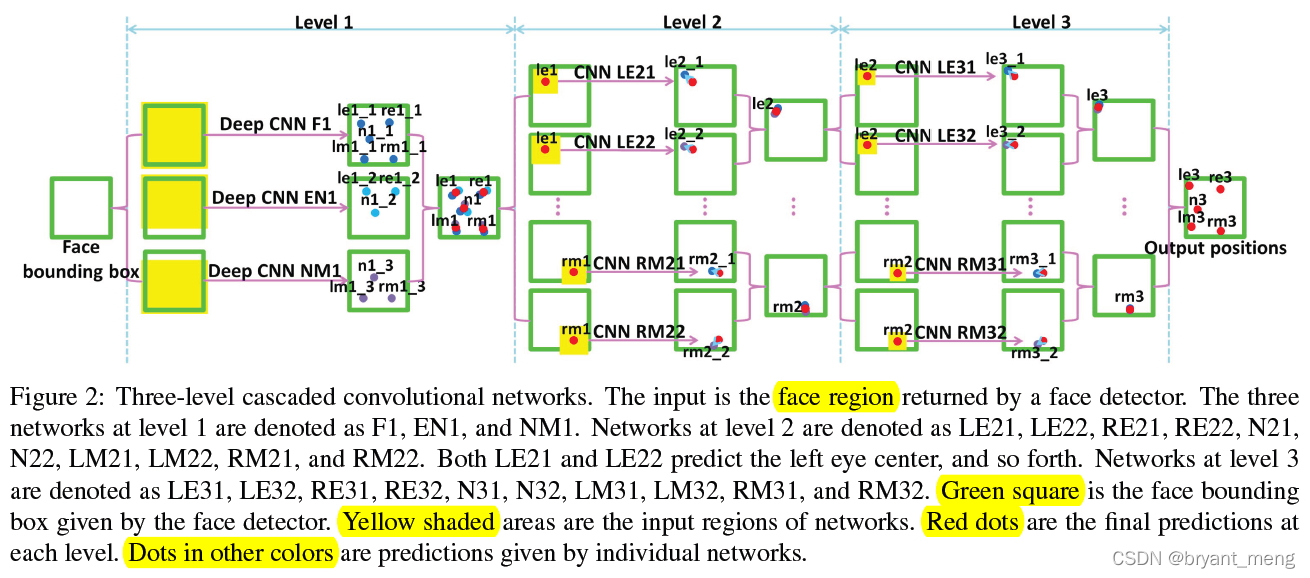
cascade three levels of convolutional networks to make coarse-to-fine prediction
五个关键点:
- left eye center (LE)
- right eye center (RE)
- nose tip (N)
- left mouth corner (LM)
- right mouth corner (RM)
1)level 1
输入是整张脸,三个网络分别预测
- whole face (F)——指的是脸上的五个关键点
- eyes and nose (EN)
- nose and mouth (NM)
三个网络的结果会平均一下作为后续 level 的输入的一部分
2)level2 和 level3
输入是以前一个 level 预测人脸关键点的坐标为基准的一个 patch
level2 和 level3 有 10 个网络,分别预测 5 个关键点的横纵坐标
Predictions at the last two levels are strictly restricted because local appearance is sometimes ambiguous and unreliable.
3)最终预测

也即在 level1 预测的结果的基础上 refine( Δ \Delta Δ)
4)具体网络结构
level1 三个网络,level2 和 level3 各有 10 个网络,长啥样呢?
先看看 level1 的 F1
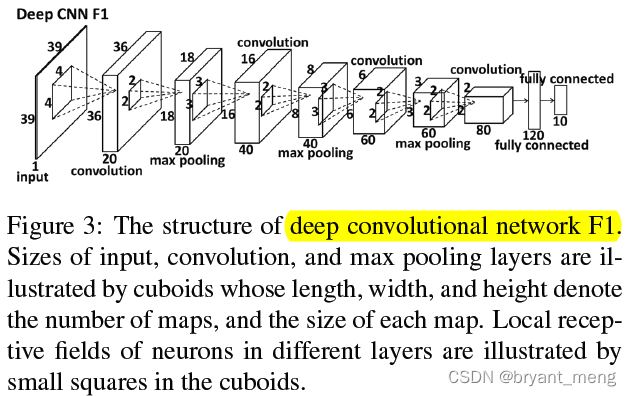
再看看其他的结构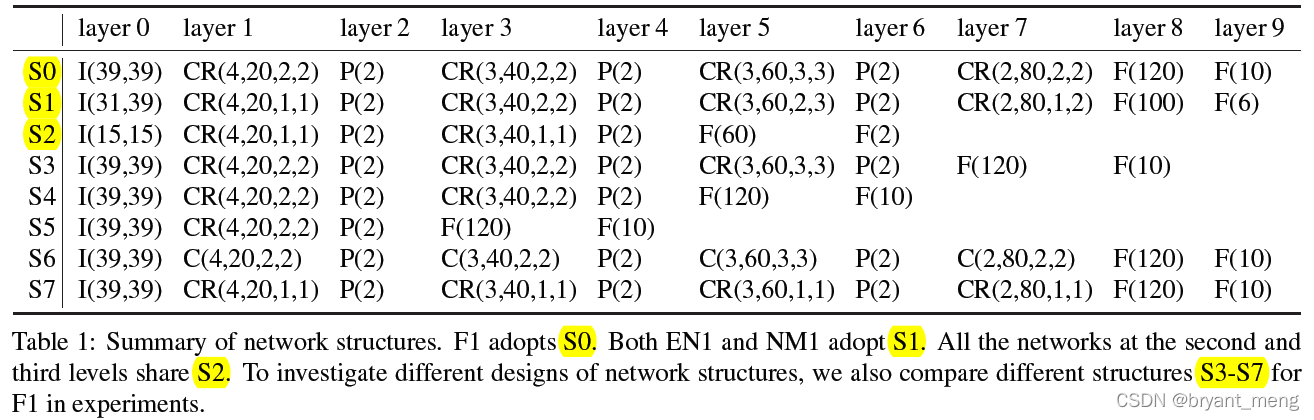
level1 用到了 S0 和 S1,level2 和 level3 都用的是 S2
5)locally sharing weights
globally sharing weights does not work well on images with fixed spatial layout, such as faces
For example, while eyes and mouth may share low-level features (e.g. edges), they are very different at high-level.
先看看卷积的公式
简写成 C ( s , n , p , q ) C(s, n, p, q) C(s,n,p,q)
C R ( s , n , p , q ) CR(s, n, p, q) CR(s,n,p,q) 则表示在 tanh 后加了个绝对值
除了 w w w 和 b b b 上多出来的 u u u 和 v v v 外和正常的卷积(没有 locally shared weight)一摸一样
输入特征图 ( h , w , m ) (h, w, m) (h,w,m)
- m m m 输入通道数
- n n n 输出通道数, t t t 输出的某个通道数, t = 0 , . . . , n − 1 t = 0,...,n-1 t=0,...,n−1
- s s s 是卷积的 kernel size
- i , j i, j i,j 是空间位置索引(不是像素空间,是作者划分的局部共享空间,具体划分规则如下面公式所示)
i = Δ h ⋅ u + 0 , . . . , Δ h ⋅ u + Δ h − 1 i = \Delta h \cdot u + 0, ... , \Delta h \cdot u + \Delta h -1 i=Δh⋅u+0,...,Δh⋅u+Δh−1,其中 Δ h = h − s + 1 p \Delta h = \frac{h-s+1}{p} Δh=ph−s+1, u = 0 , . . . , p − 1 u = 0, ... , p-1 u=0,...,p−1
j = Δ w ⋅ v + 0 , . . . , Δ w ⋅ v + Δ w − 1 j = \Delta w \cdot v + 0, ... , \Delta w \cdot v + \Delta w -1 j=Δw⋅v+0,...,Δw⋅v+Δw−1,其中 Δ w = w − s + 1 q \Delta w = \frac{w-s+1}{q} Δw=qw−s+1, v = 0 , . . . , q − 1 v = 0, ... , q-1 v=0,...,q−1
把整图 ( h , w ) (h, w) (h,w) 大致分成了 p p p x q q q 块区域(用 u u u 和 v v v 来索引),每块区域大小大致为 Δ h \Delta h Δh x Δ w \Delta w Δw,每块区域内权重共享,而不是全图了(正常卷积全图内权重共享——kernel size 范围内当然不共享)
再看看池化层的公式
gain coefficient g g g and shifted by a bias b b b, s s s is the side length of square pooling regions
FC 层
- n n n 输出向量维度, m m m 输入向量的维度
- j = 0 , . . . , n − 1 j = 0, . . . , n − 1 j=0,...,n−1
tanh 函数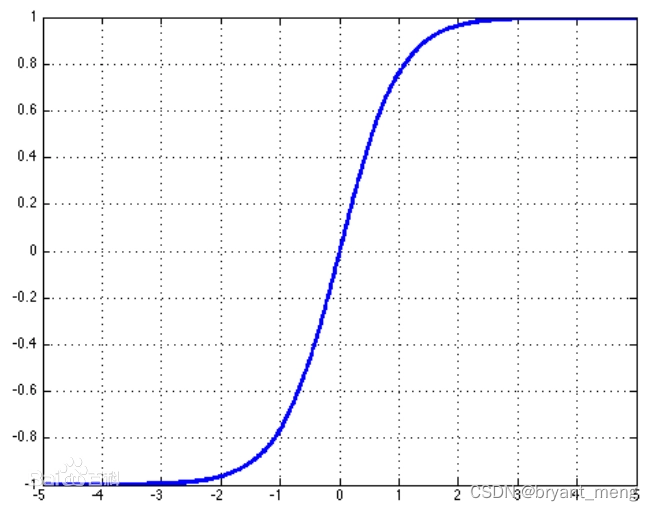
6)具体输入大小
可以看到 F1 的网络还在人脸的基础上外扩了一些
level2 和 level3 在 level1 输出的 point position 上外扩
5 Experiments
5.1 Datasets
13, 466 face images,5, 590 images are from LFW + 7, 876 from the web
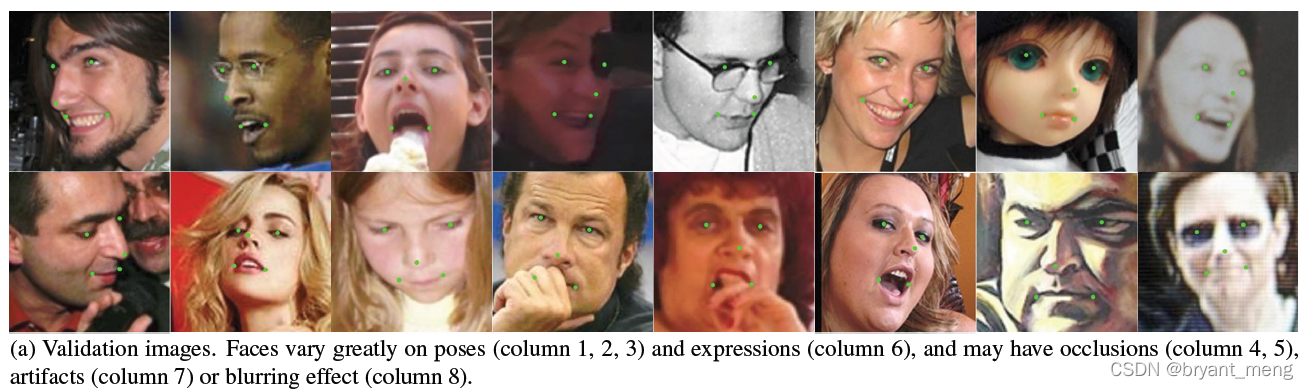
BioID has 1, 521 images of 23 subjects

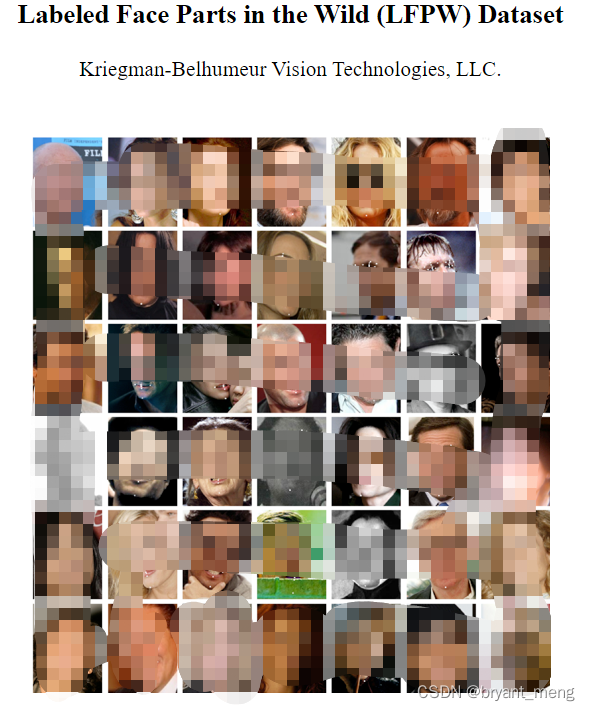
LFPW contains 1, 432 face images from the web
评价指标
- ( x , y ) (x,y) (x,y) 是预测的关键点
- ( x ′ , y ′ ) ({x}',{y}') (x′,y′) 是 GT
- l l l is the width of the bounding box returned by our face detector
误差大于 %5 则认为 failure
l l l 为 bi-ocular distance(双目距离)更常见,but it has problem on faces with large pose variations, since bi-ocular distance of near-profile faces is much shorter than that of frontal faces,也即会放大侧脸时候的误差,上述的相对会好一些
5.2 Investigate network and cascade structures
1)Network structure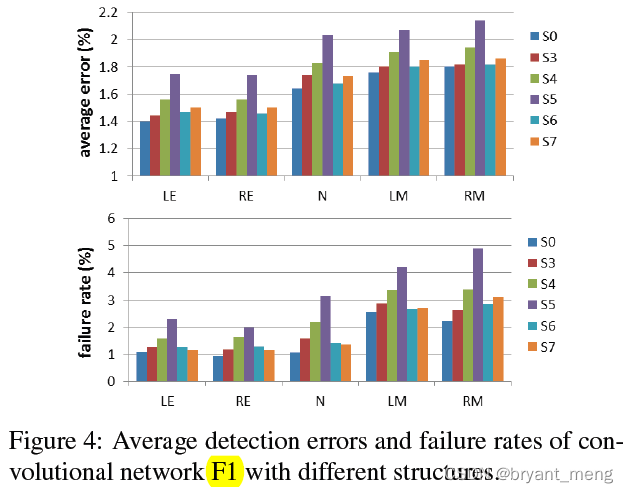
F1 探索了不同网络的效果,S0较好
the performance can be significantly improved by including more layers
S6 和 S7 的结构同 S0,但 S6 卷积用的 C 不是 CR,S7 用的是 globally shares weights 而不是 locally sharing weights
We also find that locally sharing weights in higher layers is more important
2)Multi-level prediction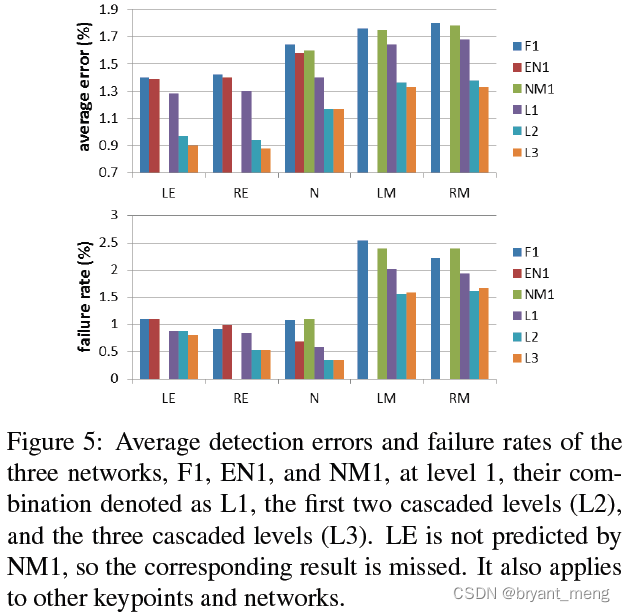
cascade 下来,error 在减少
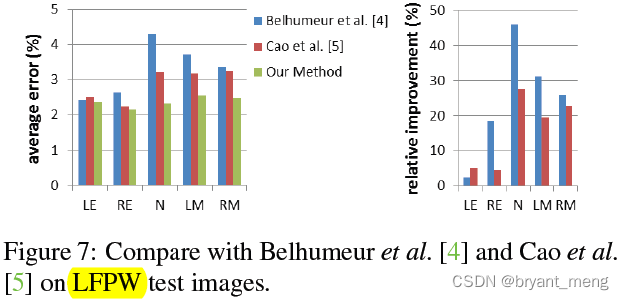
5.3 Comparison with other methods

6 Conclusion(own) / Future work
代码:https://github.com/luoyetx/deep-landmark
推荐博客:
- Deep Convolutional Network Cascade for Facial Point Detection实践总结
- Deep Convolutional Network Cascade for Facial Point Detection阅读笔记
cascade
locally sharing weights
边栏推荐
- 【Ranking】Pre-trained Language Model based Ranking in Baidu Search
- CONDA creates, replicates, and shares virtual environments
- 生成模型与判别模型的区别与理解
- A summary of a middle-aged programmer's study of modern Chinese history
- ModuleNotFoundError: No module named ‘pytest‘
- 半监督之mixmatch
- ABM论文翻译
- Open failed: enoent (no such file or directory) / (operation not permitted)
- [tricks] whiteningbert: an easy unsupervised sentence embedding approach
- label propagation 标签传播
猜你喜欢

【信息检索导论】第七章搜索系统中的评分计算
![[Bert, gpt+kg research] collection of papers on the integration of Pretrain model with knowledge](/img/2e/e74d7a9efbf9fe617f4d7b46867c0a.png)
[Bert, gpt+kg research] collection of papers on the integration of Pretrain model with knowledge

Record of problems in the construction process of IOD and detectron2
【MEDICAL】Attend to Medical Ontologies: Content Selection for Clinical Abstractive Summarization

传统目标检测笔记1__ Viola Jones
A slide with two tables will help you quickly understand the target detection
【Mixup】《Mixup:Beyond Empirical Risk Minimization》

SSM garbage classification management system

Translation of the paper "written mathematical expression recognition with bidirectionally trained transformer"
![[introduction to information retrieval] Chapter 6 term weight and vector space model](/img/42/bc54da40a878198118648291e2e762.png)
[introduction to information retrieval] Chapter 6 term weight and vector space model
随机推荐
Faster-ILOD、maskrcnn_ Benchmark installation process and problems encountered
@Transitional step pit
Alpha Beta Pruning in Adversarial Search
Installation and use of image data crawling tool Image Downloader
Spark SQL task performance optimization (basic)
Convert timestamp into milliseconds and format time in PHP
【模型蒸馏】TinyBERT: Distilling BERT for Natural Language Understanding
【信息检索导论】第七章搜索系统中的评分计算
Traditional target detection notes 1__ Viola Jones
Huawei machine test questions
【深度学习系列(八)】:Transoform原理及实战之原理篇
ABM论文翻译
Faster-ILOD、maskrcnn_ Benchmark training coco data set and problem summary
[introduction to information retrieval] Chapter II vocabulary dictionary and inverted record table
[introduction to information retrieval] Chapter 3 fault tolerant retrieval
Open failed: enoent (no such file or directory) / (operation not permitted)
ERNIE1.0 与 ERNIE2.0 论文解读
使用Matlab实现:弦截法、二分法、CG法,求零点、解方程
【调参Tricks】WhiteningBERT: An Easy Unsupervised Sentence Embedding Approach
MoCO ——Momentum Contrast for Unsupervised Visual Representation Learning