当前位置:网站首页>LeetCode每日一题(2212. Maximum Points in an Archery Competition)
LeetCode每日一题(2212. Maximum Points in an Archery Competition)
2022-07-03 09:01:00 【wangjun861205】
Alice and Bob are opponents in an archery competition. The competition has set the following rules:
Alice first shoots numArrows arrows and then Bob shoots numArrows arrows.
The points are then calculated as follows:
The target has integer scoring sections ranging from 0 to 11 inclusive.
For each section of the target with score k (in between 0 to 11), say Alice and Bob have shot ak and bk arrows on that section respectively. If ak >= bk, then Alice takes k points. If ak < bk, then Bob takes k points.
However, if ak == bk == 0, then nobody takes k points.
For example, if Alice and Bob both shot 2 arrows on the section with score 11, then Alice takes 11 points. On the other hand, if Alice shot 0 arrows on the section with score 11 and Bob shot 2 arrows on that same section, then Bob takes 11 points.
You are given the integer numArrows and an integer array aliceArrows of size 12, which represents the number of arrows Alice shot on each scoring section from 0 to 11. Now, Bob wants to maximize the total number of points he can obtain.
Return the array bobArrows which represents the number of arrows Bob shot on each scoring section from 0 to 11. The sum of the values in bobArrows should equal numArrows.
If there are multiple ways for Bob to earn the maximum total points, return any one of them.
Example 1:

Input: numArrows = 9, aliceArrows = [1,1,0,1,0,0,2,1,0,1,2,0]
Output: [0,0,0,0,1,1,0,0,1,2,3,1]
Explanation: The table above shows how the competition is scored.
Bob earns a total point of 4 + 5 + 8 + 9 + 10 + 11 = 47.
It can be shown that Bob cannot obtain a score higher than 47 points.
Example 2:
[外链图片转存失败,源站可能有防盗链机制,建议将图片保存下来直接上传(img-NXbpXyi5-1656207148005)(https://assets.leetcode.com/uploads/2022/02/24/ex2new.jpg)]
Input: numArrows = 3, aliceArrows = [0,0,1,0,0,0,0,0,0,0,0,2]
Output: [0,0,0,0,0,0,0,0,1,1,1,0]
Explanation: The table above shows how the competition is scored.
Bob earns a total point of 8 + 9 + 10 = 27.
It can be shown that Bob cannot obtain a score higher than 27 points.
Constraints:
- 1 <= numArrows <= 105
- aliceArrows.length == bobArrows.length == 12
- 0 <= aliceArrows[i], bobArrows[i] <= numArrows
- sum(aliceArrows[i]) == numArrows
对于每一个 score section, bob 可以选择付出比 alice 多一根箭的代价来拿到这个分数, 或者直接略过这一个 score section
use std::collections::HashMap;

impl Solution {

    fn dp(
        num_arrows: i32,
        alice_arrows: &Vec<i32>,
        score_level: usize,
        cache: &mut HashMap<(usize, i32), (Vec<i32>, i32)>,
    ) -> (Vec<i32>, i32) {

        let alice = alice_arrows[score_level];
        if score_level == 11 {

            return (
                vec![num_arrows],
                if num_arrows <= alice {

                    0
                } else {

                    score_level as i32
                },
            );
        }
        if num_arrows <= alice {

            let (mut next_state, next_score) = if let Some((l, s)) =
                cache.get(&(score_level + 1, num_arrows))
            {

                let state = l.clone();
                (state.clone(), *s)
            } else {

                let (state, score) = Solution::dp(num_arrows, alice_arrows, score_level + 1, cache);
                (state, score)
            };
            next_state.insert(0, 0);
            cache.insert((score_level, num_arrows), (next_state.clone(), next_score));
            return (next_state, next_score);
        }
        let (take_state, take_score) = if let Some((next_state, next_score)) =
            cache.get(&(score_level + 1, num_arrows - alice - 1))
        {

            let mut state = next_state.clone();
            state.insert(0, alice + 1);
            (state, *next_score + score_level as i32)
        } else {

            let (mut next_state, mut next_score) =
                Solution::dp(num_arrows - alice - 1, alice_arrows, score_level + 1, cache);
            next_state.insert(0, alice + 1);
            next_score += score_level as i32;
            (next_state, next_score)
        };
        let (pass_state, pass_score) =
            if let Some((next_state, next_score)) = cache.get(&(score_level + 1, num_arrows)) {

                let mut next_state = next_state.clone();
                next_state.insert(0, 0);
                (next_state, *next_score)
            } else {

                let (mut next_state, score) =
                    Solution::dp(num_arrows, alice_arrows, score_level + 1, cache);
                next_state.insert(0, 0);
                (next_state, score)
            };
        if take_score > pass_score {

            cache.insert((score_level, num_arrows), (take_state.clone(), take_score));
            return (take_state, take_score);
        }
        cache.insert((score_level, num_arrows), (pass_state.clone(), pass_score));
        (pass_state, pass_score)
    }
    pub fn maximum_bob_points(num_arrows: i32, alice_arrows: Vec<i32>) -> Vec<i32> {

        let (state, _) = Solution::dp(num_arrows, &alice_arrows, 0, &mut HashMap::new());
        state
    }
}
边栏推荐
- 【点云处理之论文狂读前沿版10】—— MVTN: Multi-View Transformation Network for 3D Shape Recognition
- Filter comments to filter out uncommented and default values
- There is no open in default browser option in the right click of the vscade editor
- Save the drama shortage, programmers' favorite high-score American drama TOP10
- 2022-2-14 learning xiangniuke project - generate verification code
- Principles of computer composition - cache, connection mapping, learning experience
- Go language - IO project
- State compression DP acwing 91 Shortest Hamilton path
- Hudi integrated spark data analysis example (including code flow and test results)
- Overview of image restoration methods -- paper notes
猜你喜欢
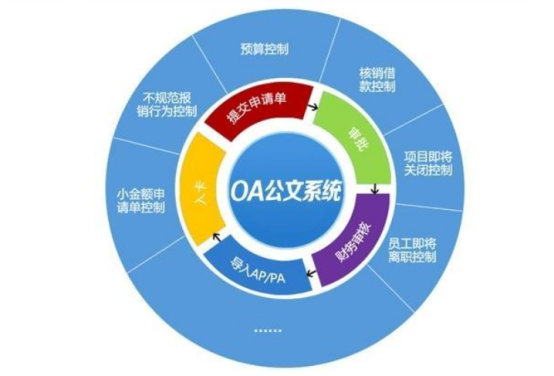
The "booster" of traditional office mode, Building OA office system, was so simple!

Install third-party libraries such as Jieba under Anaconda pytorch

LeetCode 75. Color classification

【点云处理之论文狂读经典版9】—— Pointwise Convolutional Neural Networks

Crawler career from scratch (I): crawl the photos of my little sister ① (the website has been disabled)

Liteide is easy to use
![[point cloud processing paper crazy reading classic version 7] - dynamic edge conditioned filters in revolutionary neural networks on Graphs](/img/0a/480f1d1eea6f2ecf84fd5aa96bd9fb.png)
[point cloud processing paper crazy reading classic version 7] - dynamic edge conditioned filters in revolutionary neural networks on Graphs
![[point cloud processing paper crazy reading classic version 10] - pointcnn: revolution on x-transformed points](/img/c1/045ca010b212376dc3e5532d25c654.png)
[point cloud processing paper crazy reading classic version 10] - pointcnn: revolution on x-transformed points
![[set theory] order relation (chain | anti chain | chain and anti chain example | chain and anti chain theorem | chain and anti chain inference | good order relation)](/img/fd/c0f885cdd17f1d13fdbc71b2aea641.jpg)
[set theory] order relation (chain | anti chain | chain and anti chain example | chain and anti chain theorem | chain and anti chain inference | good order relation)
LeetCode 871. Minimum refueling times
随机推荐
We have a common name, XX Gong
[set theory] order relation (eight special elements in partial order relation | ① maximum element | ② minimum element | ③ maximum element | ④ minimum element | ⑤ upper bound | ⑥ lower bound | ⑦ minimu
The less successful implementation and lessons of RESNET
Flink学习笔记(十)Flink容错机制
【点云处理之论文狂读前沿版12】—— Adaptive Graph Convolution for Point Cloud Analysis
Use the interface colmap interface of openmvs to generate the pose file required by openmvs mvs
[point cloud processing paper crazy reading cutting-edge version 12] - adaptive graph revolution for point cloud analysis
[point cloud processing paper crazy reading classic version 11] - mining point cloud local structures by kernel correlation and graph pooling
The idea of compiling VBA Encyclopedia
Vscode编辑器右键没有Open In Default Browser选项
Vs2019 configuration opencv3 detailed graphic tutorial and implementation of test code
Uc/os self-study from 0
Jenkins learning (II) -- setting up Chinese
Matlab dichotomy to find the optimal solution
Overview of database system
Just graduate student reading thesis
2022-2-13 learning xiangniuke project - version control
Hudi learning notes (III) analysis of core concepts
【点云处理之论文狂读前沿版11】—— Unsupervised Point Cloud Pre-training via Occlusion Completion
Internet Protocol learning record