当前位置:网站首页>链队实现(C语言)
链队实现(C语言)
2022-07-06 09:23:00 【安若兮~】
我们之前已经了解过栈了,我们知道,栈是先进后出,后进先出
那么队则是先进先出,后进后出
就像我们去排队买饭一样,排在前面的人就先买到,天经地义对吧>-<
那么我们知道了队的原理,链队实现起来就相对容易多了。
在这里我们要注意:我们这里的头节点不能和之前的头节点一样了,因为我们这是链式队列,需要的操作是先进先出,后进后出,即尾插头删,所以这里我们的头节点要有两个指针域,分别指向待插入位置和待删除位置。
我们先在头文件中进行函数声明
typedef int ELEM_TYPE;
typedef struct Node {
	ELEM_TYPE data;
	struct Node* next;
}Node,*PNode;
typedef struct Head {
	struct Node* front;
	struct Node* rear;
}Head,*Plist;
void Init(Plist plq);
bool Push(Plist plq,ELEM_TYPE val);
bool Pop(Plist plq);
bool Top(Plist plq,ELEM_TYPE* rtval);
int Getlength(Plist plq);
bool IsEmpty(Plist plq);
void Clear(Plist plq);
void Destory(Plist plq);
void Show(Plist plq);
头文件中函数定义
#include<stdio.h>
#include<assert.h>
#include<stdlib.h>
#include"list_queue.h"
void Init(Plist plq) {
	assert(plq!=NULL);
	plq->front = NULL;
	plq->rear = NULL;
}
bool Push(Plist plq, ELEM_TYPE val) {
	assert(plq != NULL);
	struct Node* pnewnode = (struct Node*)malloc(sizeof(struct Node));
	assert(pnewnode!=NULL);
	pnewnode->data = val;

	if (IsEmpty(plq)) {
		pnewnode->next = NULL;
		plq->front = plq->rear = pnewnode;
		return true;
	}
	pnewnode->next = plq->rear->next;
	plq->rear->next = pnewnode;
	plq->rear = pnewnode;
	return true;
}
bool Pop(Plist plq) {
	assert(plq!=NULL);
	if (IsEmpty(plq)) {
		return false;
	}
	if (plq->front->next==NULL){//plq->front==plq->rear
		free(plq->front);
		plq->front = plq->rear = NULL;
		return true;
	}

	struct Node* p = plq->front;
	plq->front = p->next;
	free(p);
	p = NULL;
	return true;
}
bool Top(Plist plq, ELEM_TYPE* rtval) {
	assert(plq != NULL);
	if (IsEmpty(plq)) {
		return false;
	}
	*rtval = plq->front->data;
	return true;
}
int Getlength(Plist plq) {
	assert(plq!=NULL);
	int count = 0;
	for (struct Node* p = plq->front; p!= NULL;p=p->next) {
		count++;
	}
	return count;
}
bool IsEmpty(Plist plq) {
	assert(plq!=NULL);
	return plq->front == NULL;
}
void Clear(Plist plq) {
	assert(plq!=NULL);
	Destory(plq);
}
void Destory(Plist plq) {
	assert(plq != NULL);
	/*while (plq->front!=NULL) {
		struct Node* p = plq->front;
		plq->front = p->next;
		free(p);
	}
	plq->rear =plq->front= NULL;*/
	struct Node* p = plq->front;
	struct Node* q;
	plq->front = plq->rear = NULL;
	while (p!=NULL) {
		q = p->next;
		free(p);
		p = q;
	}
}
void Show(Plist plq) {
	assert(plq != NULL);
	for (struct Node* p = plq->front; p != NULL; p = p->next) {
		printf("%5d",p->data);
	}
	printf("\n");
}
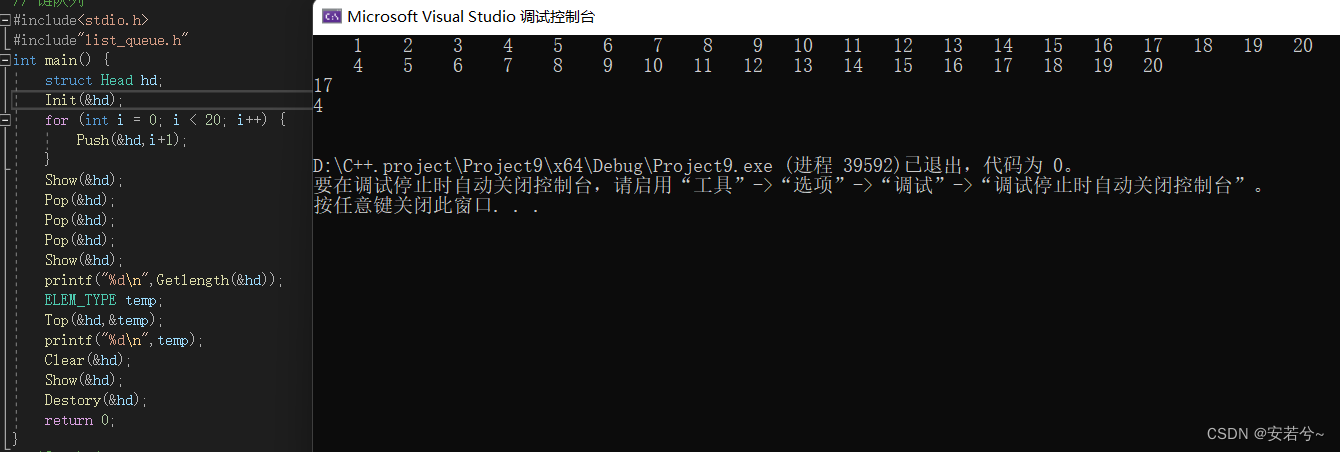
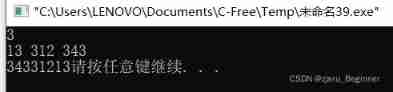
测试文件
测试用例
#include<stdio.h>
#include"list_queue.h"
int main() {
	struct Head hd;
	Init(&hd);
	for (int i = 0; i < 20; i++) {
		Push(&hd,i+1);
	}
	Show(&hd);
	Pop(&hd);
	Pop(&hd);
	Pop(&hd);
	Show(&hd);
	printf("%d\n",Getlength(&hd));
	ELEM_TYPE temp;
	Top(&hd,&temp);
	printf("%d\n",temp);
	Clear(&hd);
	Show(&hd);
	Destory(&hd);
	return 0;
}
边栏推荐
- 实验四 数组
- Spot gold prices rose amid volatility, and the rise in U.S. prices is likely to become the key to the future
- [three paradigms of database] you can understand it at a glance
- 7-1 output all primes between 2 and n (PTA programming)
- Relationship between hashcode() and equals()
- Experiment 6 inheritance and polymorphism
- js判断对象是否是数组的几种方式
- 记一次,修改密码逻辑漏洞实战
- 强化学习基础记录
- 2. First knowledge of C language (2)
猜你喜欢
1. First knowledge of C language (1)
1. Preliminary exercises of C language (1)
HackMyvm靶机系列(2)-warrior
QT meta object qmetaobject indexofslot and other functions to obtain class methods attention
记一次edu,SQL注入实战

Only 40% of the articles are original? Here comes the modification method
Principles, advantages and disadvantages of two persistence mechanisms RDB and AOF of redis
Using spacedesk to realize any device in the LAN as a computer expansion screen
Yugu p1012 spelling +p1019 word Solitaire (string)
Hackmyvm target series (2) -warrior
随机推荐
Record once, modify password logic vulnerability actual combat
搭建域环境(win)
canvas基础1 - 画直线(通俗易懂)
Interpretation of iterator related "itertools" module usage
. How to upload XMIND files to Jinshan document sharing online editing?
强化学习基础记录
4. Branch statements and loop statements
网络层—简单的arp断网
[insert, modify and delete data in the headsong educator data table]
The difference between cookies and sessions
xray與burp聯動 挖掘
记一次,修改密码逻辑漏洞实战
渗透测试学习与实战阶段分析
【Numpy和Pytorch的数据处理】
《英特尔 oneAPI—打开异构新纪元》
Xray and burp linkage mining
Safe driving skills on ice and snow roads
SQL注入
Record a penetration of the cat shed from outside to inside. Library operation extraction flag
Implementation principle of automatic capacity expansion mechanism of ArrayList