当前位置:网站首页>【Android -- 数据存储】使用 SQLite 存储数据
【Android -- 数据存储】使用 SQLite 存储数据
2022-07-07 14:12:00 【Kevin-Dev】

一、前言
在 Android 中一共提供了五种数据存储方式,分别为:
1. Files:通过FileInputStream和FileOutputStream对文件进行操作。具体使用方法可以参阅博文《Android学习笔记34:使用文件存储数据》。
2. Shared Preferences:常用来存储键值对形式的数据,对系统配置信息进行保存。
3. Content Providers:数据共享,用于应用程序之间数据的访问。
4. SQLite:Android自带的轻量级关系型数据库,支持SQL语言,用来存储大量的数据,并且能够对数据进行使用、更新、维护等操作。
5. Network:通过网络来存储和获取数据。
本篇博文主要介绍第一种方式,通过 SQLite 存储数据。
二、实战
在项目开发中,我们或多或少都会用到数据库。在 Android 中,我们一般使用 SQLite,因为 Android 在 android.database.sqlite 包封装了很多 SQLite 操作的 API。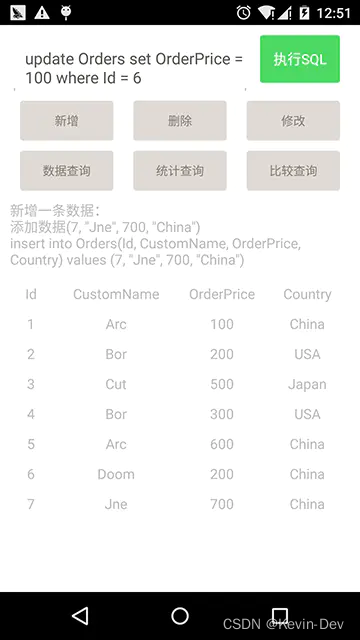
在使用 SQLite 时,我建议先下载一个本地 SQLite 客户端来验证操作,在本地写的 SQL 语句运行正确后,再转移到 Android 中。我用的是 SQLite Expert Personal。
1. 创建一个继承在 SQLiteOpenHelper 的类,并重写 onCreate() 和 onUpgrade() 方法。
public class OrderDBHelper extends SQLiteOpenHelper{

    private static final int DB_VERSION = 1;
    private static final String DB_NAME = "myTest.db";
    public static final String TABLE_NAME = "Orders";

    public OrderDBHelper(Context context) {

        super(context, DB_NAME, null, DB_VERSION);
    }

    @Override
    public void onCreate(SQLiteDatabase sqLiteDatabase) {

        // create table Orders(Id integer primary key, CustomName text, OrderPrice integer, Country text);
        String sql = "create table if not exists " + TABLE_NAME + " (Id integer primary key, CustomName text, OrderPrice integer, Country text)";
        sqLiteDatabase.execSQL(sql);
    }

    @Override
    public void onUpgrade(SQLiteDatabase sqLiteDatabase, int oldVersion, int newVersion) {

        String sql = "DROP TABLE IF EXISTS " + TABLE_NAME;
        sqLiteDatabase.execSQL(sql);
        onCreate(sqLiteDatabase);
    }
}
这个类主要用于建数据库和建表用,我们再创建一个 OrderDao 用于处理所有的数据操作方法。在 OrderDao 中实例化OrderDBHelper:
public OrderDao(Context context) {

    this.context = context;
    ordersDBHelper = new OrderDBHelper(context);
}
数据库操作无外乎:“增删查改”。对于“增删改”这类对表内容变换的操作,我们需先调用 getWritableDatabase() ,在执行的时候可以调用通用的 execSQL(String sql) 方法或对应的操作 API:insert()、delete()、update() 。而对“查”,需要调用 getReadableDatabase() ,这时就不能使用 execSQL 方法了,得使用 query() 或 rawQuery() 方法。
增加数据
- 初始化数据
在进入 Demo 程序时,先判断表中是否有数据,如果表中没有数据,先添加一些数据。在初始化数据时,因为一次性要添加的数据比较多,所以直接采用的是 execSQL 方法:
db = ordersDBHelper.getWritableDatabase();
db.beginTransaction();

db.execSQL("insert into " + OrderDBHelper.TABLE_NAME + " (Id, CustomName, OrderPrice, Country) values (1, 'Arc', 100, 'China')");
db.execSQL("insert into " + OrderDBHelper.TABLE_NAME + " (Id, CustomName, OrderPrice, Country) values (2, 'Bor', 200, 'USA')");
db.execSQL("insert into " + OrderDBHelper.TABLE_NAME + " (Id, CustomName, OrderPrice, Country) values (3, 'Cut', 500, 'Japan')");
db.execSQL("insert into " + OrderDBHelper.TABLE_NAME + " (Id, CustomName, OrderPrice, Country) values (4, 'Bor', 300, 'USA')");
db.execSQL("insert into " + OrderDBHelper.TABLE_NAME + " (Id, CustomName, OrderPrice, Country) values (5, 'Arc', 600, 'China')");
db.execSQL("insert into " + OrderDBHelper.TABLE_NAME + " (Id, CustomName, OrderPrice, Country) values (6, 'Doom', 200, 'China')");

db.setTransactionSuccessful();
- 插入一条新数据
我们还可以使用 insert(String table,String nullColumnHack,ContentValues values) 方法来插入,ContentValues 内部实现就是HashMap,但是两者还是有差别的,ContenValues Key 只能是 String 类型,Value 只能存储基本类型的数据,像 string,int 之类的,不能存储对象这种东西:
public ContentValues() {

    // Choosing a default size of 8 based on analysis of typical
    // consumption by applications.
    mValues = new HashMap<String, Object>(8);
}
使用 insert() 方法我们插入一条新数据(7, “Jne”, 700, “China”),对于修改数据的操作我们一般当作事务(Transaction)处理:
db = ordersDBHelper.getWritableDatabase();
db.beginTransaction();

// insert into Orders(Id, CustomName, OrderPrice, Country) values (7, "Jne", 700, "China");
ContentValues contentValues = new ContentValues();
contentValues.put("Id", 7);
contentValues.put("CustomName", "Jne");
contentValues.put("OrderPrice", 700);
contentValues.put("Country", "China");
db.insertOrThrow(OrderDBHelper.TABLE_NAME, null, contentValues);

db.setTransactionSuccessful();
删除数据
删除数据的方法除了 execSQL 还有 delete(String table,String whereClause,String[] whereArgs),whereClause是删除条件,whereArgs 是删除条件值数组。
db = ordersDBHelper.getWritableDatabase();
db.beginTransaction();

// delete from Orders where Id = 7
db.delete(OrderDBHelper.TABLE_NAME, "Id = ?", new String[]{
    String.valueOf(7)});
db.setTransactionSuccessful();
再看删除的源码,里面会拼装删除条件和删除条件值数组:
public int delete(String table, String whereClause, String[] whereArgs) {

    acquireReference();
    try {

        SQLiteStatement statement =  new SQLiteStatement(this, "DELETE FROM " + table +
                (!TextUtils.isEmpty(whereClause) ? " WHERE " + whereClause : ""), whereArgs);
        try {

            return statement.executeUpdateDelete();
        } finally {

            statement.close();
        }
    } finally {

        releaseReference();
    }
}
修改数据
修改数据和插入数据很相似,调用的方法除了execSQL还可以是 update(String table,ContentValues values,String whereClause, String[] whereArgs):
db = ordersDBHelper.getWritableDatabase();
db.beginTransaction();

// update Orders set OrderPrice = 800 where Id = 6
ContentValues cv = new ContentValues();
cv.put("OrderPrice", 800);
db.update(OrderDBHelper.TABLE_NAME,
        cv,
        "Id = ?",
        new String[]{
    String.valueOf(6)});
db.setTransactionSuccessful();
查找数据
查找数据有两个方法,一是 public Cursor query(String table,String[] columns,String selection,String[] selectionArgs,String groupBy,String having,String orderBy,String limit);,另外一个是 public Cursor rawQuery(String sql, String[] selectionArgs)。rawQuery的写法类似上面的execSQL,在此不做介绍,query方法中的参数如下:
- table:表名称
- columns:列名称数组
- selection:条件字句,相当于where
- selectionArgs:条件字句,参数数组
- groupBy:分组列
- having:分组条件
- orderBy:排序列
- limit:分页查询限制
- Cursor:返回值,相当于结果集ResultSet
我们可以看到返回的类型都是 Cursor,Cursor是一个游标接口,提供了遍历查询结果的方法,如移动指针方法move(),获得列值方法。Cursor 游标常用方法如下: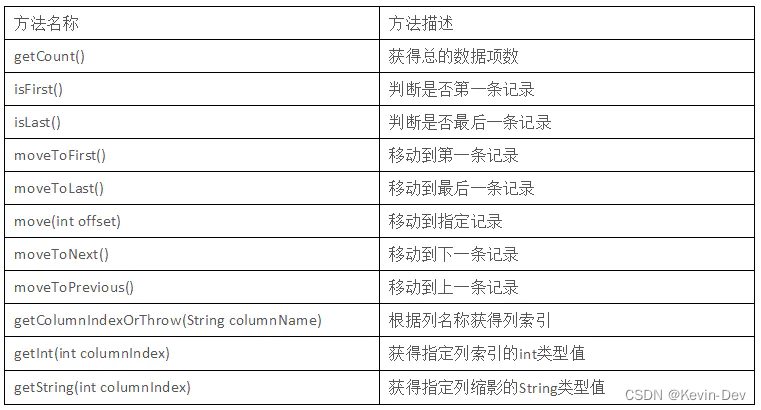
我们先来查一查用户名为"Bor"的信息:
db = ordersDBHelper.getReadableDatabase();

// select * from Orders where CustomName = 'Bor'
cursor = db.query(OrderDBHelper.TABLE_NAME,
        ORDER_COLUMNS,
        "CustomName = ?",
        new String[] {
    "Bor"},
        null, null, null);

if (cursor.getCount() > 0) {

    List<Order> orderList = new ArrayList<Order>(cursor.getCount());
    while (cursor.moveToNext()) {

        Order order = parseOrder(cursor);
        orderList.add(order);
    }
    return orderList;
}
当然我们也可以查询总数、最大值最小值之类的,以查询Country为China的用户总数为例:
db = ordersDBHelper.getReadableDatabase();
// select count(Id) from Orders where Country = 'China'
cursor = db.query(OrderDBHelper.TABLE_NAME,
        new String[]{
    "COUNT(Id)"},
        "Country = ?",
        new String[] {
    "China"},
        null, null, null);

if (cursor.moveToFirst()) {

    count = cursor.getInt(0);
}
边栏推荐
- Three. JS introductory learning notes 10:three JS grid
- ThinkPHP URL 路由简介
- leetcode 241. Different Ways to Add Parentheses 为运算表达式设计优先级(中等)
- 持续创作,还得靠它!
- Unity3d click events added to 3D objects in the scene
- Sysom case analysis: where is the missing memory| Dragon lizard Technology
- How to query the data of a certain day, a certain month, and a certain year in MySQL
- 目标跟踪常见训练数据集格式
- 【知识小结】PHP使用svn笔记总结
- 企业级日志分析系统ELK
猜你喜欢
深度之眼(七)——矩阵的初等变换(附:数模一些模型的解释)
Eye of depth (VI) -- inverse of matrix (attachment: some ideas of logistic model)

95. (cesium chapter) cesium dynamic monomer-3d building (building)
Three. JS introductory learning notes 07: external model import -c4d to JSON file for web pages -fbx import

Apache Doris just "graduated": why should we pay attention to this kind of SQL data warehouse?
Numpy --- basic learning notes
神经网络c语言中的指针是怎么回事

尤雨溪,来了!
Notification uses full resolution

星瑞格数据库入围“2021年度福建省信息技术应用创新典型解决方案”
随机推荐
Step by step monitoring platform ZABBIX
应用程序和matlab的通信方式
laravel 是怎么做到运行 composer dump-autoload 不清空 classmap 映射关系的呢?
C4D learning notes 3- animation - animation rendering process case
Markdown formula editing tutorial
A link opens the applet code. After compilation, it is easy to understand
PyTorch 中的乘法:mul()、multiply()、matmul()、mm()、mv()、dot()
Use moviepy Editor clips videos and intercepts video clips in batches
Leetcode-136-只出现一次的数(用异或来解答)
Xcode Revoke certificate
pycharm 终端部启用虚拟环境
markdown公式编辑教程
Mysql database backup script
Dotween -- ease function
How does geojson data merge the boundaries of regions?
Odoo集成Plausible埋码监控平台
2022第四届中国(济南)国际智慧养老产业展览会,山东老博会
神经网络c语言中的指针是怎么回事
Three. JS introductory learning notes 18: how to export JSON files with Blender
Three. JS introductory learning notes 08:orbitcontrols JS plug-in - mouse control model rotation, zoom in, zoom out, translation, etc